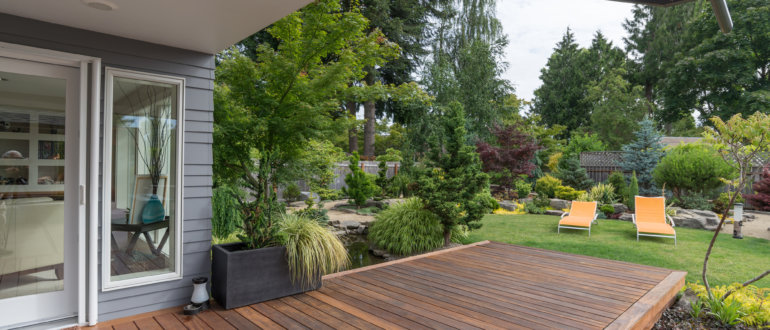
Composite vs. Wood Decking: Which Is Better?
Picking a decking material is one of those decisions that follows you for 20 years. Get it wrong and you are sanding, staining, or replacing boards every other summer. Get it right and your deck becomes the place everyone gravitates toward from May through October.
The core tradeoff is straightforward: composite decking costs more upfront but asks almost nothing from you after installation. Natural wood costs less at the start but requires real maintenance if you want it to hold up decade after decade. Neither is wrong, but one is almost certainly a better fit for your actual life.
This breakdown covers the real numbers, what each material actually feels like underfoot, and four specific products worth knowing about whether you go wood or composite. The goal is to give you enough information to make a confident call before the first board gets cut.
Best Composite Decking for a Low-Maintenance Build
Trex Enhance Naturals is the composite board most contractors reach for first, and after seeing a dozen decks side by side, the reason is obvious. The surface mimics wood grain convincingly, it stays cool enough to walk on barefoot in full sun compared to capped composites with darker colors, and it does not crack, splinter, or absorb moisture. On a 12x16 deck, you are looking at 40 to 50 boards depending on spacing, which adds up fast. But you are not sanding anything in year three, or year seven, or year fifteen.
The color holds without staining. Trex backs these boards with a 25-year fade and stain warranty, which sounds like marketing copy until you stand next to a cedar deck that went unmaintained for five summers. They do get warm in direct afternoon sun, so if your deck faces west and gets blasted from 2pm onward, factor in a shade sail or pergola before blaming the boards. For most people replacing an aging wood deck, this is the sensible upgrade that ends the annual maintenance cycle for good.
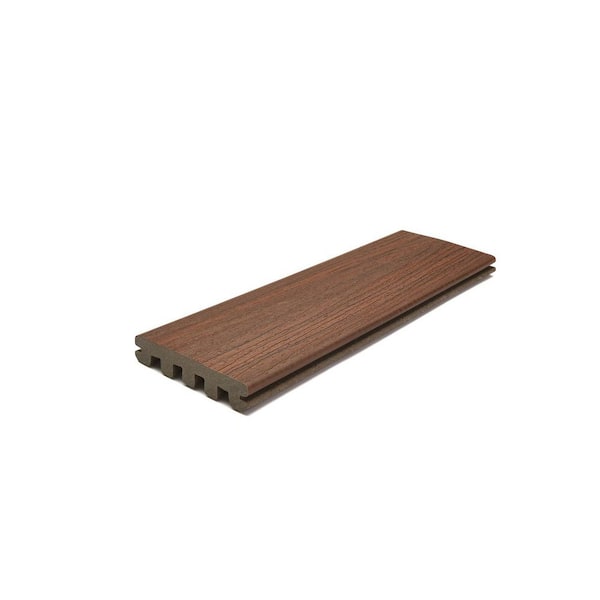
Trex Enhance Naturals Composite Decking Board 1 in. x 6 in. x 16 ft.
Check price on Amazon
3,200+ reviews
Fade-resistant composite that convincingly mimics wood grain and comes with a 25-year warranty against fading and staining.
Shop on Amazon →Best Penetrating Finish If You Go With Natural Wood
Choosing cedar or pressure-treated pine means committing to maintenance, and the sealer you use determines how much of a chore that actually is. Flood CWF-UV5 is the finish that actually penetrates into the wood fiber rather than sitting on top and eventually peeling. One gallon covers 150 to 200 square feet on fresh lumber. Apply it with a pump sprayer, brush it into the grain, and new boards will take their first coat in a single afternoon.
Cedar responds to this formula especially well, pulling the oil deep and turning a rich amber that honestly looks better than the raw board. The UV inhibitors do real work: a treated cedar board left in a Texas summer next to an untreated one for a single season tells the whole story. Plan on reapplying every one to two years depending on sun exposure and your climate. That is the honest cost of owning a natural wood deck, and it is worth knowing before you build one.
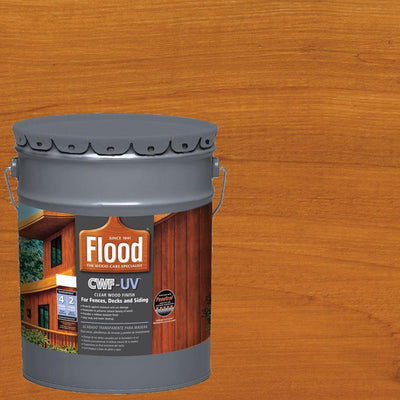
Flood CWF-UV5 Cedar Tone Penetrating Wood Finish 1 Gallon
Check price on Amazon
4,800+ reviews
Deep-penetrating oil finish that protects cedar and pressure-treated pine from UV damage and moisture without sitting on the surface and peeling.
Shop on Amazon →Best Cleaner for Keeping a Composite Deck Looking New
Composite is low maintenance, not zero maintenance. Pollen, mildew, and grease from the grill all find their way into the textured grooves that give composite its traction. Simple Green Oxy Solve Total Outdoor Cleaner cuts through all of it without bleaching the color or damaging the board surface. One gallon diluted with water handles a full 400 square feet, which covers most residential decks in a single pass.
This is the cleaner to use at the start of every summer, or right before you put a house on the market and need the deck to look like it did when the boards were new. Apply with a pump sprayer, let it sit for five minutes, then work it with a soft deck brush or a 1,200 PSI pressure washer on a 40-degree nozzle. Skip the zero-degree nozzle on composite, it will furrow the cap layer. One bottle handles a full season of buildup without any scrubbing.

Simple Green Oxy Solve Total Outdoor Cleaner 1 Gallon
Check price on Amazon
6,400+ reviews
Oxygen-powered formula that lifts mildew, algae, and grill grease from composite and wood decking without bleach or color damage.
Shop on Amazon →Best Hidden Fasteners for a Clean Composite Installation
Face-screwing composite boards is structurally fine but looks like something from 2005, and every screw penetration is a small entry point for the elements. CAMO Edge Hidden Fasteners grip the side edge of each board and lock it to the joist from below, leaving the top surface completely clear of hardware. The look on a finished deck is noticeably cleaner. Guests walk out and assume you paid extra for some premium board, when really it is just the fastening method.
The 345-count kit covers roughly 100 square feet of 5/4-inch decking, which works out to a 10x10 section or one phase of a larger build. The CAMO drive tool is sold separately but it is worth it: it sets every fastener at the correct angle automatically, which matters when you are driving a few hundred of them in a row. If you are hiring this out, ask your contractor specifically whether they use hidden fasteners. Some charge a small upcharge. It is worth paying.
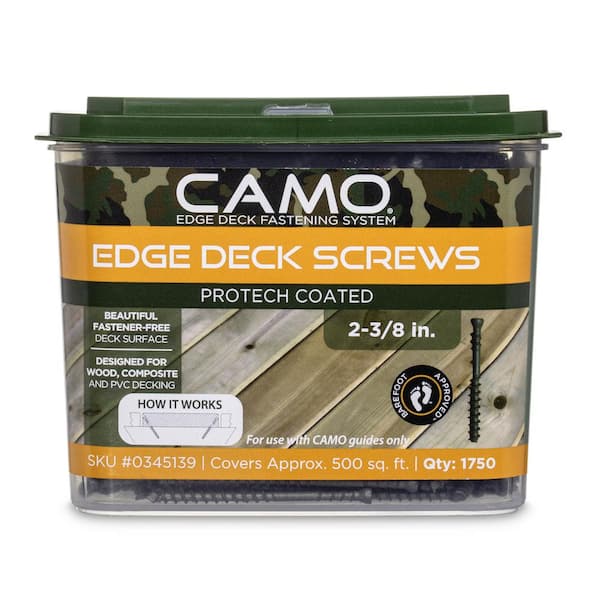
CAMO 345-Count Composite and Hardwood Hidden Deck Fasteners for 5/4 Decking
Check price on Amazon
2,100+ reviews
Side-grip fasteners that leave composite deck surfaces completely free of visible screws without sacrificing holding strength.
Shop on Amazon →Quick Tips for Choosing and Maintaining Decking
- Let pressure-treated lumber dry before sealing. New PT wood can hold up to 19% moisture content. Wait 60 to 90 days after installation, or test with a moisture meter, before applying any stain or sealer.
- Check joist spacing before ordering composite. Most composite boards require joists at 16 inches on center. Diagonal installations often require 12 inches. Reframing after the fact is expensive and avoidable.
- Keep composite grooves clear of debris. Leaves and dirt sitting in the textured channels trap moisture and encourage mildew. A quick pass with a leaf blower after every storm takes 30 seconds.
- Test wood stain on a hidden board first. Different wood species absorb stain at different rates. A small test area on a joist or the underside of a board saves you from stripping an entire deck later.
- Go hidden fasteners from the start. Retrofitting hidden fasteners on an existing deck means pulling every board. It is nearly impossible to do cleanly after the fact, so make the call before you start.
Frequently Asked Questions
How long does composite decking last compared to wood?
Quality composite decking lasts 25 to 30 years with minimal upkeep. Pressure-treated pine lasts 15 to 25 years with regular sealing. Cedar runs closer to 15 to 20 years. The difference is how much maintenance you put in along the way.
Is composite decking worth the extra cost?
For most people, yes. Composite runs 2 to 3 times more than pressure-treated pine upfront. But factor in 20 years of stain, stripper, rental tools, and the occasional board replacement, and the gap closes faster than you'd expect. If you genuinely enjoy outdoor maintenance projects, wood is a legitimate choice. If you do not, composite pays for itself in avoided weekends.
Can composite decking get slippery when wet?
Textured composite boards grip reasonably well when wet, better than smooth capped boards. Look for an embossed or brushed surface rather than a flat cap. Adding anti-slip tape on steps is smart regardless of what material you choose.
What type of wood is best for outdoor decking?
Pressure-treated pine is the most affordable and available option nationwide. Cedar and redwood are naturally rot-resistant and much more pleasant to work with. Ipe and other tropical hardwoods are extremely durable but expensive and require pre-drilling every fastener, which slows installation considerably.