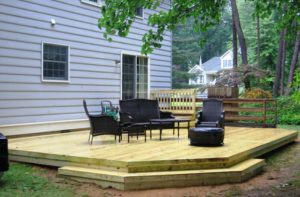
How to Clean and Seal Your Deck for Spring
A winter-beaten deck needs more than a quick rinse. If you skip the prep work and go straight to sealing, you're locking in the grime, mold, and gray oxidation that built up over the past six months.
The good news is that a proper spring deck refresh takes one weekend and the right products. Do it right and your deck stays protected for two to three years.
This guide walks you through the full process: cleaning, brightening the wood grain, and applying a sealer that actually holds up. Every product here is one worth using on a real 200-to-400-square-foot pressure-treated deck.
Best Deck Cleaner for Heavy Grime and Mildew
Start here before you do anything else. Simple Green Oxy Solve Total Outdoor Cleaner is a peroxide-based formula that cuts through embedded mold, mildew, algae, and grease without bleaching the wood or harming surrounding plants. You dilute it with water, apply it to a wet deck, let it sit for about 10 minutes, then scrub or rinse off.
For a 200-square-foot deck, one quart of concentrate goes a long way. It works on wood, composite, and PVC decking, which is rare for cleaners at this price. If your deck has green algae patches or black mildew staining from wet leaves sitting all fall, reach for this first.
You can apply it with a pump sprayer or a pressure washer at low PSI, around 1200 to 1500. For most residential decks, a garden hose and a stiff scrub brush do the job just fine.
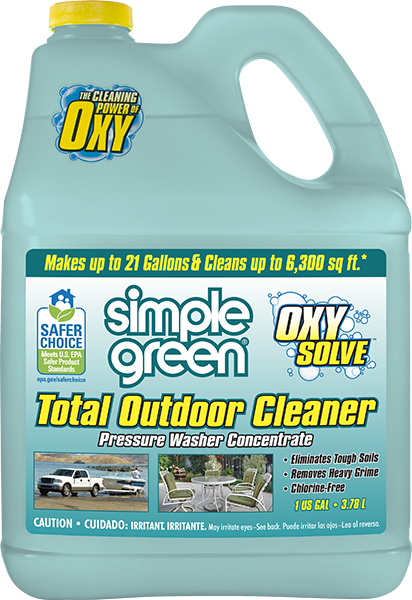
Simple Green Oxy Solve Total Outdoor Cleaner
Check price on Amazon
14,200+ reviews
Peroxide-based cleaner that tackles mold, mildew, and algae on wood and composite decks without bleaching the surface or harming plants.
Shop on Amazon →Best Wood Brightener to Restore the Grain
After cleaning, most wood decks look dull or blotchy. That happens because the cleaning process raises the pH of the wood surface. A wood brightener brings the pH back down and opens the grain so the sealer you apply next actually penetrates instead of sitting on top.
DEFY Wood Brightener is an oxalic acid-based formula that works in about 15 minutes. You apply it to a wet deck, scrub lightly, and rinse. The change is visible: weathered gray wood comes back to a warm honey tone, and blotchy spots even out.
This step is optional if your wood is relatively new, but on any deck that has been outside for more than two years it makes a real difference in how the final seal job looks and how long it lasts. It is a $22 bottle that protects a much more expensive sealer application.
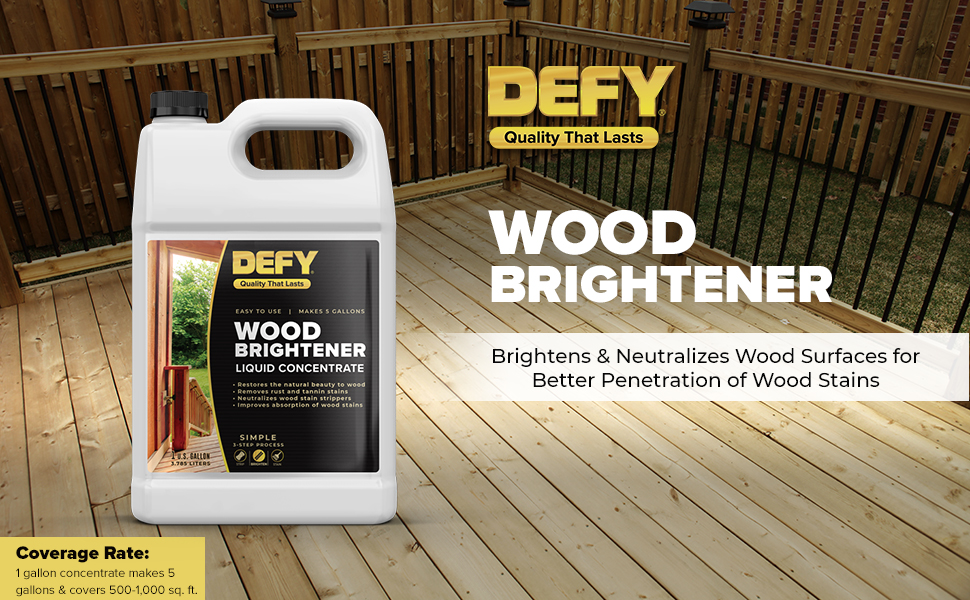
DEFY Wood Brightener
Check price on Amazon
3,100+ reviews
Oxalic acid formula that restores wood color and opens the grain for better sealer penetration after cleaning.
Shop on Amazon →Best Deck Sealer for Pressure-Treated Wood
Ready Seal 512 is the sealer to reach for on standard pressure-treated pine decks. It is a semi-transparent oil-based stain and sealer in one, which means you are not doing two separate applications. The natural cedar shade works on most pressure-treated lumber without looking orange or fake.
The formula is forgiving about application conditions. You can apply it to wet wood, which matters in spring when the weather does not always cooperate. It self-levels well, which reduces lap marks, and it soaks into the wood rather than forming a film on top that can peel later.
One gallon covers roughly 200 square feet of decking. For a standard 12x16 deck, two gallons handles the full job including railings. It dries to the touch in a few hours, but give it 24 to 48 hours before putting furniture back.
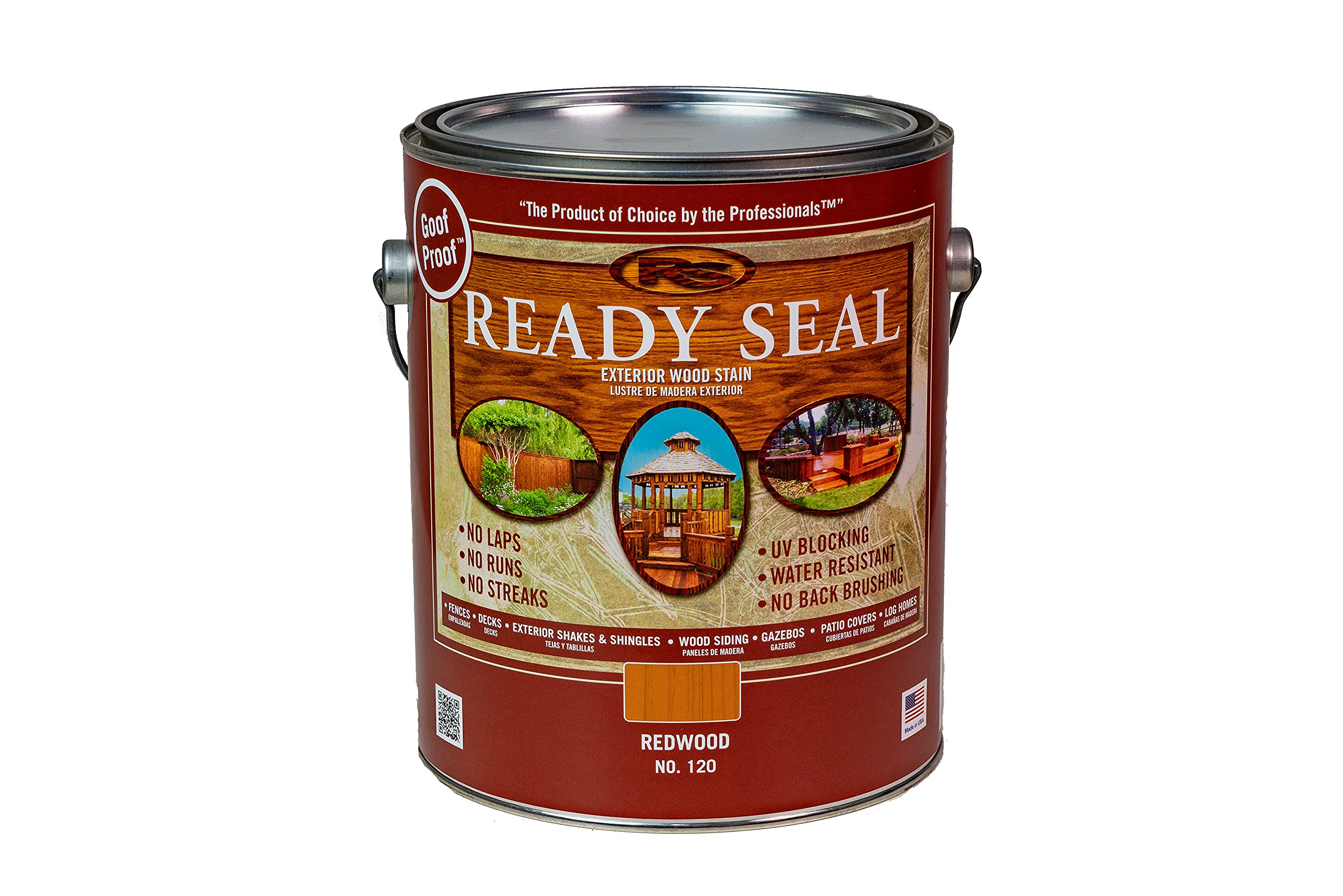
Ready Seal 512 Exterior Stain and Sealer for Wood
Check price on Amazon
6,800+ reviews
Oil-based stain and sealer in one that can be applied to wet wood, self-levels to reduce lap marks, and holds up 2 to 3 years on pressure-treated decks.
Shop on Amazon →Best Sealer for Cedar, Redwood, and Older Decks
If you have a cedar, redwood, or older weathered deck, Flood CWF-UV5 is a better match than a tinted stain. It is a clear penetrating oil finish with UV blockers built in. The UV protection matters more than most people realize: it is not moisture alone that grays wood, it is the sun breaking down the lignin in the surface fibers.
This formula goes on thin and soaks in fast. On cedar or redwood it enhances the natural color without changing it. On a deck that has been allowed to gray out over a few seasons, it brings back warmth without making the wood look artificially stained.
Apply it with a brush or roller, wait a few minutes, then wipe off any excess that has not soaked in. Leaving too much on the surface causes tackiness. Very dry or porous wood typically needs two coats.
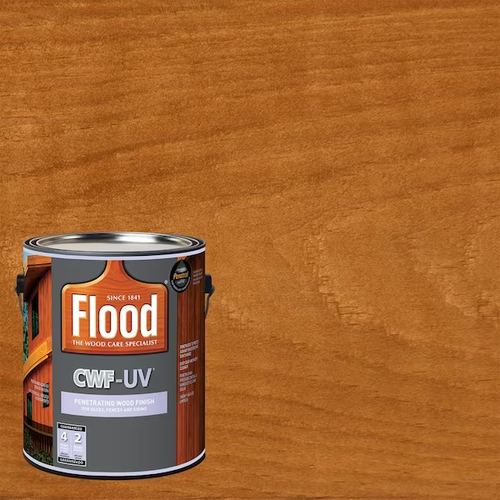
Flood CWF-UV5 Cedar Tone Wood Finish
Check price on Amazon
4,500+ reviews
Penetrating clear oil finish with UV protection that preserves natural wood color without forming a peel-prone surface film.
Shop on Amazon →Best Applicator for an Even Coat Without Lap Marks
A cheap foam roller leaves you with an uneven coat and a frustrating afternoon. The Shur-Line 6300C Deck and Fence Finish Applicator uses a thick lambswool-style pad that holds more product and distributes it evenly across wide boards without leaving roller texture.
The pad attaches to any standard threaded extension pole, so you can seal most of your deck without bending over or kneeling for hours. It is particularly useful on decks with wide boards, five inches or wider, where a narrow brush would require multiple overlapping strokes on every single board.
After you finish, clean it out with mineral spirits for oil-based sealers or water for water-based products. The pad holds up for multiple uses if you rinse it thoroughly right away.
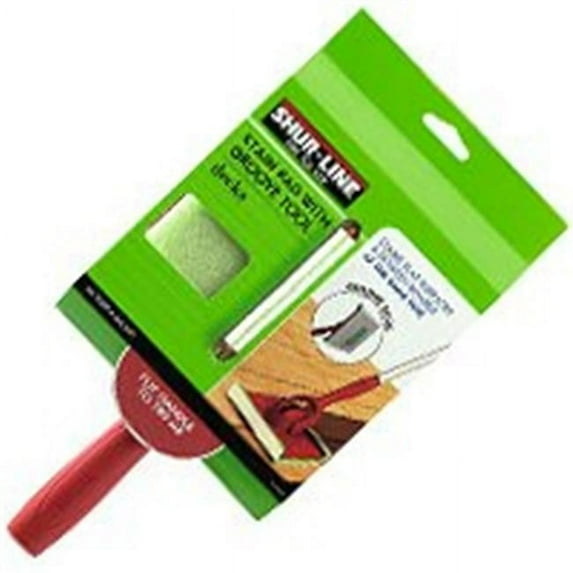
Shur-Line 6300C Deck and Fence Finish Applicator
Check price on Amazon
2,800+ reviews
Lambswool-style pad applicator that threads onto any extension pole and distributes deck stain evenly without lap marks.
Shop on Amazon →Quick Tips for Deck Cleaning and Sealing
- Wait at least 48 hours after rain. Wood needs to be dry before sealing or the product will not penetrate properly. Press a paper towel to the boards. If it comes up damp, wait another day.
- Sand after cleaning, before sealing. Cleaning and pressure washing raises wood fibers slightly. A light pass with 80-grit sandpaper brings them back down and helps the sealer go on smoothly.
- Seal the ends of boards first. End grain absorbs far more moisture than the face of the board, and that is where rot usually starts. Hit the cut ends at the perimeter with an extra brush coat before doing the main application.
- Avoid sealing in direct midday sun. Apply sealer in the morning or on a cloudy day. Direct sun causes the sealer to dry too fast, which leads to lap marks and uneven absorption.
- Composite decks still need annual cleaning. Most composite decks do not need sealing, but they do need cleaning. A mold and mildew cleaner applied each spring prevents the gray haze that makes composite look old before its time.
- Test the sealer on a hidden section first. Even if you have used a product before, test it on a small area under a chair or behind a planter to confirm the color reads correctly on your specific wood.
Frequently Asked Questions
How often should you seal a wood deck?
Most pressure-treated pine and cedar decks need resealing every 2 to 3 years depending on sun exposure and foot traffic. Do the water bead test: pour a small splash on the boards. If it soaks in instead of beading up, it is time to reseal.
Can you pressure wash a composite deck?
Yes, but keep the PSI under 1500 and use a fan tip rather than a pinpoint nozzle. High pressure on composite can etch the surface or force water under the boards. A garden hose with a cleaning solution usually does just as well.
Do you need to strip old sealer before applying a new coat?
If the old sealer is peeling or flaking, yes, you need to strip it first. If it is just worn thin and the wood is absorbing water, you can clean and apply fresh sealer without stripping. Oil-based sealers over old water-based ones do not bond well, so know what you currently have before you buy anything.
What is the difference between a deck stain and a deck sealer?
A sealer is clear or near-clear and protects primarily against moisture. A stain adds color and UV protection on top of the moisture barrier. Most products today combine both functions. A semi-transparent stain-sealer like Ready Seal gives you color, UV protection, and waterproofing in a single coat.