How to Keep Your Patio Cool All Summer
A hot patio doesn't have to mean an empty patio. With a few targeted upgrades, you can drop the ambient temperature on your outdoor space by 15 to 20 degrees and actually spend time out there during July and August.
The trick is layering your cooling strategy. Shade handles radiant heat from the sun. Airflow takes care of stagnant, humid air. Misting tackles the sharp edge of dry heat. Plants do a little of everything over time. No single fix works alone.
These five products cover each layer of that strategy. Some you install once and forget. Some you run only on the hottest days. Together they make a real difference on a 95-degree afternoon.
Best Shade Solution for Open Patios
A shade sail beats a traditional patio umbrella for one simple reason: coverage. A 16-foot triangle sail covers roughly 128 square feet of patio, which is enough to put your whole seating area in shade by noon. You can angle it at 30 to 40 degrees off horizontal to maximize coverage and let hot air escape underneath, which prevents the trapped-greenhouse feeling you get with flat canopies.
The Coolaroo 16-ft Triangle Shade Sail uses a knitted HDPE fabric that blocks up to 90% of UV rays while still letting air move through. That breathability is what keeps the space under it actually cool rather than just shaded. It comes with brass corner rings and hardware to attach to posts, walls, or trees. On a 12x16 patio, one triangle does the job. On anything bigger, two overlapping triangles in complementary colors look intentional and give you better coverage across a 20x20 space.
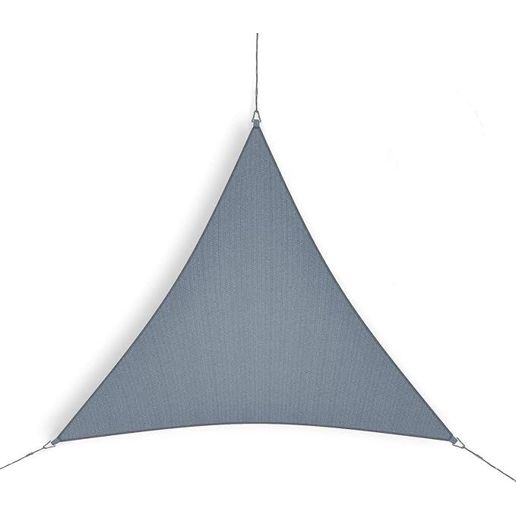
Coolaroo 16-ft Triangle Shade Sail
Check price on Amazon
28,400+ reviews
Breathable HDPE knit blocks 90% UV while still letting air circulate, making it genuinely cooler than solid-canopy alternatives.
Shop on Amazon →Best Misting System for Dry Heat
Misters work best when your humidity is below about 60%. If you're in Arizona, New Mexico, or inland California, a good misting system can make a 105-degree afternoon feel like 85. Even in the Southeast, running misters in the morning before the humidity peaks makes a noticeable difference. The key is fine nozzles that produce a fog, not a spray. Coarse mist just soaks your furniture and makes everything worse.
The Orbit 20-Nozzle Outdoor Misting Kit connects to a standard garden hose and attaches to pergola beams, fence rails, or umbrella poles with included clamps. The nozzles produce a very fine mist that evaporates before it hits the ground on a hot day, pulling heat out of the surrounding air. Setup takes about 20 minutes. It's not a permanent installation, so you can take it down in the fall without any damage to the structure. The whole kit comes in under $50 and is genuinely one of the highest-value cooling upgrades you can make to any outdoor space.
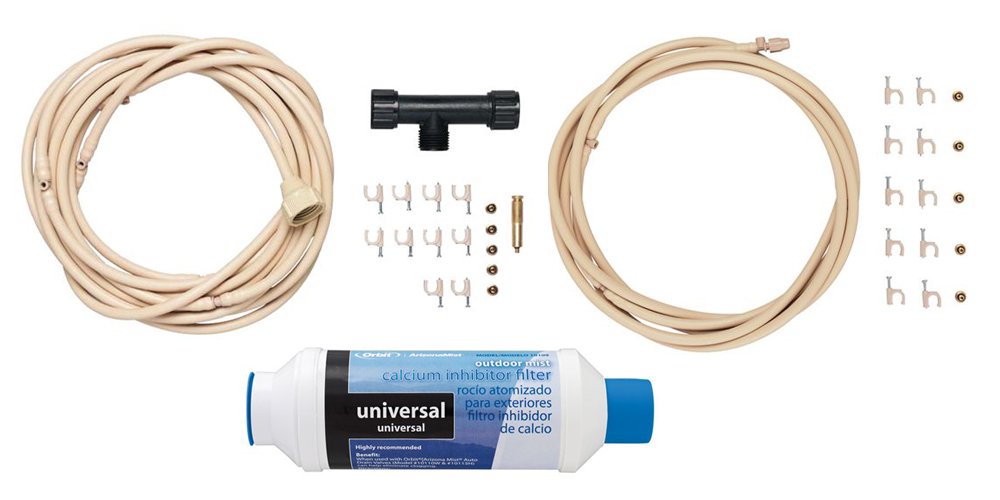
Orbit 20-Nozzle Outdoor Misting System
Check price on Amazon
9,100+ reviews
Twenty fine-mist nozzles attach to any structure in 20 minutes and can drop ambient patio temps by up to 20 degrees in low humidity.
Shop on Amazon →Best Ceiling Fan for Covered Patios
If you have a covered patio or pergola with electrical access, a wet-rated ceiling fan is probably the single best cooling investment you can make. It moves air constantly, which makes any temperature feel 5 to 8 degrees cooler by creating a wind chill effect. A good outdoor fan also helps keep mosquitoes away since they can't fly reliably in a breeze above 2 mph. The coverage sweet spot for most patios is a 52-inch blade span, which handles up to about 300 square feet effectively.
The Hunter Fan Company Dempsey 52-inch Ceiling Fan is UL-listed for wet locations, meaning it handles direct rain exposure, not just covered porch conditions. It runs on a DC motor, which makes it quieter and more energy-efficient than older AC-motor outdoor fans. Three forward speeds plus a reverse function for winter heat distribution. At around $220, it costs more than a box fan, but the installation is permanent and the performance at the highest speed is genuinely impressive on a 10x20 covered porch with 8-foot ceilings.
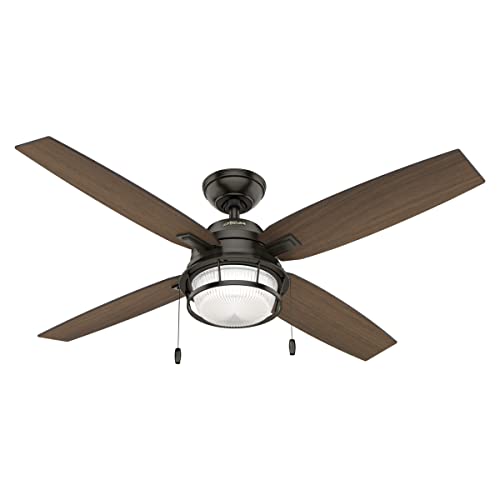
Hunter Fan Company Dempsey 52-Inch Outdoor Ceiling Fan
Check price on Amazon
5,800+ reviews
Wet-rated DC motor fan with a 52-inch blade span moves enough air to cool a 300 sq ft covered patio while staying quiet at all three speeds.
Shop on Amazon →Best Portable Cooler for Uncovered Spaces
Not every patio has a roof to mount a fan. For open-air spaces where a ceiling fan isn't an option, an evaporative cooler is the next best thing. These pull outside air through water-soaked pads and exhaust it 15 to 20 degrees cooler. They run on electricity, which means you need an outlet nearby, but they use a fraction of what a window AC unit draws. On a low-humidity afternoon on a 12x12 patio, a good evaporative cooler makes a real difference.
The Hessaire MC37M is a commercial-grade evaporative cooler that moves 3,100 CFM of air. That's enough to cool a space up to 950 square feet under the right conditions. It runs on a standard 110V outlet and has a built-in water connection for continuous operation, or you can fill the 10-gallon tank manually for a few hours of use. At 37 lbs it has wheels for repositioning as the sun moves. This is the unit restaurants and outdoor job sites use, not a lightly reviewed consumer product that fades after one summer.
Hessaire MC37M Mobile Evaporative Cooler
Check price on Amazon
4,600+ reviews
Commercial-grade 3,100 CFM output cools up to 950 sq ft on a standard 110V outlet, with optional continuous water hookup for all-day operation.
Shop on Amazon →Best Option for Strategic Shade Planting
Plants cool your patio through transpiration, the process where leaves release water vapor and pull heat from the surrounding air. A row of tall ornamental grasses or elephant ears along a south-facing fence can drop the temperature against that wall by 10 degrees or more. The problem is most patios don't have ground-level planting beds adjacent to them. A bamboo fence roll solves this as a double solution: it attaches to an existing fence or railing and acts as a trellis for fast-growing vines like passionflower or sweet potato vine.
Greenes Fence Natural Bamboo Fence Rolls come in 6-foot heights and 8 or 16-foot lengths, which fits most standard fence panel dimensions. Secure it to chain-link or wood fence posts with zip ties and plant climbing vines at the base. Within one growing season you have a green wall that blocks radiant heat from a sun-baked privacy fence, while the bamboo itself acts as a visual screen in early spring before the vines fill in. The bamboo is UV-treated and holds up through multiple seasons without much maintenance. For a west-facing fence that radiates heat well into the evening, this is the highest-impact change you can make for under $60.
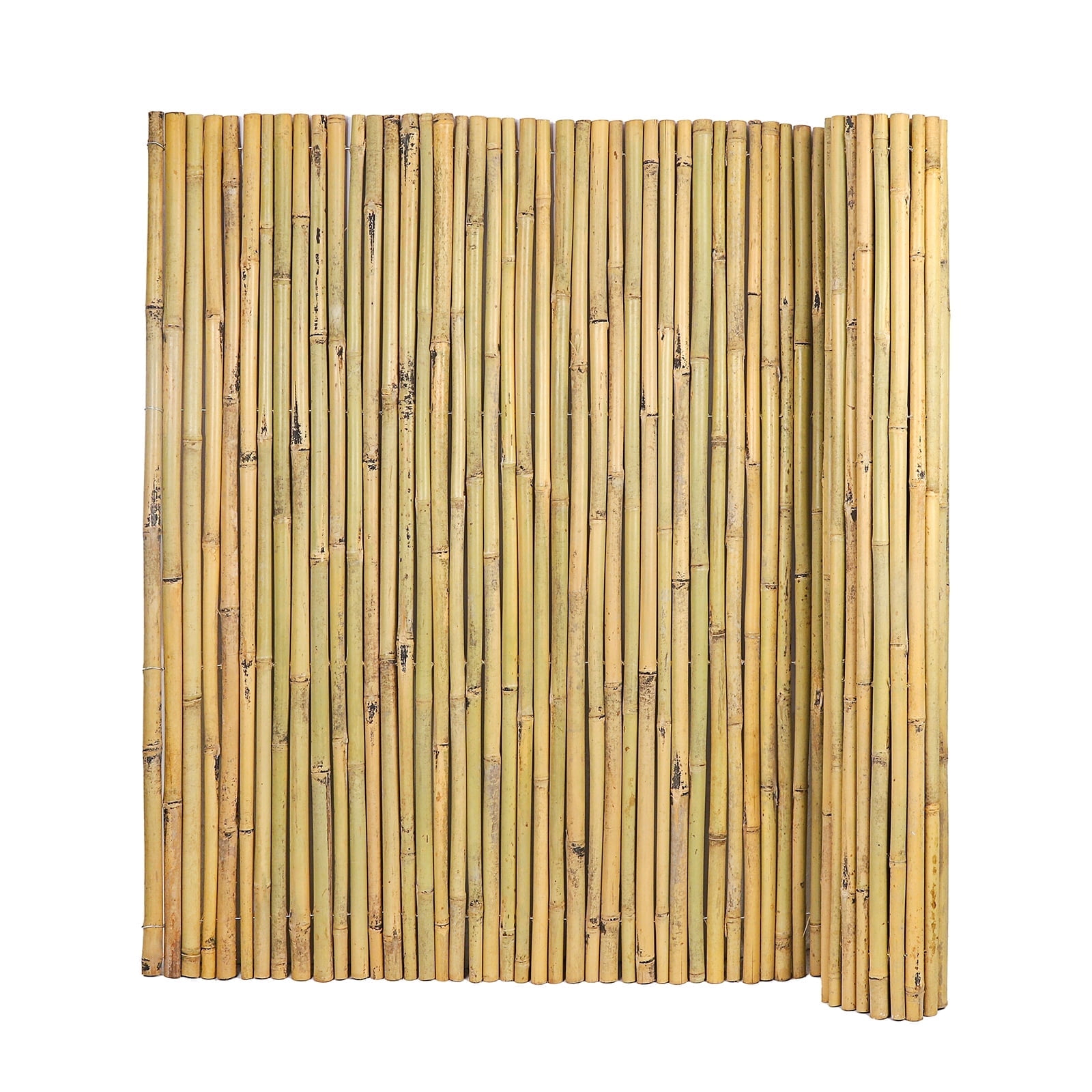
Greenes Fence Natural Bamboo Fence Roll 6ft x 16ft
Check price on Amazon
3,200+ reviews
UV-treated bamboo panel doubles as a trellis for cooling vines and blocks radiant heat from sun-baked fences and walls all season.
Shop on Amazon →Quick Tips for Cooling Your Patio
- Angle your shade sail, not just position it. A shade sail at 30 to 40 degrees off horizontal blocks afternoon sun while letting hot air rise and escape underneath. Flat canopies trap heat and often feel warmer below them on calm days.
- Run misters in the morning. Humidity climbs through the day in most climates. Morning misting when relative humidity is still below 50% gives you the biggest temperature drop per gallon of water used.
- Check your ceiling fan direction. Counterclockwise rotation in summer pushes air straight down and creates a wind chill effect. Most fans ship in the clockwise setting, which is for winter, so flip the switch on the motor housing.
- Block west-facing walls first. A west-facing fence or wall absorbs heat all afternoon and radiates it back at you in the evening. Bamboo screens or climbing vines on that wall cut evening heat more than any other single planting change.
- Choose light-colored pavers over dark concrete. Dark concrete pavers can hit 150 degrees in direct sun. Light-colored pavers stay 30 to 40 degrees cooler and re-radiate far less heat into your seating area and bare feet.
Frequently Asked Questions
How much can a shade sail actually lower patio temperature?
A quality shade sail with 90% UV block can lower surface temps beneath it by 15 to 20 degrees compared to direct sun exposure. The breathable weave matters. Solid canopies trap heat and often feel warmer underneath on calm days than an open-weave sail covering the same area.
Do outdoor misting systems work in humid climates?
Less effectively than in dry climates, but they still help. In high humidity above 70%, fine mist may not fully evaporate before it reaches surfaces, leaving things damp. Running the system in early morning or evening when humidity dips gives noticeably better results in the Southeast and Gulf Coast regions.
What is the difference between a damp-rated and wet-rated outdoor ceiling fan?
Damp-rated fans handle moisture from condensation and indirect rain exposure, which is fine for most covered patios. Wet-rated fans are built to handle direct rain. If your patio ceiling can get rain blown in from the sides in a storm, buy wet-rated from the start.
Can plants actually make a measurable difference in patio temperature?
Yes, measurably. A single mature shade tree provides more cooling than several window AC units through transpiration and shading combined. Container plants won't match that, but a dense vine-covered fence wall can reduce surface temps against that wall by 10 degrees or more on a hot afternoon.