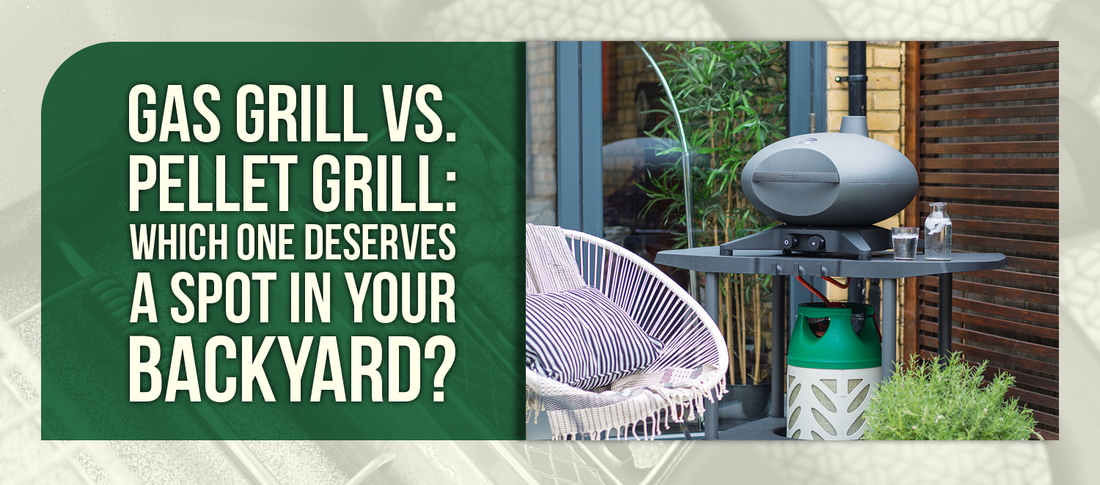
Gas Grill vs Pellet Grill: Which Should You Buy?
The most common question I hear from people setting up a backyard for the first time is whether to go gas or pellet. Both will cook great food. But they are built for completely different cooks, and buying the wrong one will frustrate you every time you fire it up.
Gas grills are about speed and control. You turn a knob, wait five minutes, and you are cooking. Pellet grills are about flavor and patience. They run on compressed wood pellets and produce real smoke, but they take 15 to 20 minutes to reach temperature and need a power outlet to run.
This guide covers the actual tradeoffs: startup cost, ongoing fuel costs, what kind of cook you need to be, and which specific models are worth the money in 2026. Two gas picks, two pellet picks, all of them real products you can find and buy today.
Best Gas Grill for Everyday Grilling
The Napoleon Rogue XT 425 fits a 10x12 deck without taking over the space, and it runs on standard propane or natural gas with a conversion kit. Three burners hit 18,000 BTUs each, which means you can sear a ribeye on one side while keeping chicken thighs on a lower flame on the other. That kind of zone cooking matters when you are feeding six people who all want something different.
What sets the Rogue XT apart from cheaper three-burner grills is the build quality. The cast iron grates hold heat evenly without creating cold spots, and the lid thermometer is actually accurate rather than decorative. If you want a grill you can hand off to someone who has never grilled before and have them cook a good meal, this is the one. Ignition works every time, cleanup is straightforward, and the side shelf is big enough to hold a full sheet pan.
At around $749, it is not the cheapest gas grill on the market, but it competes directly with Weber Spirit models that cost the same or more. Napoleon backs it with a lifetime warranty on the burners and a 15-year warranty on the cooking grates.
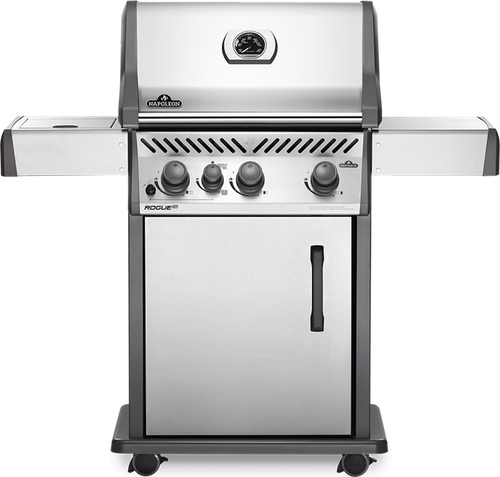
Napoleon Rogue XT 425 3-Burner Propane Gas Grill
Check price on Amazon
3,800+ reviews
A compact three-burner grill with cast iron grates, accurate lid thermometer, and genuine Napoleon build quality at a fair price.
Shop on Amazon →Best Gas Grill for Serious Backyard Cooks
The Weber Genesis E-325S is what you buy when you cook outside three or four times a week and want the grill to keep up with you. It has three main burners plus a dedicated sear station burner that runs at 9,000 BTUs right below the grates, hitting temperatures where you actually get a restaurant-quality crust on a steak. The side burner handles sauces and corn without you running back inside.
The iGrill 3 thermometer built into the Genesis E-325S connects to your phone via Bluetooth, which sounds gimmicky until you realize you can monitor your pork tenderloin from inside without babysitting it. The cooking area is 529 square inches, enough to do burgers for 10 people at once or lay out two full racks of ribs flat. It sits on a 26-inch-wide footprint, which works on most standard decks.
This grill runs around $949 in 2026. That is real money, but the Genesis line has a reputation for lasting 10 to 15 years with basic maintenance. If you are buying a gas grill once and not replacing it in five years, the Genesis E-325S is the move.
Weber Genesis E-325S 3-Burner Gas Grill
Check price on Amazon
6,200+ reviews
A three-burner gas grill with a dedicated sear station, Bluetooth thermometer integration, and the long-term reliability Weber is known for.
Shop on Amazon →Best Pellet Grill for Getting Started with Smoke
If you want real wood smoke flavor without managing a fire, the Traeger Pro 575 is the easiest entry point. You load the hopper with wood pellets, set the temperature on the digital controller, and it holds that temp within plus or minus 15 degrees for hours. Brisket, pulled pork, smoked chicken wings for a party of 12, all of it is genuinely hands-off compared to a charcoal or offset smoker.
The 575 square inches of cooking space handles a 15-pound brisket flat with room to spare, or two pork butts side by side. The Wi-Fi connectivity through the Traeger app actually works, and you can adjust temps remotely when you are watching a game inside. Pellet consumption runs around one to three pounds per hour depending on temp and ambient weather, which adds up but is manageable if you cook a few times a month.
The honest downside to any pellet grill is that it needs electricity. You cannot use it camping or during a power outage. It also does not sear the way a gas grill does because the flame never touches the grates directly. Some people solve that by keeping a cast iron grate on their gas grill specifically for searing and using the pellet grill for long cooks. The Traeger Pro 575 runs around $699.
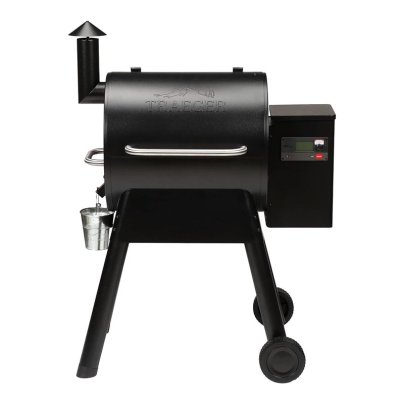
Traeger Pro 575 Wi-Fi Pellet Grill and Smoker
Check price on Amazon
12,400+ reviews
The most beginner-friendly pellet grill on the market, with Wi-Fi temperature control and consistent smoke output for long cooks.
Shop on Amazon →Best Budget Pellet Grill for Flavor Without Overspending
Z Grills has been manufacturing pellet grills for Traeger for years before launching their own brand, and the ZPG-700D shows it. You get 694 square inches of cooking space, a PID temperature controller that holds temps accurately, and a design that is nearly identical to grills that cost twice as much. The main differences between Z Grills and premium brands are the app integration (limited) and the warranty (three years versus Traeger's five).
For smoking ribs on a Sunday or doing a whole smoked turkey at Thanksgiving, the ZPG-700D performs as well as any pellet grill in this price range. The hopper holds 20 pounds of pellets, enough for a 10 to 12 hour brisket without a refill. The slide and grill feature lets you open a direct flame access port for higher heat cooking, which addresses the searing gap that most pellet grills have.
At around $449, the ZPG-700D is the answer for someone who wants the pellet grill experience without committing $700 or more. It sits on a 48x22 inch footprint, so it fits a 10x10 patio. If you end up loving pellet cooking, you can always upgrade later. If you cook on it for five years and never feel the need to upgrade, you saved a few hundred dollars.
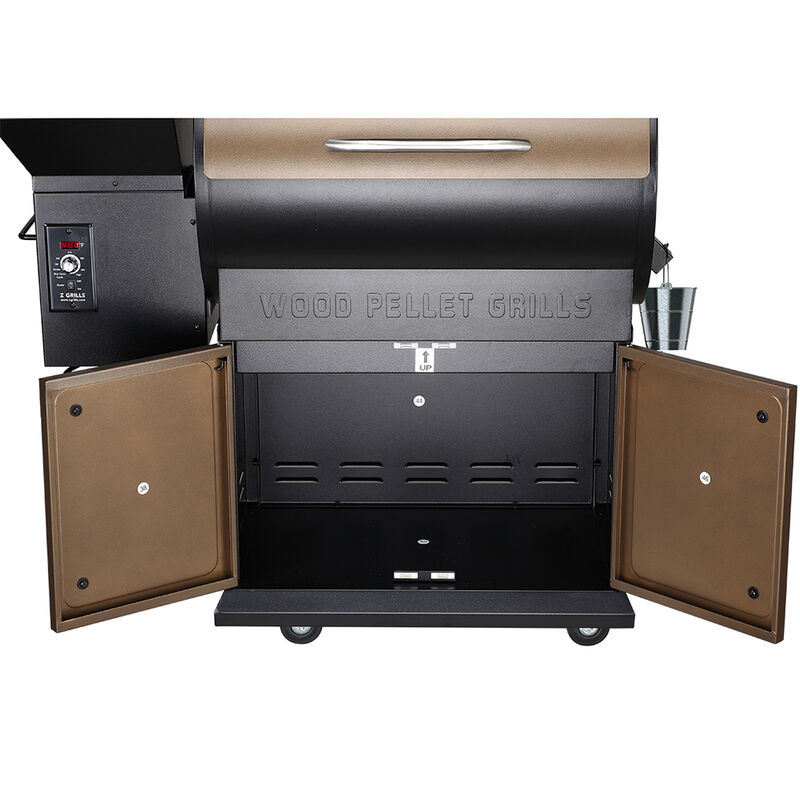
Z Grills ZPG-700D Wood Pellet Grill and Smoker
Check price on Amazon
8,700+ reviews
A high-value pellet grill with 694 square inches of cooking space, PID temperature control, and a direct-flame searing option built in.
Shop on Amazon →Quick Tips for Choosing Between Gas and Pellet
- Gas is faster, pellet is more flavorful. If you grill on weeknights after work, gas wins on convenience. If you mostly cook on weekends and want that smoke flavor, pellet is worth the longer startup time.
- Pellet grills need electricity. Make sure your outdoor outlet is close enough before buying. Running an extension cord is fine but plan for it, and use a heavy-gauge outdoor-rated cord.
- Factor in fuel costs over time. A 20-pound propane tank runs $20 to $25 and lasts most people 10 to 15 cooks. A 40-pound bag of premium wood pellets runs $22 to $30 and burns similarly, so costs are roughly comparable.
- Neither grill is a full smoker replacement. Pellet grills produce real smoke flavor, but it is lighter than an offset smoker. If you want competition-level bark on a brisket, a pellet grill gets you close but not identical.
- Searing matters more than you think. Gas grills sear better because of direct high heat. If steaks and burgers are your priority, lean toward gas. If ribs, pork shoulder, and chicken are your priority, lean toward pellet.
- You can own both without breaking the bank. A solid gas grill in the $300 to $400 range plus a budget pellet grill around $350 gives you both experiences for less than one premium grill. Plenty of serious backyard cooks do exactly this.
Frequently Asked Questions
Is a pellet grill worth it over a gas grill?
It depends on how you cook. Pellet grills produce genuine wood smoke flavor that gas cannot replicate. But they are slower to start, require electricity, and cost more upfront. If you love slow-cooked BBQ, a pellet grill is worth every dollar. If you mostly grill on weeknights, gas is more practical.
Can a pellet grill replace a gas grill?
For most purposes, yes, but you will miss the searing capability. Pellet grills max out around 450 to 500 degrees at grate level, which is not enough to get a true crust on a steak the way a 650-degree gas grill can. Many people keep a cast iron skillet or flat-top grate on their gas grill specifically for that use.
How much does it cost to run a pellet grill per cook?
At around $1 per pound and burning 1 to 2 pounds per hour, a four-hour cook runs $4 to $8 in pellets. A longer 10-hour brisket cook might run $15 to $20 in fuel. That is comparable to propane costs for equivalent cook times.
Do pellet grills work in cold weather?
They work but burn significantly more pellets to maintain temperature in winter. Below 40 degrees, fuel consumption can double. A grill blanket or insulated cover helps, and most manufacturers sell them specifically for cold-weather cooking.
What is the best gas grill under $500?
The Napoleon Rogue XT 425 is the strongest option in that price tier for most buyers. It has genuine build quality, accurate temperature control, and cast iron grates that will outlast cheaper alternatives.