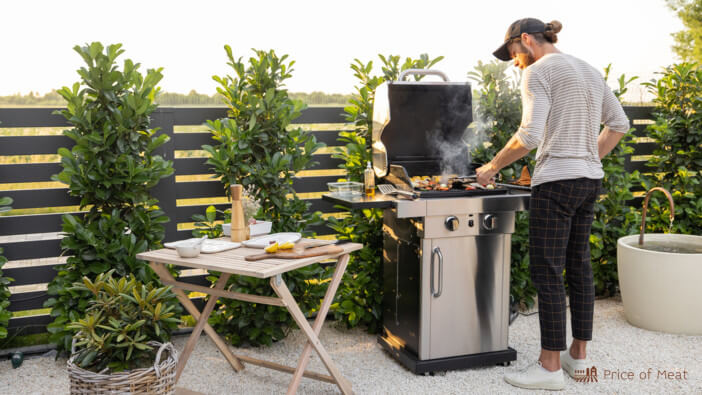
Gas vs Pellet Grill: Which One Is Right for You?
The honest answer is that both types of grill can make excellent food, but they do it completely differently. Gas grills give you heat on demand and precise control. Pellet grills give you smoke flavor you cannot get from a gas burner, no matter what you do.
If you are grilling burgers and chicken thighs on a Tuesday night after work, a gas grill wins every time. If you are waking up early on a Saturday to smoke a brisket for a 6 PM dinner, a pellet grill is genuinely the better tool. Most people land somewhere in the middle, which is exactly why this comparison exists.
We looked at five real grills across both categories, from a $379 starter pellet grill to an $800 gas grill with serious cooking surface. Here is what each one is actually good for.
Best Gas Grill for Consistent High Heat
The Weber Genesis E-325s is the grill you buy when you are done replacing cheaper grills every three years. It has three burners putting out 39,000 BTUs, a 637-square-inch cooking area, and a dedicated Sear Station between the left and center burners that creates a high-heat zone for steaks. On a standard 12x16 patio, it fits without crowding the space.
The build quality here is genuinely different from grills in the $400 range. The lid seals tightly, the grates retain heat evenly, and the burners ignite reliably every single time. Gas grills at this price point are not exciting, but the Genesis earns its reputation by being dependable for years rather than seasons.
This is the right call if you cook for 4-6 people regularly and want a grill that handles everything from weeknight vegetables to weekend steaks without any real learning curve. You turn the knobs, it heats up, you cook. That simplicity has more value than people give it credit for.
Weber Genesis E-325s 3-Burner Gas Grill
Check price on Amazon
8,400+ reviews
Weber's mid-tier flagship with a dedicated Sear Station and 637 sq in of cooking surface that outperforms most grills twice its size.
Shop on Amazon →Best Gas Grill for a Tighter Budget
Napoleon makes grills in Canada and the Rogue XT 425 is where their quality really starts to show at an accessible price. Three burners, 625 square inches of cooking surface, and heavy porcelain-coated cast iron grates that hold heat the way a professional grill does. It runs around $580 and regularly outperforms more expensive competitors in head-to-head tests.
The lid thermometer on this one is actually accurate, which sounds minor until you have used three grills with gauges that read 50 degrees off. Napoleon also includes a rear infrared burner for rotisserie cooking, a feature you typically find on grills $200 more expensive.
For a 10x12 deck where you want a quality gas grill that fits without dominating the space, the Rogue XT 425 is the strongest value in the category. It runs a little hotter than the Genesis on its top burners, which some people prefer for getting a proper char on thicker cuts.
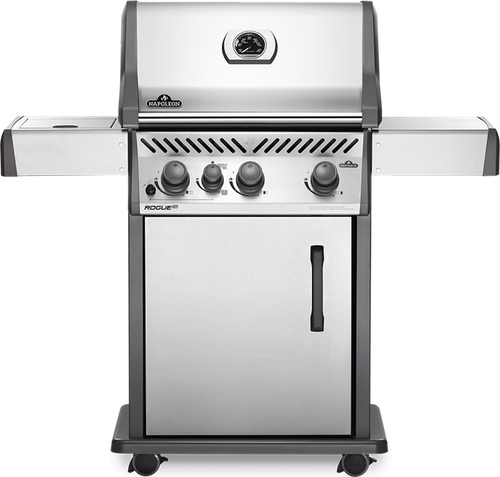
Napoleon Rogue XT 425 3-Burner Propane Gas Grill
Check price on Amazon
3,200+ reviews
A Canadian-built gas grill with accurate temperature gauges, cast iron grates, and a rear infrared burner at a price that is hard to argue with.
Shop on Amazon →Best Pellet Grill for Most Backyard Cooks
The Traeger Pro 575 is the pellet grill that converted most of the neighbors on my street. You load hardwood pellets, set a temperature anywhere from 165 to 500 degrees, and the grill manages everything from there. The WiFIRE system lets you monitor and adjust temperature from your phone, which matters when you are running a six-hour pork shoulder and want to stay inside during a sudden rain shower.
On 575 square inches you can fit two full racks of ribs or a 12-pound brisket flat. The smoke flavor at low temperatures is real and noticeably different from what you get with wood chips in a gas grill's smoke box. At 225 degrees over five hours, a pork butt comes out with a bark and smoke ring that would take years to replicate on a charcoal setup.
The learning curve is gentler than charcoal but the results ceiling is higher than gas. If you are going to own one grill and you like the idea of set-it-and-forget-it cooking, this is the one to get.
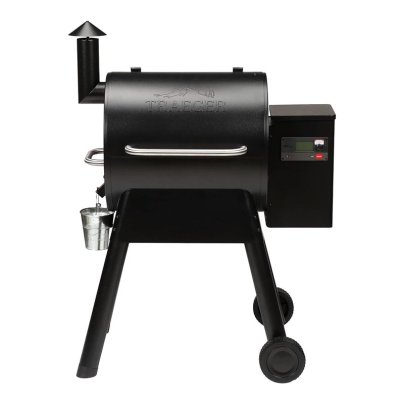
Traeger Pro 575 Wi-Fi Pellet Grill and Smoker
Check price on Amazon
12,500+ reviews
The most popular pellet grill for a reason: consistent temperature, real smoke flavor, and app control that makes low-and-slow genuinely approachable.
Shop on Amazon →Best Pellet Grill with Direct-Flame Searing
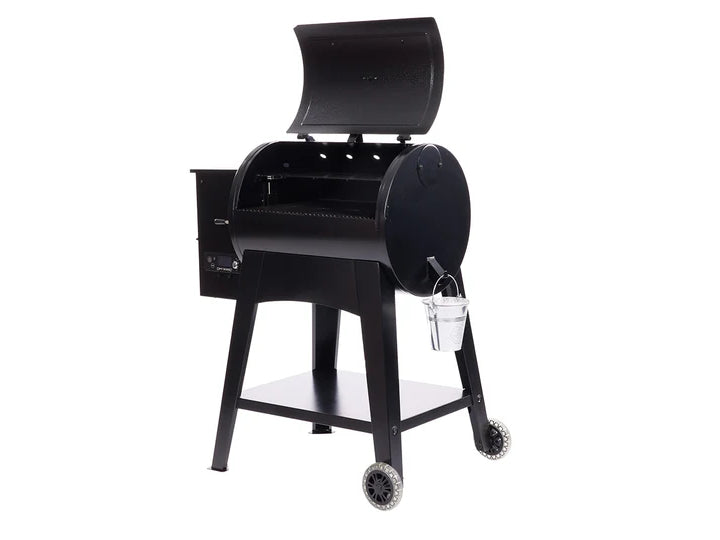
One honest weakness of pellet grills is searing. Most run hot enough to cook a steak, but the indirect heat from pellets does not produce the same crust as a direct gas flame. Pit Boss fixed this with the flame broiler lever, a sliding plate under the grates that opens a direct path to the fire pot. On the 700FB, you switch from smoking to direct-flame searing without moving the food.
The 700 square inches gives you real capacity for a party. A full spread of chicken wings, corn, and sausages for 8 people fits comfortably. The PID controller holds temperature within about 10 degrees of your target, which is tighter than some Traeger models at this price range.
At $447 this grill is a step down from the Traeger in terms of app features and brand support, but the cooking performance is comparable for everyday use. If the pellet grill sear limitation is a dealbreaker for you, the 700FB solves that problem directly.
Pit Boss 700FB Wood Pellet Grill
Check price on Amazon
6,800+ reviews
The flame broiler lever is a genuine differentiator. This is the pellet grill that actually sears steaks properly without needing a separate cast iron pan.
Shop on Amazon →Best Budget Pellet Grill for First-Timers
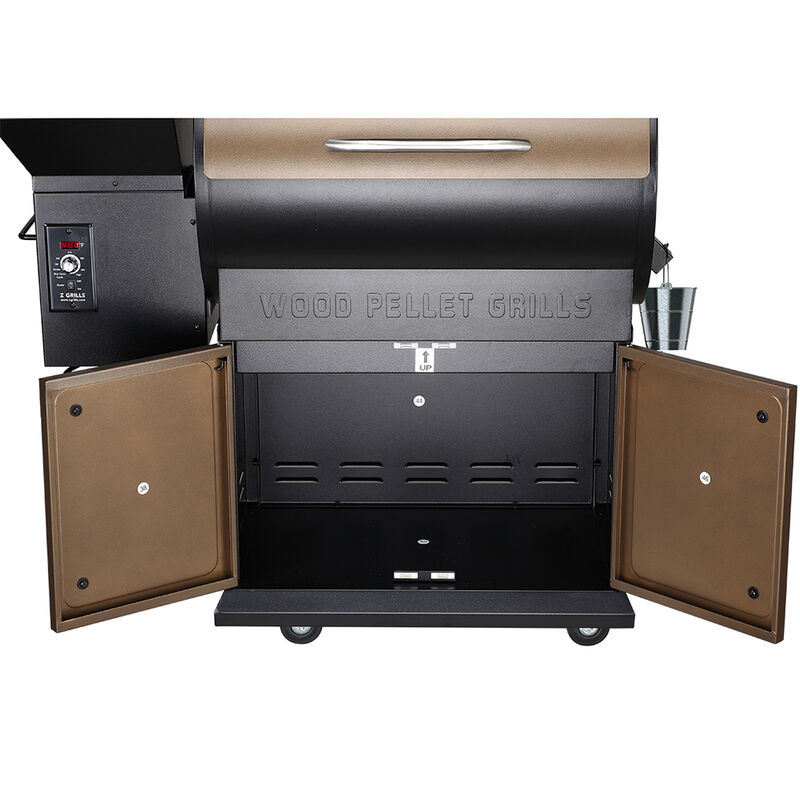
Z Grills makes pellet grills using many of the same internal components as more expensive brands and sells them at a lower price because they spend less on marketing. The ZPG-700D has a 694-square-inch cooking surface, a PID temperature controller, and a 20-pound hopper that can run for roughly 20 hours on a single load of pellets. It works on a 10x10 patio with room to spare.
The temperature range covers 180 to 450 degrees, which handles everything from cold smoking cheese to grilling chicken at high heat. The one area where it shows its price is the companion app, which is less polished than Traeger's. For someone who does not want to fuss with connectivity and just wants to set a temperature and walk away, that is actually fine.
If you want to try pellet grilling before committing to a $650 grill, this is the right starting point. The smoke flavor is real, the food comes out well, and the $379 entry point lets you figure out whether you actually use this style of cooking before spending more.
Z Grills ZPG-700D Wood Pellet Grill and Smoker
Check price on Amazon
4,100+ reviews
A no-frills pellet grill with 694 sq in of cooking space and a 20-pound hopper, delivering real smoke flavor at the lowest price we would recommend.
Shop on Amazon →Quick Tips for Choosing and Using Your Grill
- Pellet grills need electricity. They have an auger motor and a digital controller that require a power outlet. If your patio does not have one nearby, factor in a heavy-duty outdoor extension cord or outlet installation before you buy.
- Pellet fuel cost adds up over time. Plan on spending $15-25 per 20-pound bag of quality pellets. A long cook can burn through 10 pounds or more. Gas grills cost more per session on propane but the prices are generally more predictable.
- Gas grills need more frequent cleaning. The drip tray and burner covers collect grease faster than pellet grills, where the ash pot is the main maintenance item. Budget 15 minutes of cleanup after every three or four gas grill sessions.
- Searing on a pellet grill is possible but different. Most pellet grills top out at 450-500 degrees on their hottest setting. That is hot enough for a decent sear, but it takes longer than a gas grill running a direct flame at 600 degrees.
- Start with one pellet flavor and learn it. Hickory and apple are the most versatile starting points. Hickory works on beef and pork. Apple is milder and better for chicken and fish. Mixing blindly tends to produce muddled flavor.
- Cold weather affects pellet grills more than gas. Below 40 degrees, a pellet grill burns through fuel faster and struggles to hit high temperatures. A grill blanket designed for your specific model helps significantly in colder climates.
Frequently Asked Questions
Do pellet grills taste better than gas grills?
For slow-cooked meats like ribs, brisket, and pork shoulder, yes. The hardwood smoke at low temperatures produces a depth of flavor a gas grill cannot replicate. For quick cooks like burgers, chicken thighs, or vegetables, the difference is minimal and many people actually prefer gas grill results.
Can you use a pellet grill in cold weather?
Yes, but pellet grills work harder and burn more fuel when temperatures drop. Below 40 degrees, add 20-30 percent more cook time and keep the lid closed as much as possible. A thermal blanket designed for your grill model helps a lot.
How long does a propane tank last on a gas grill?
A standard 20-pound propane tank lasts about 18-20 hours of cooking on a mid-size gas grill. For most households grilling two or three times per week, that is roughly one tank per month during peak grilling season.
Is a pellet grill worth it if I already have a gas grill?
If you already cook on your gas grill regularly and are happy with the results, a pellet grill is a complement rather than a replacement. It truly shines for long smokes. For everyday weeknight cooking, the gas grill is faster and more convenient.
What is the main downside of a pellet grill?
You need a power outlet, you need to keep pellets stocked, and you cannot cook during a power outage. Pellet grills also take 10-15 minutes to reach temperature, compared to 5 minutes or less for most gas grills.