Wood vs Metal Pergola: Which Is Better?
The pergola you choose will define how your backyard looks and how much work you put into it over the next decade. Getting the material wrong means either a rot problem in five years or a structure that never quite fits the personality of your yard.
Wood pergolas feel warmer and more traditional. They take stain beautifully, age with character, and blend into garden spaces in a way that metal rarely matches.
Metal pergolas, typically aluminum or powder-coated steel, behave more like permanent infrastructure. They ask almost nothing from you once they're standing. If you live somewhere humid or rainy, that trade-off is worth thinking through before you order anything.
Best Wood Pergola for Classic Backyard Style
The Backyard Discovery Arbor Creek is a 10x12 cedar kit that two people can raise in a weekend with basic tools and no prior building experience. Cedar is the smart wood choice here because it resists rot and insects naturally, without the chemical load of pressure-treated pine. On a mid-size suburban patio, 10x12 covers a four-person dining set with space left for planters along the edges.
Cedar weathers to a silver-gray if you leave it alone, which looks intentional in a lot of garden settings. If you want to hold the warm tone, a semi-transparent deck stain applied every two to three years does the job. This is the pergola for someone who wants a structure that looks like it grew with the yard rather than arrived in a flatbed truck.
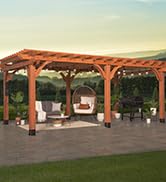
Backyard Discovery Arbor Creek 10 ft. x 12 ft. Cedar Pergola
Check price on Amazon
3,100+ reviews
A cedar kit pergola that installs in a weekend and holds up for years with minimal staining maintenance.
Shop on Amazon →Best Metal Pergola for Low Maintenance
The Purple Leaf 12x12 aluminum pergola has earned its following because it solves the one problem most pergola owners complain about: maintaining the shade surface. The retractable canopy slides open and closed by hand, which makes it practical across seasons and in climates where you get rain without warning.
Aluminum does not rust, warp, or need refinishing. This fits a 12x12 footprint, which comfortably covers a 6-person dining set or a deep-seat sectional for entertaining. Assembly is notably easier than wood because the pieces are lighter and come pre-drilled with tight tolerances. If you are buying a pergola primarily as a functional shade structure rather than a design statement, this one is hard to argue with.
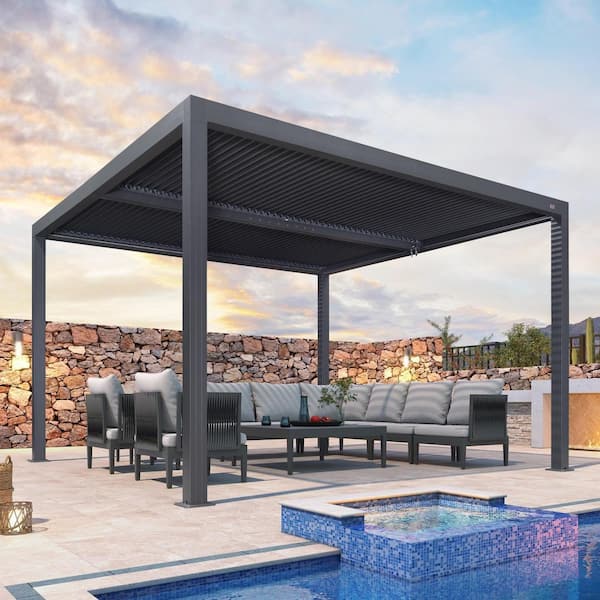
PURPLE LEAF 12 ft. x 12 ft. Outdoor Aluminum Pergola with Retractable Canopy
Check price on Amazon
6,400+ reviews
A retractable-canopy aluminum pergola that handles weather without any annual maintenance or refinishing.
Shop on Amazon →Best Wood Pergola for Larger Patios
The Yardistry 12x14 is built for people who have a bigger footprint and want a structure that looks like it was planned from the beginning, not added after the fact. The cedar posts and beams deliver the warmth and scale of a wood pergola, while the aluminum roof panels add real weather protection across the top surface where moisture does the most damage.
That aluminum roof is a clever trade-off. You get the aesthetic of a wood-frame build without worrying about the one part most likely to rot or warp over time. At 12x14, this covers a full outdoor dining setup for eight people with room for a serving cart along one side. Plan on a full weekend for assembly with two people and budget an extra $100 to $150 for concrete and post anchors not included in the kit.
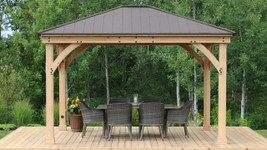
Yardistry 12 ft. x 14 ft. Cedar Wood Pergola with Aluminum Roof
Check price on Amazon
2,200+ reviews
A full-size cedar pergola with an aluminum roof that protects the top surface without giving up the warmth of a wood frame.
Shop on Amazon →Best Aluminum Pergola for Modern Homes
The Aoxun 10x13 louvered aluminum pergola is a different kind of structure than a canopy pergola. The adjustable roof louvers rotate to let in as much or as little sun as you want, which makes it genuinely useful on days when you want partial shade rather than full cover. The powder-coated aluminum frame handles moisture and temperature swings without any seasonal prep.
The modern profile fits well on contemporary home styles where a rustic cedar beam would look out of place. Black powder coat pairs cleanly with composite decking, polished concrete, and clean-line furniture. At 10x13, this works on a medium patio where you want a defined outdoor room without blocking the sightlines from inside the house.
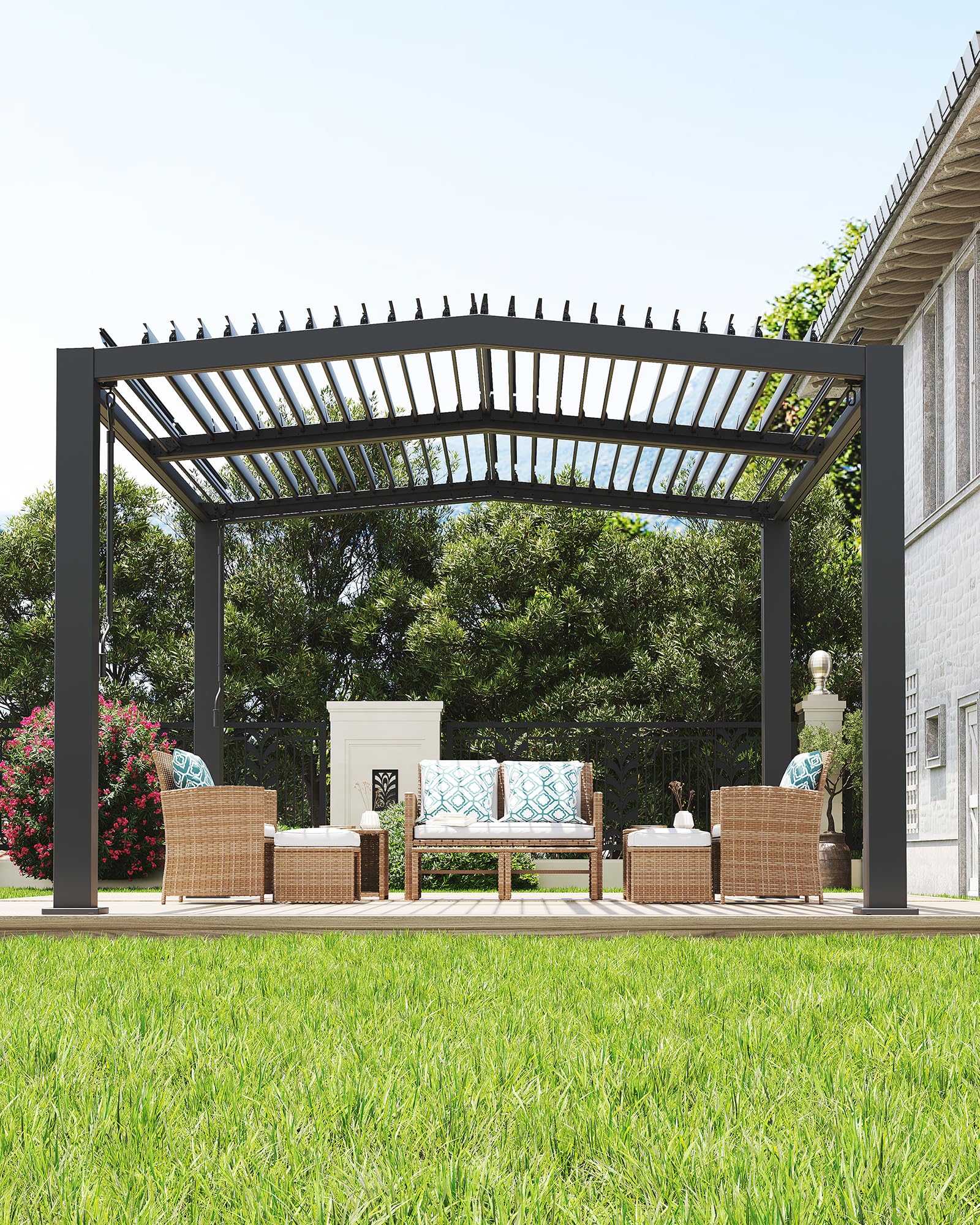
Aoxun 10 ft. x 13 ft. Aluminum Pergola with Adjustable Louvered Roof
Check price on Amazon
1,800+ reviews
An adjustable-louver aluminum pergola with a modern profile that requires zero seasonal maintenance.
Shop on Amazon →Quick Tips for Buying a Pergola Kit
- Cedar beats pine for wood pergolas. Cedar's natural oils resist rot and insects without pressure treatment chemicals. If a kit uses pine, make sure it's rated for ground contact and plan to seal it more frequently.
- Measure your patio before you order. A 10x12 kit covers four to six people comfortably. If you regularly host more than six, size up to at least 12x14 before you commit.
- Budget for hardware beyond the kit. Most wood kits do not include concrete, post anchors, or lag hardware. Add $100 to $150 to your budget to cover what you'll need from the hardware store.
- Stain wood pieces before assembly. Getting stain into the joints and fresh-cut ends is much easier before the structure is standing. Pre-coat everything on the ground, then touch up after assembly.
- Check metal bolts at the start of each season. Aluminum and steel expand and contract with temperature swings. A quick walk-around each spring to snug up any loose fasteners keeps the frame tight and quiet.
- Check permit requirements before you dig. Many municipalities require a permit for any structure over 200 square feet. Freestanding pergolas often fall into a gray area, but it varies by city. A five-minute call to your building department saves a much longer headache later.
Frequently Asked Questions
How long does a wood pergola last?
A cedar or redwood pergola can last 15 to 25 years with regular maintenance, including staining or sealing every two to three years. Pressure-treated pine lasts a similar amount of time but requires more attention to keeping the sealant intact, especially at cut ends and joints.
Are aluminum pergolas worth the money?
If you want low maintenance and live in a wet, humid, or coastal climate, aluminum is worth paying for. You give up some warmth in the aesthetic, but you never have to refinish it or worry about rot. Over a 10-year period the maintenance savings usually justify the price difference over wood.
Which is easier to assemble, a wood or metal pergola?
Metal pergola kits are generally easier to assemble because the pieces are lighter and come pre-drilled with tighter tolerances. Wood kits involve heavier beams and more variation in the material, which means more measuring and adjusting during the build.
Can a pergola be attached to my house?
Yes, but attached pergolas almost always require a permit and proper ledger board attachment to the house framing. Freestanding kits avoid that complexity entirely, and most residential pergola kits are designed to be freestanding for exactly that reason.
What size pergola do I need for a 10x10 patio?
A 10x10 or 10x12 kit fits a 10x10 patio, but you will have very little clearance around the posts. If budget allows, a 12x12 gives you more breathing room and looks more proportional on a patio of that size.