Solar vs Wired Outdoor Lighting: Which Is Right for You?
The real question isn't which one is better. It's which one is right for where you're putting the lights and what you need them to do. Solar has gotten genuinely good over the past few years, but it still has hard limits. Wired low-voltage systems cost more to set up, but they perform consistently in a way solar cannot.
Solar wins on convenience. No digging, no transformer, no running wire under the lawn. You stake them in, angle the panels toward the sun, and they work. The catch is that solar panels need 6-8 hours of direct sun to hold a full charge, and in winter or shaded yards, runtime drops off fast.
Wired low-voltage systems run off a transformer plugged into an outdoor outlet. Lights connect via wire that runs just below ground or under mulch. Once it's in, it works, rain or shine, in December or July. This post covers three strong picks in each category so you can decide which approach fits your yard.
Best Solar Light for Security Coverage
If you want motion-activated security lighting without running wire to a detached garage or back corner of the yard, the Aootek 182 LED Solar Outdoor Security Lights are the ones to get. They're bright enough to actually startle someone, not just glow politely. At full brightness, each head puts out around 2000 lumens, which covers a standard two-car driveway.
The motion sensor catches movement from about 26 feet out and holds the light on for 30 seconds by default. You can adjust sensitivity and duration with a screwdriver on the back panel. These won't replace a hardwired floodlight in a climate with four dark months, but for most of the country they handle security duty reliably from spring through fall.
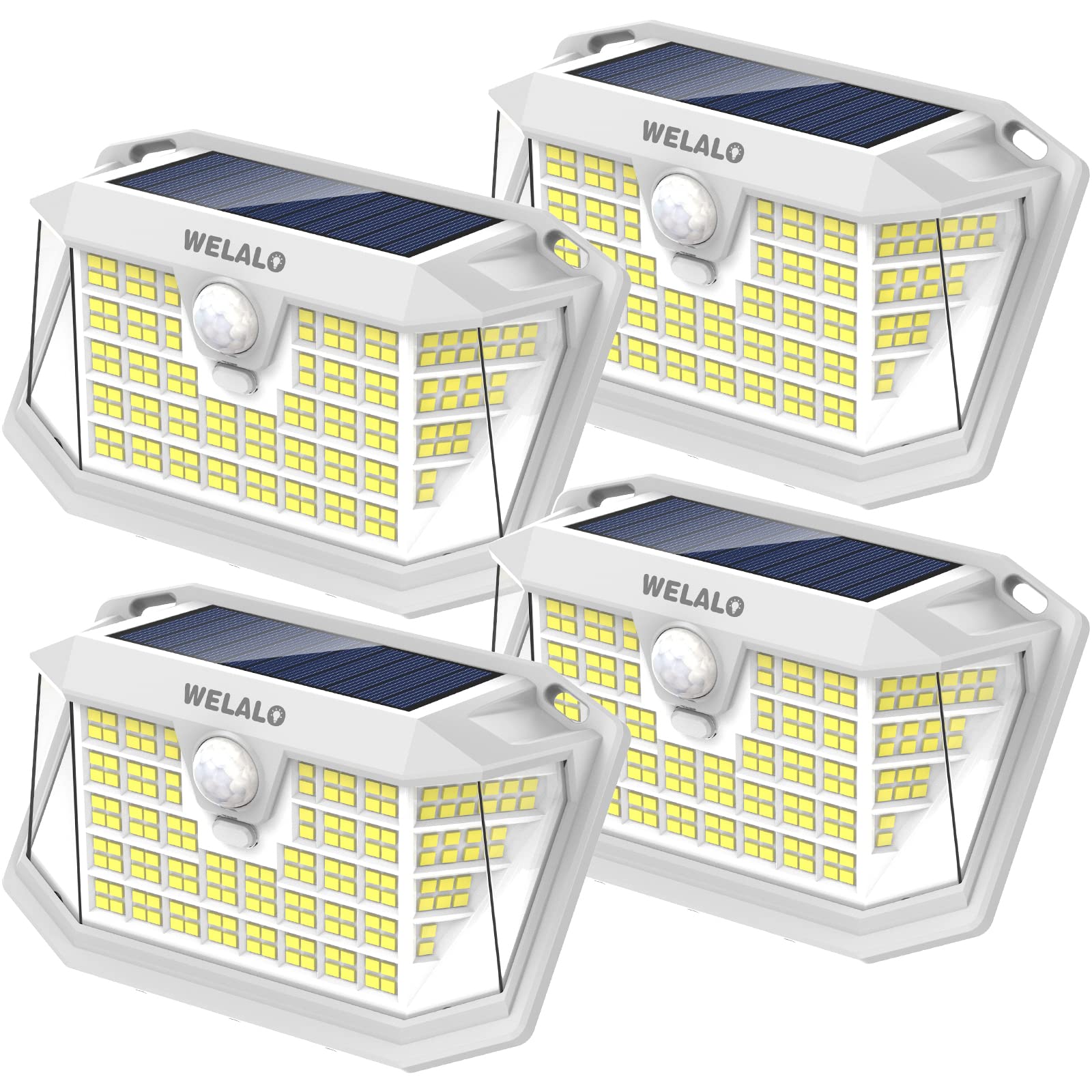
Aootek 182 LED Solar Outdoor Security Lights (2-Pack)
Check price on Amazon
48,000+ reviews
Genuinely bright motion-activated solar security lights that work on garages, sheds, and fence posts without any wiring.
Shop on Amazon →Best Solar Path Lights for Garden Borders
Solar pathway lights are where solar really earns its reputation. You don't need a lot of lumens for a garden border, the path gets regular sun exposure, and the aesthetic payoff is immediate. The Solpex Solar Pathway Lights come 10 to a pack, which is enough to line both sides of a 15-foot walkway or border a medium garden bed.
They go from box to installed in about 20 minutes. Twist the stake in, angle the top cap slightly south if you're in the northern hemisphere, and you're done. The stainless housing has held up through rain and frost without rusting, and the warm white LED runs 8-10 hours on a full day's charge.
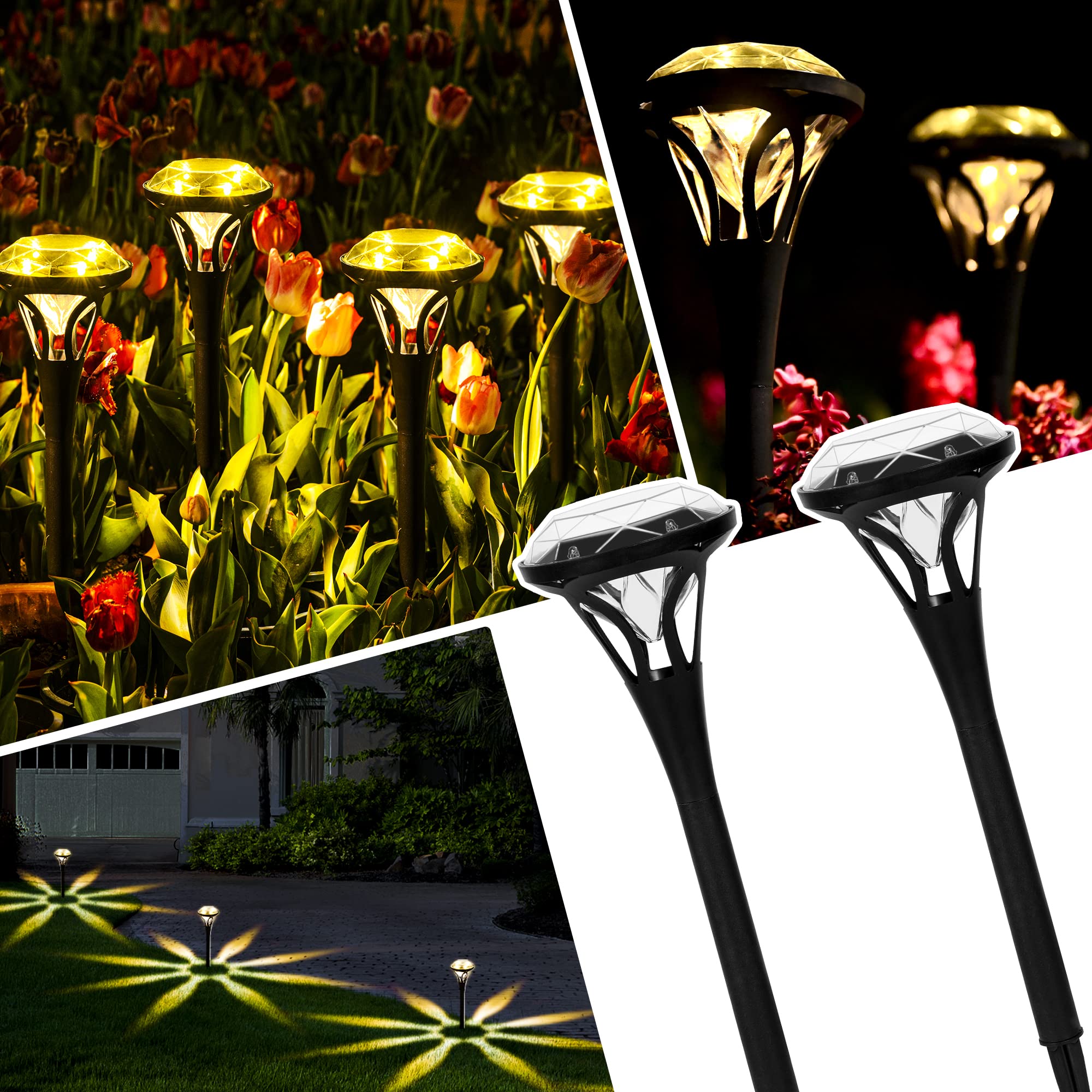
Solpex Solar Pathway Lights Outdoor (10-Pack)
Check price on Amazon
9,200+ reviews
Ten well-built path lights that install in minutes and throw warm, consistent light through a full night on a single day's charge.
Shop on Amazon →Best Solar Spotlights for Trees and Shrubs
Uplighting a tree or washing light across a garden wall is where solar spotlights make a real case for themselves. The LITOM 12 LED Solar Landscape Spotlights come two per pack, each with its own separate solar panel on a stake. That matters because you can position the light and panel independently, pointing the panel south toward the sky while angling the light toward your Japanese maple or front-yard shrubs.
Each head puts out around 300 lumens, which is enough to make a 10-12 foot ornamental tree look intentional after dark. The auto on/off sensor is reliable, and the IP67 waterproof rating means they've handled full Minnesota winters without dying. For $30 for two lights with detachable panels, the value is genuinely hard to argue with.
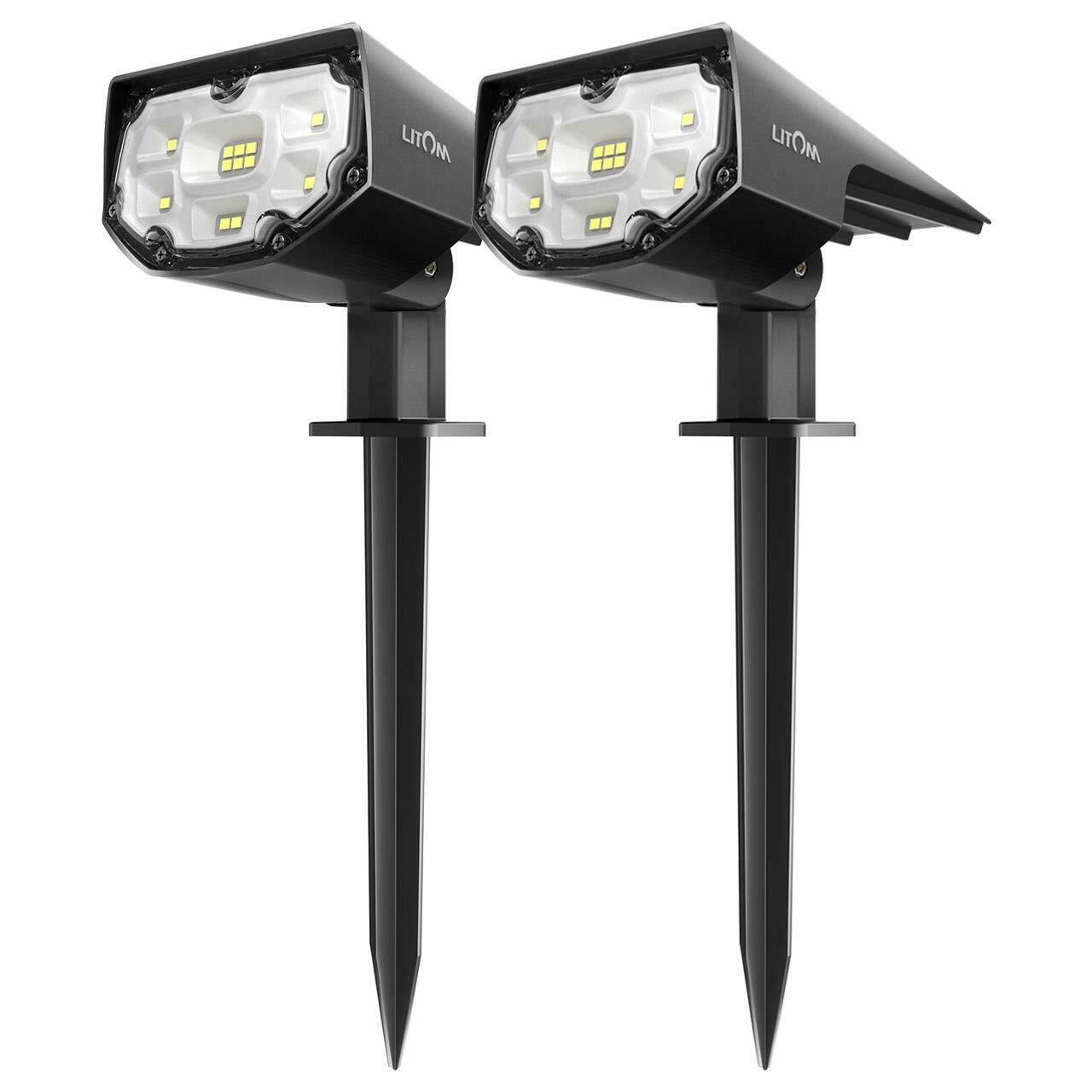
LITOM 12 LED Solar Landscape Spotlights (2-Pack)
Check price on Amazon
38,500+ reviews
Two solar spotlights with detachable panels, ideal for uplighting trees, garden walls, or any focal point where you want accent, not flood.
Shop on Amazon →Best Wired Kit for a Complete Yard System
If you want lighting across a full yard, a path, a garden bed, two trees, and a front walkway, piecing together solar gets expensive and inconsistent fast. The Malibu 8-Piece LED Low Voltage Landscape Lighting Kit gives you a transformer, 50 feet of 16-gauge wire, and eight path lights in one box. That's the right way to start a wired system for a typical suburban front yard.
Setup takes about two hours for most people. You lay the wire under mulch, connect each fixture with the built-in piercing connector, and plug the transformer into your outdoor outlet. The lights are warm white, low to the ground, and you can expand by adding fixtures to the run up to the transformer's watt limit.
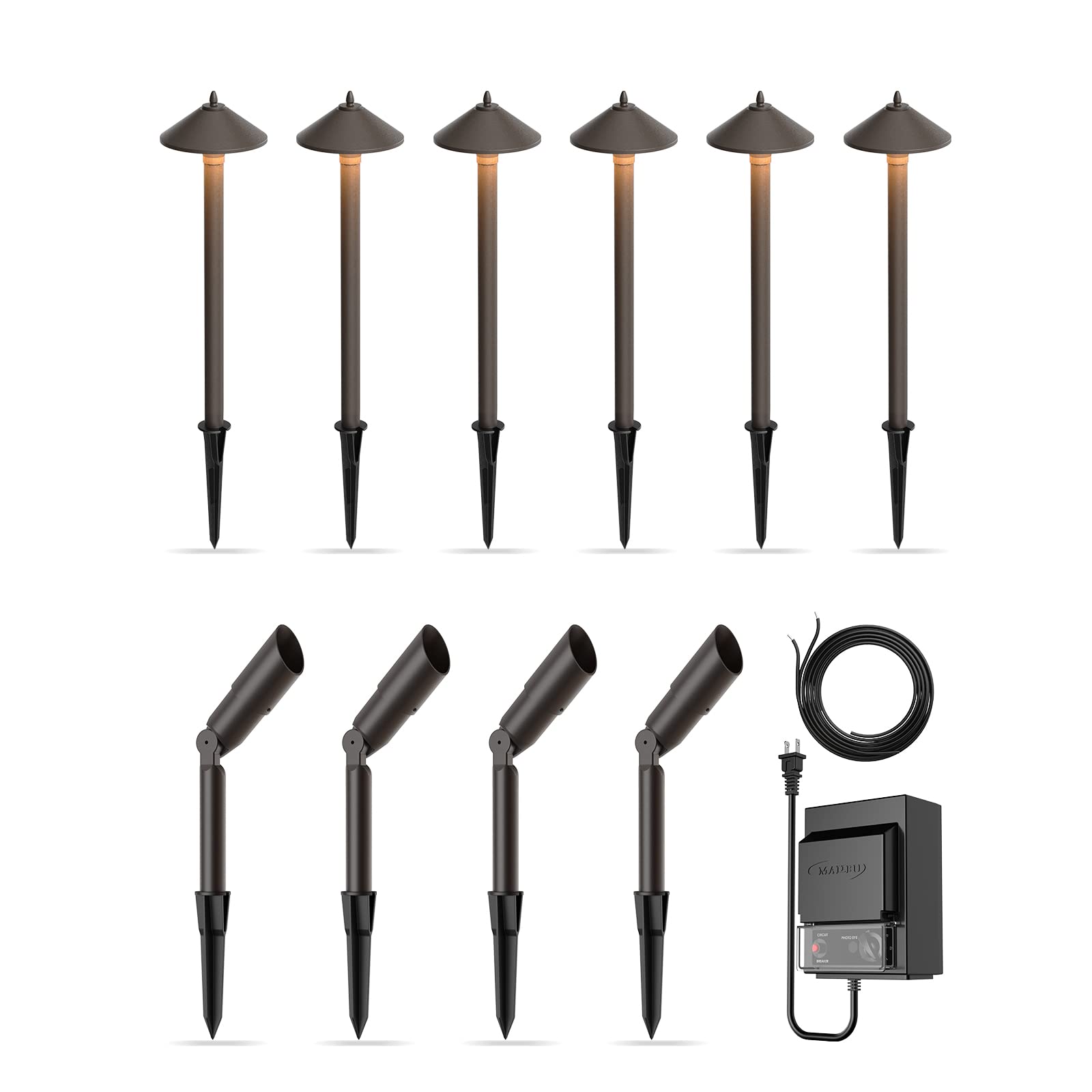
Malibu 8-Piece LED Low Voltage Landscape Lighting Kit
Check price on Amazon
14,300+ reviews
A complete wired starter kit with transformer, 50 feet of wire, and eight path lights, enough to cover a full front yard approach.
Shop on Amazon →Best Wired Lights for Deck Steps and Borders
Recessed step lighting is something solar really cannot do well. The panels need direct sky exposure, and deck steps are typically shaded by the deck above them. The DEWENWILS Low Voltage LED Deck Lights solve that cleanly. They're small recessed discs you mount directly into the riser face of each step, connected to a shared low-voltage wire that runs back to your transformer.
A 10-pack covers five steps with two lights per riser, or ten steps with one light each depending on stair width. The warm amber output keeps guests from missing a step without washing out the whole deck in light. These are aluminum, not plastic, which matters on stairs that take foot traffic and regular cleaning.
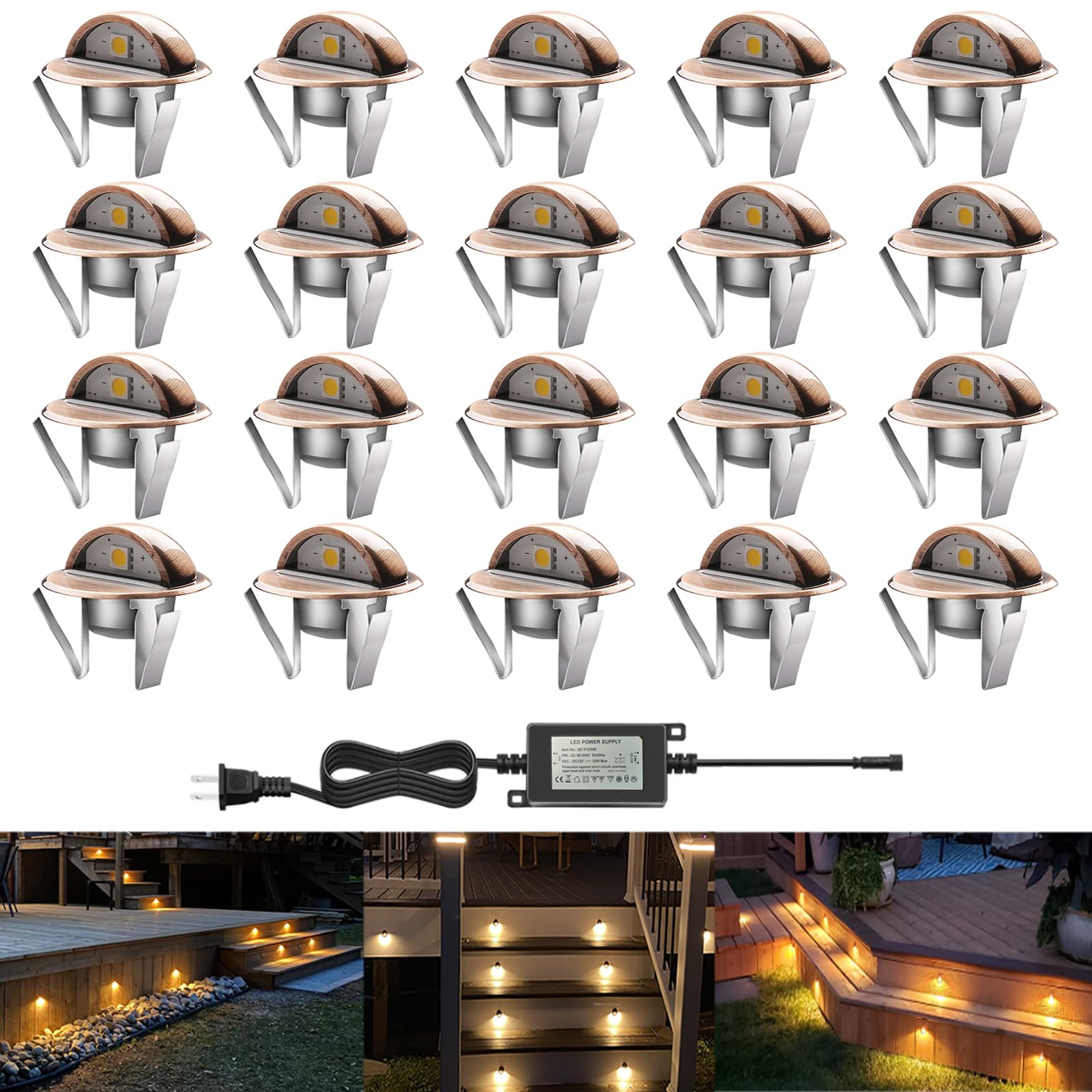
DEWENWILS Low Voltage LED Deck Lights (10-Pack)
Check price on Amazon
6,800+ reviews
Recessed aluminum step lights that mount into deck risers and connect to any low-voltage system for reliable, permanent step safety lighting.
Shop on Amazon →Best Wired Path Light for Long-Term Reliability
If you want path lights that still look good in 15 years, brass is the material to buy. VOLT Landscape Lighting sells individual brass path lights that develop a natural patina over time instead of fading, cracking, or corroding like painted aluminum. A single VOLT brass path light running at 3-5 watts costs less than a dollar a month to operate on a wired system.
These are for the yard where you want to get it right, not just get it done. They take a standard MR16 LED bulb, so you can swap brightness as your landscaping matures. For a 40-foot front path, eight lights spaced five feet apart gives you the clean, intentional look that solar path lights only approximate.
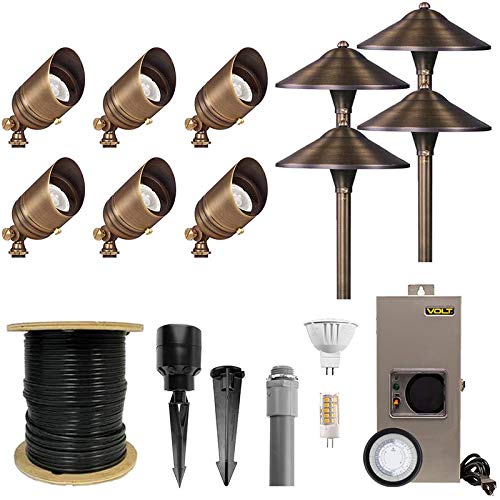
VOLT Landscape Lighting Brass Path Light
Check price on Amazon
3,400+ reviews
A solid brass low-voltage path light built to last decades, not seasons, with a natural patina finish and a replaceable MR16 LED socket.
Shop on Amazon →Quick Tips for Choosing Outdoor Lighting
- Count the sun hours first. Solar only makes sense if the install spot gets 6 or more hours of direct sun. A shaded north-facing corner will disappoint you with any solar product, regardless of price.
- Plan your wire run before you buy. For wired systems, measure the total distance from your outdoor outlet to your farthest fixture. Most starter kits include 50 feet of wire, which often isn't enough for a full yard.
- Mix the two systems where it makes sense. Use wired for your front walkway and driveway where consistent brightness matters. Solar works well for back corners or garden accents where running wire isn't worth the effort.
- Size your transformer with room to grow. If your current fixtures use 40 watts total, don't buy a 44-watt transformer. Buy a 150-watt one. Adding fixtures later is easy if you have headroom built in.
- Keep path light lumens modest. Path lights in the 30-100 lumen range look intentional and inviting. Anything brighter creates harsh hot spots instead of a smooth, even run of light along a walkway.
- Check IP ratings if you have irrigation running at night. IP65 handles rain without issue. IP67 can take a direct sprinkler hit. If your system runs overnight, IP67 is worth finding on any solar fixture in the spray zone.
Frequently Asked Questions
Are solar outdoor lights bright enough for security?
Some are. Look at lumens, not LED count. Motion-activated solar security lights in the 1500-2000 lumen range are bright enough to light a driveway and deter opportunistic activity. They won't match a hardwired floodlight, but they're adequate for most residential situations.
How hard is it to install low-voltage wired landscape lighting?
Easier than most people expect. Most kits use a piercing connector that clips onto the wire without stripping or soldering. The main effort is laying the wire along your path and staking fixtures. A front yard install usually takes two to three hours.
Do solar lights work in winter or cloudy climates?
They work, but with reduced performance. Shorter days and lower sun angles mean the battery doesn't fully charge, so runtime drops off. In the Pacific Northwest or northern states from November through February, wired is the more reliable choice.
What is the real cost difference between solar and wired lighting?
Solar has a lower upfront cost with no transformer or wiring needed. A 10-pack of solar path lights runs $30-40. A comparable wired system with transformer and eight fixtures starts closer to $70-100. Over time, wired costs almost nothing to operate beyond the transformer's minimal electricity draw.
Can you use solar and wired lighting in the same yard?
Yes, and it often makes the most sense. Use wired for high-priority areas like your front walkway where consistent light matters year-round. Solar handles lower-priority spots like garden accents or back corners where running wire would be disruptive.