
Propane vs Natural Gas Patio Heaters: Which Is Better?
The fuel type you choose for your patio heater matters more than the heater itself. Propane is portable and works anywhere. Natural gas costs less to run over time and never runs out mid-gathering. The right choice depends on your patio setup.
If you rent, move seasonally, or just want flexibility, propane wins every time. If you have a dedicated outdoor space with a gas line nearby, natural gas will pay for itself within a season or two of regular use.
This guide walks through four real heaters, two propane and two natural gas, so you can see exactly what each fuel type offers in practice. Every pick here is available on Amazon with thousands of reviews.
Best Propane Heater for Maximum Portability
The AZ Patio Heaters HLDS01-WGTHG is where most people start, and for good reason. It runs on a standard 20-pound propane tank, puts out 46,000 BTUs, and covers roughly a 15-foot diameter circle of warmth. You can move it from the deck to the driveway to a tailgate without any planning.
The hammered bronze finish holds up better than cheaper powder coats after a full season outdoors. The built-in auto shut-off tilts the heater off if it tips, which matters if you have kids or dogs around. At this price, it is the default recommendation for anyone who does not want to commit to a gas line.
The one real drawback with propane at this scale is the tank swap. You will burn through a 20-pound tank in about 10 hours at full blast. Keep a spare on hand if you entertain regularly, especially in late October when a cold front rolls in and everyone suddenly wants to stay outside.
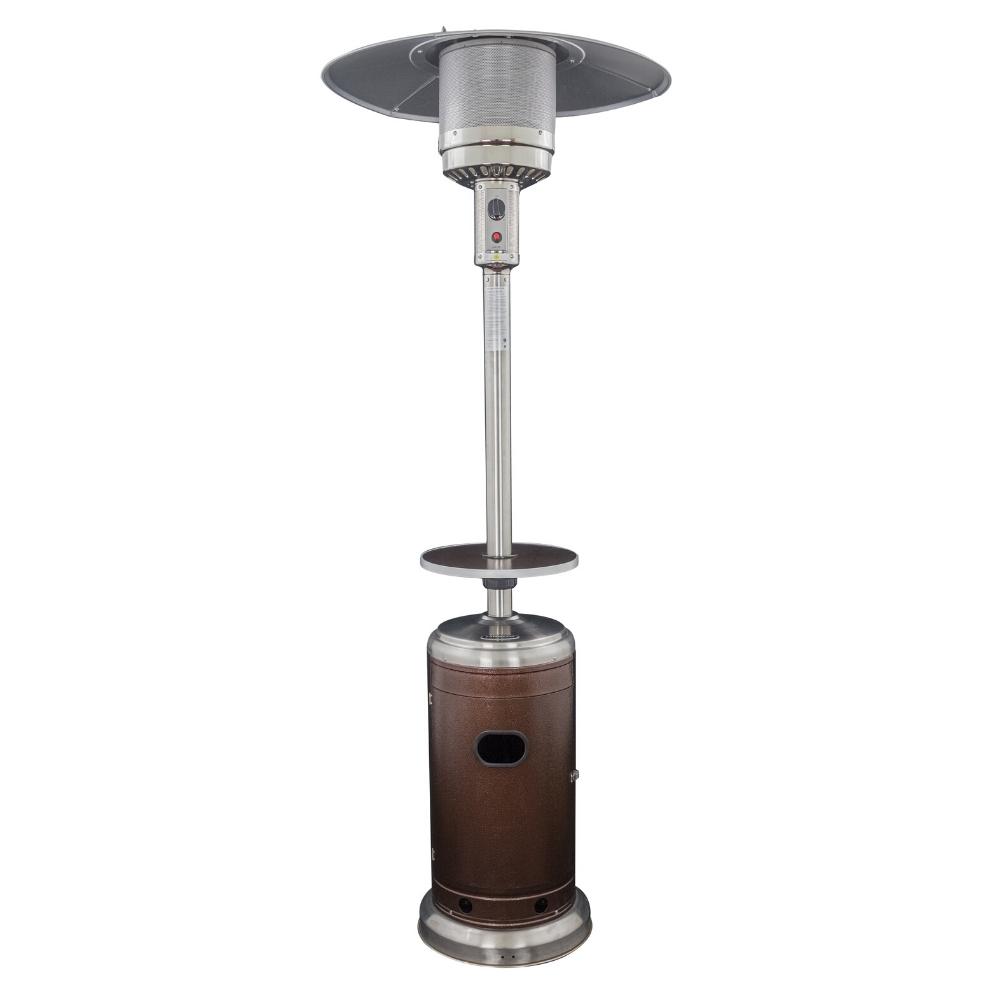
AZ Patio Heaters HLDS01-WGTHG Tall Propane Patio Heater
Check price on Amazon
9,400+ reviews
A no-fuss 46,000 BTU mushroom-style heater that runs on a standard propane tank and heats a 15-foot circle reliably.
Shop on Amazon →Best Propane Heater with a Visible Flame
If you want warmth and ambiance from the same unit, the Hiland 46,000 BTU Glass Tube Propane Patio Heater is the pick. The glass tube runs the full height of the unit and shows the flame, which adds a fire pit feel to a space where an actual fire pit would not fit. This works especially well on covered patios where a wood or gas fire pit is off the table.
The heat output matches any standard mushroom heater, but the visual element makes the whole thing feel more intentional. Guests notice it. It becomes part of the patio aesthetic rather than just a utilitarian appliance parked in the corner.
Like all freestanding propane units, you are still dealing with tank management. But for a covered 12x14 patio where you want the warmth and the look, this one is hard to argue with. It rolls easily on base wheels, so you can move it aside when the weather turns warm and reclaim the space.
Hiland 46,000 BTU Propane Patio Heater with Glass Tube
Check price on Amazon
3,800+ reviews
Same BTU output as standard propane heaters but with a full-length glass tube that shows the flame, adding real visual warmth to covered patios.
Shop on Amazon →Best Natural Gas Heater for a Dedicated Patio
The Endless Summer GAD1401G is the most practical entry point into natural gas patio heating. It connects directly to a natural gas line, never needs a tank, and runs as long as you want at 48,000 BTUs. If you have a gas hookup within 10 feet of your patio, installation is a straightforward job for a licensed plumber.
The cost difference adds up faster than most people expect. Propane runs roughly $3 to $4 per hour at full output. Natural gas for the same heat typically costs under $0.60 per hour. If you use your heater two evenings a week through a six-month shoulder season, natural gas saves you over $200 a year on fuel alone.
The GAD1401G has a stainless finish that handles rain well and stays clean without much effort. The auto ignition lights reliably, and the tip-over shut-off is the same safety standard you get on propane units. The one thing to plan for: you cannot move it. Once it is connected to the gas line, it lives in that spot.
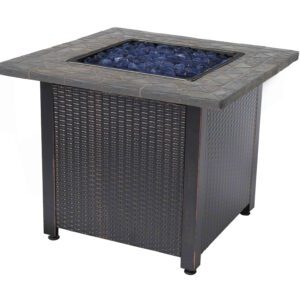
Endless Summer GAD1401G Natural Gas Freestanding Patio Heater
Check price on Amazon
4,600+ reviews
A 48,000 BTU natural gas heater that runs indefinitely without tanks, with a stainless finish built for permanent outdoor installation.
Shop on Amazon →Best Natural Gas Heater for Large Entertaining Spaces
The Fire Sense Stainless Steel Commercial Patio Heater in natural gas steps up with a commercial-grade frame built for larger residential setups and restaurant patios. It connects to a standard 3/8-inch gas line and outputs enough heat to hold a 20-foot circle comfortably. If you are heating a 20x20 deck where 10 to 12 people spread out, two of these positioned at opposite ends beats one undersized unit in the middle.
The commercial designation means thicker materials, a more stable base, and a heating element that holds up to nightly use over multiple seasons. The pole height is adjustable, which helps when you need to direct heat toward a seating cluster rather than straight down onto an empty table.
This is not a casual purchase. It costs more upfront and requires a gas line. But if you entertain regularly through fall and early winter, this heater treats your outdoor space like a real extension of the house. Pair it with good seating and a pergola to block wind and you extend your usable season by two solid months.
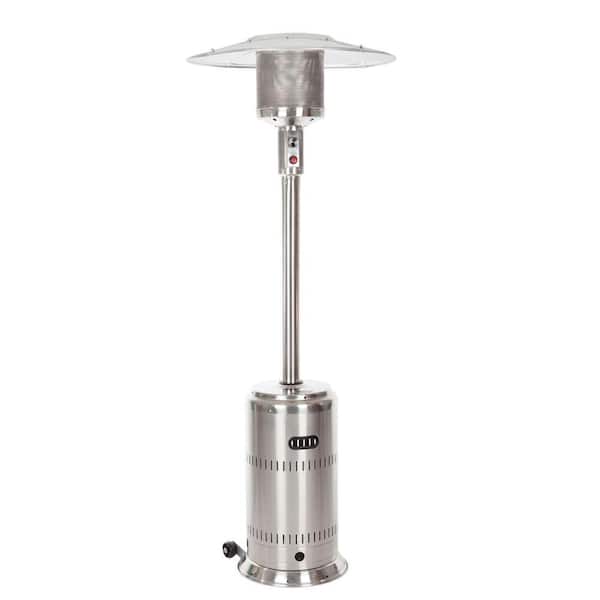
Fire Sense Commercial Patio Heater Natural Gas Stainless Steel
Check price on Amazon
2,300+ reviews
A commercial-grade natural gas heater with a heavy-duty stainless frame, designed for large patios and regular entertaining use.
Shop on Amazon →Quick Tips for Choosing a Patio Heater Fuel Type
- Match BTUs to your space, not to the biggest number. Most 40,000 to 48,000 BTU heaters cover a 15-foot diameter circle. A 10x12 patio needs one unit. A 20x20 deck realistically needs two, regardless of fuel type.
- Price out the gas line before buying a natural gas unit. A short outdoor gas line extension typically runs $200 to $500 installed. That changes the break-even calculation compared to just grabbing a propane heater and going.
- Keep a spare propane tank if you go portable. A 20-pound tank lasts about 10 hours at full output. A second filled tank in the garage means you never cut an evening short at 9pm because the flame sputtered out.
- Wind reduces effective range by 30 to 40 percent. A heater that works fine on a calm night loses significant coverage in a 10 mph breeze. A pergola, privacy screen, or fence on the windward side makes either fuel type perform much better.
- Check local codes before running an outdoor gas line. Many municipalities require a licensed plumber and a permit for any outdoor natural gas work, even a short run. This is not the place to improvise.
Frequently Asked Questions
Which is cheaper to run, propane or natural gas for a patio heater?
Natural gas is significantly cheaper. Propane costs roughly $3 to $4 per hour at full output for a 46,000 BTU heater. Natural gas for the same heat output typically runs $0.40 to $0.60 per hour. Regular use through a full outdoor season can add up to over $200 in savings on fuel alone.
Can you convert a propane patio heater to natural gas?
Most freestanding patio heaters are not designed to convert between fuel types. The orifice size and pressure regulator requirements are different for each fuel. Buy the right fuel type from the start rather than trying to modify an existing unit.
How many BTUs do I need for an outdoor patio heater?
For an average 10x12 to 12x16 covered or semi-enclosed patio, one 40,000 to 46,000 BTU unit handles most nights. Open or larger patios benefit more from two heaters positioned at opposite ends than from one oversized model in the center.
Do natural gas patio heaters need professional installation?
Yes, in most cases. Connecting to a natural gas line outdoors requires a licensed plumber or gas fitter and may need a permit depending on your municipality. The heater itself attaches simply, but the gas line connection is not a DIY project in most jurisdictions.