Concrete vs Granite Outdoor Kitchen Countertops
Picking the wrong countertop material for an outdoor kitchen is a mistake you will feel every time it rains, every time you spill olive oil, and every summer when the sun bakes it to 140 degrees. The four materials worth your time are concrete, granite, porcelain tile, and stainless steel. Each one has a clear best-use case.
Concrete is the most customizable and works well for permanent builds. Granite looks expensive and handles heat, but needs annual sealing outdoors. Porcelain tile is the most UV-stable of the group. Stainless steel is the lowest-maintenance choice if you are building around a grill station.
Cost ranges dramatically. A DIY concrete countertop can run under $100 in materials. A granite slab installed professionally costs $80 to $120 per square foot. Stainless steel prefab modules land somewhere in the middle. This guide covers what to expect from each material and exactly what to buy.
Best Concrete Mix for DIY Outdoor Kitchen Countertops
Poured concrete is the choice when you want a countertop that looks like it belongs to the space, not something you ordered and bolted on. You can tint it to match your paver patio, add aggregate for texture, or keep it smooth and seal it charcoal gray. For a 10x3 foot countertop, you are looking at roughly four to six 80-pound bags depending on thickness.
The thing that trips up first-timers is mix design. Standard concrete is too porous for countertops and will stain immediately. Quikrete makes a countertop-specific mix with additives for smoother surfaces and better water resistance. It is also fiber-reinforced, which matters outdoors where freeze-thaw cycles can crack a standard mix over a few winters.
Plan for a minimum 1.5-inch thickness if you are pouring over a plywood substrate. Edge forms are sold separately and let you add a bull-nose or flat profile without special tools. Budget about two weekends: one for the pour, one for finishing and sealing after it fully cures.
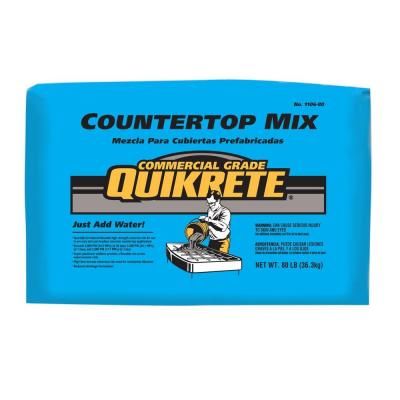
Quikrete 80 lb. Countertop Mix
Check price on Amazon
3,100+ reviews
A fiber-reinforced, polymer-modified mix built for countertop pours, with better surface density and water resistance than standard concrete.
Shop on Amazon →Best Sealer for Outdoor Granite Countertops
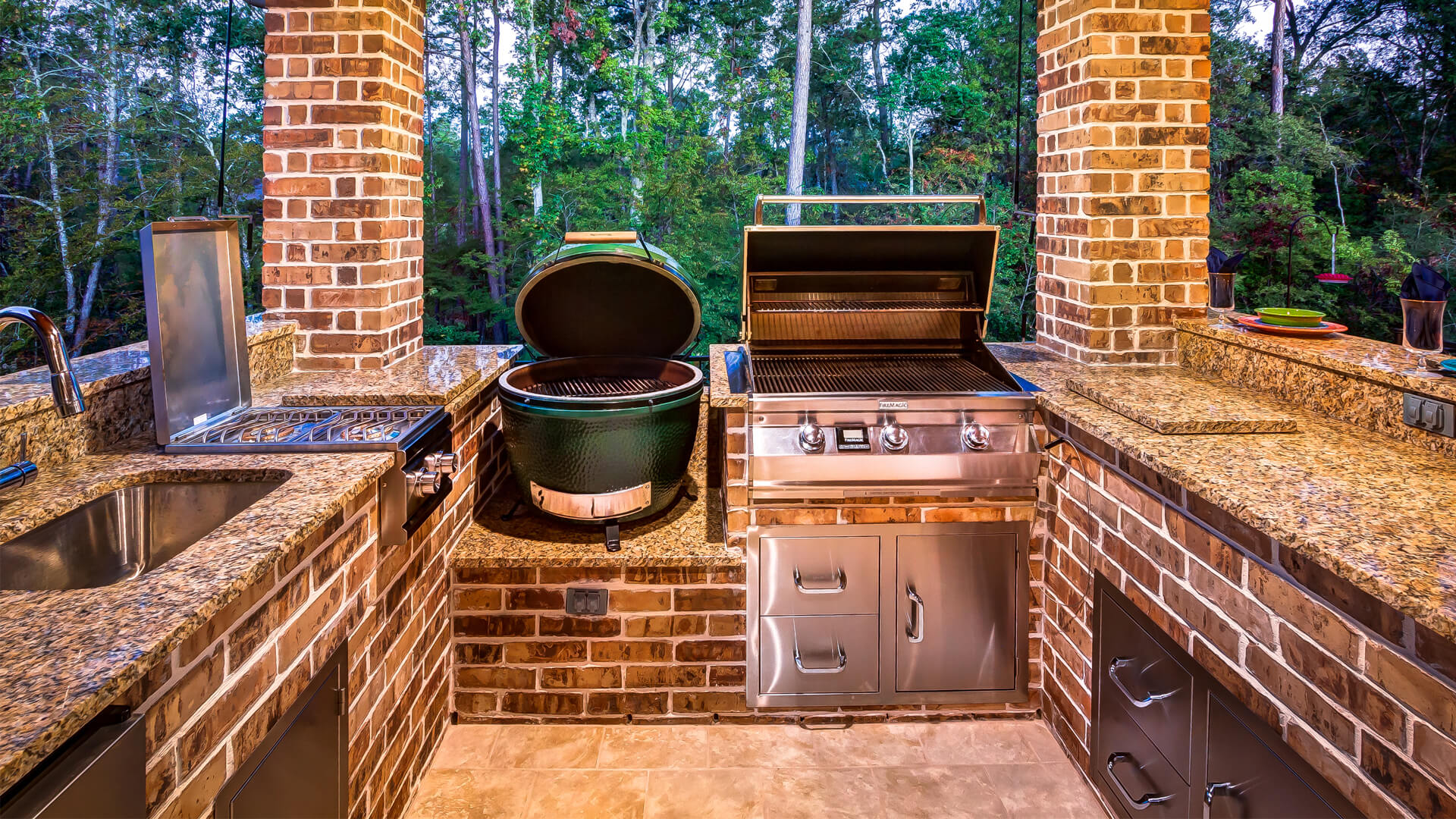
Granite is striking outdoors. It handles heat from a nearby grill, looks more expensive than almost anything else, and ages beautifully in a shaded space. The catch is that it is porous, and an outdoor granite countertop that is not sealed yearly will absorb cooking oil, wine, and rainwater until it stains and darkens unevenly.
Most hardware store sealers are topical, meaning they sit on the surface and peel over time when exposed to UV light and temperature swings. Penetrating sealers bond with the stone instead of coating it. Miracle Sealants 511 is the one professional fabricators use on outdoor installations. It goes on with a rag, soaks in, and you wipe off the excess after ten minutes.
For a standard outdoor kitchen countertop of about 20 square feet, one quart gives you two coats with some left over. Plan to reseal once a year in climates with hard winters, or every 18 months in milder zones. The test is simple: if a drop of water soaks in within five minutes instead of beading up, it is time to reseal.
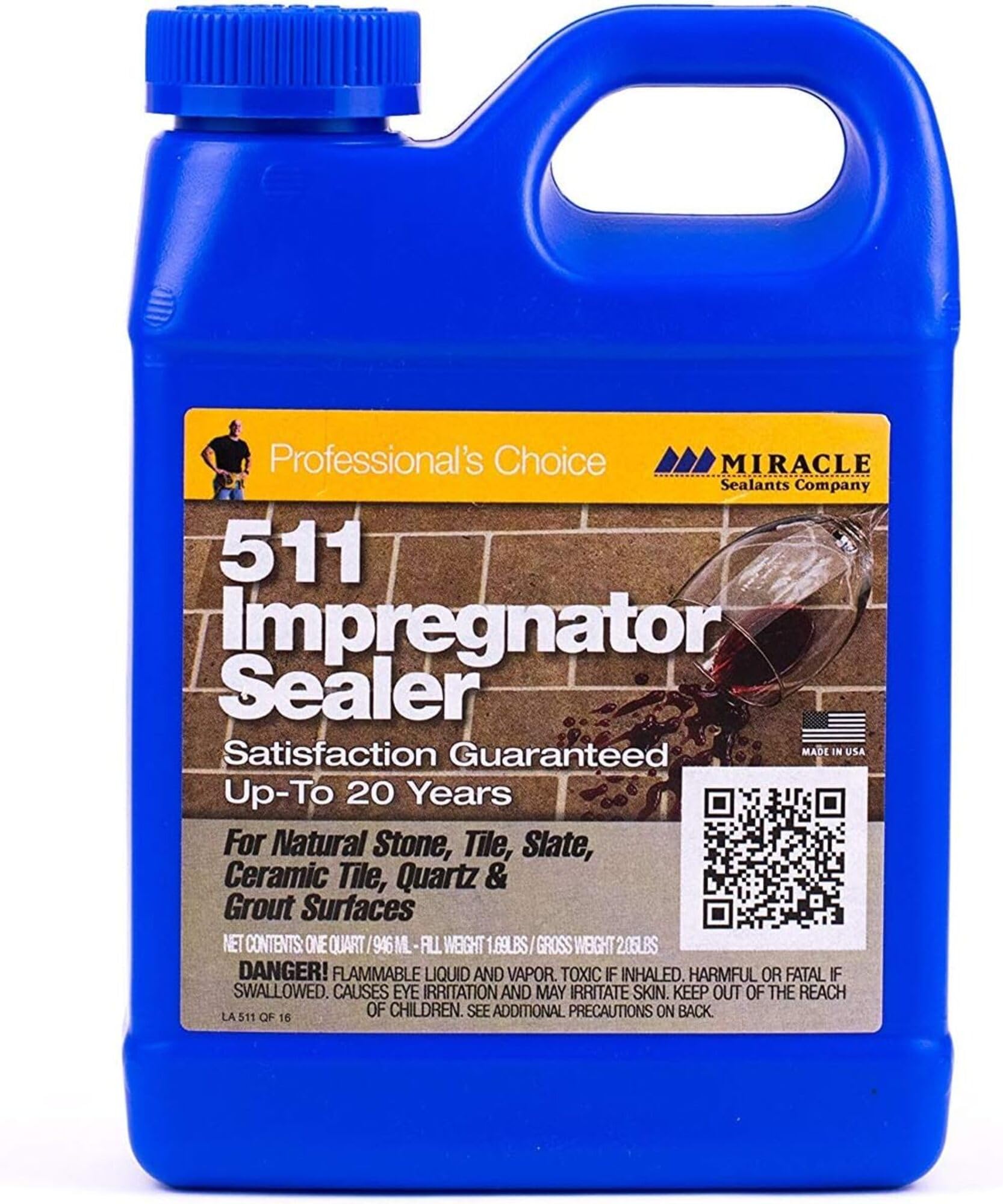
Miracle Sealants 511 Impregnator Sealer, 1 Qt.
Check price on Amazon
8,400+ reviews
A penetrating sealer trusted by stone fabricators for outdoor granite, travertine, and limestone, with no film buildup and strong UV stability.
Shop on Amazon →Best Grout for Outdoor Porcelain Tile Countertops
Porcelain tile is the most overlooked option for outdoor kitchen countertops. Large-format 12x24 or 24x24 tiles in a matte finish handle direct sun better than almost any other material, they do not need sealing, and they are straightforward to replace if one ever cracks. The grout joint is what makes or breaks a tile countertop outdoors.
Standard sanded grout crumbles and absorbs grease within a season or two in an outdoor cooking environment. You need a grout with built-in stain resistance that can handle thermal expansion and contraction without failing at the joints. Mapei Flexcolor CQ is a ready-to-use, single-component grout with color-consistent quartz aggregate and genuine no-seal performance. It is what tile setters use for pool decks and outdoor kitchen applications where the grout sees heat, water, and cooking residue regularly.
For a 15 square foot countertop with 1/8-inch joints, one 9-pound tub gets the job done. Apply it with a float, clean the haze with a damp sponge, and it is ready to use in 24 hours. The color holds for years without fading from UV exposure, which is the main failure point with standard grout outdoors.
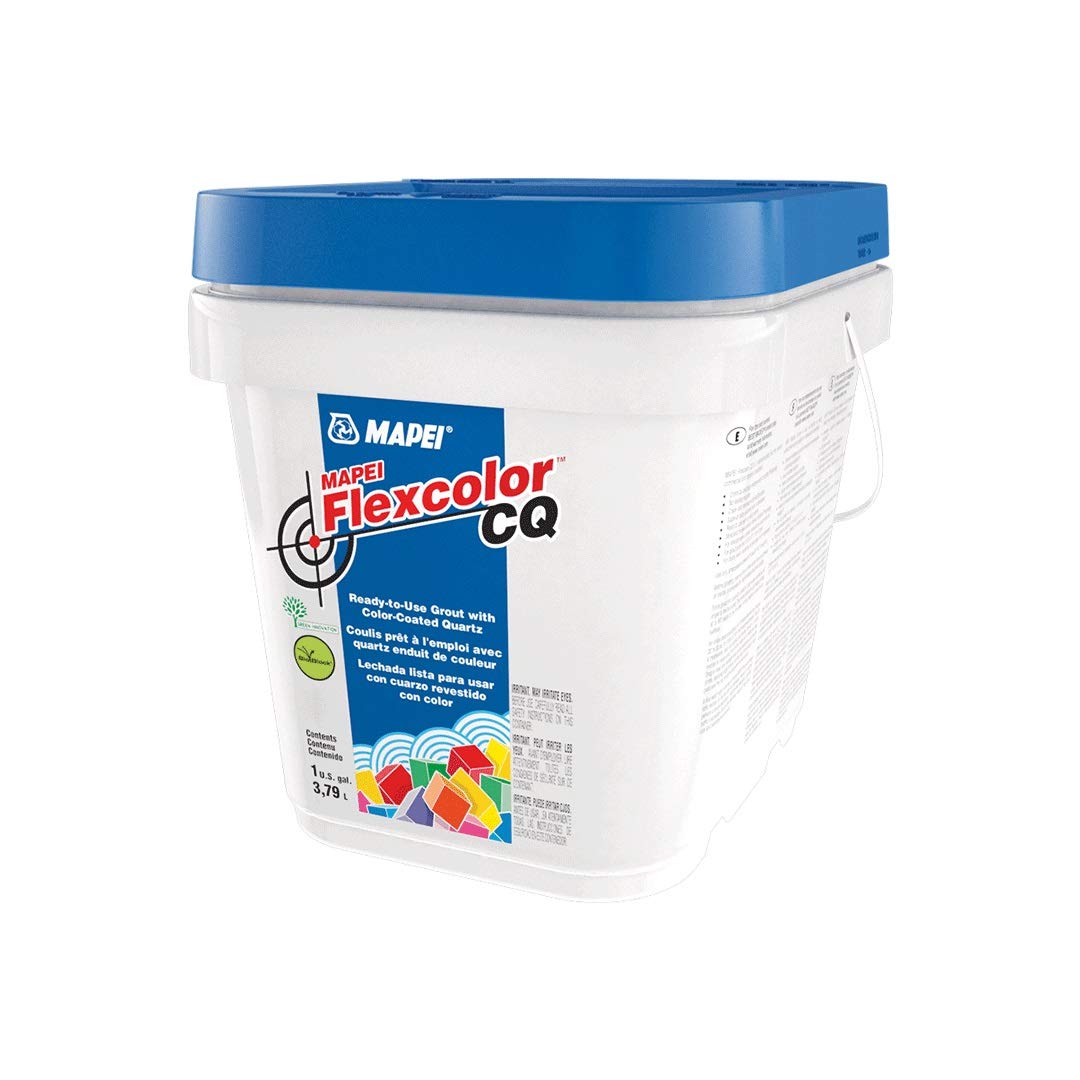
Mapei Flexcolor CQ Ready-to-Use Grout, 9 lb.
Check price on Amazon
2,600+ reviews
A no-seal, stain-resistant grout with quartz aggregate designed for wet and outdoor tile applications, including countertops and pool decks.
Shop on Amazon →Best Prefab Outdoor Kitchen with Stainless Steel Countertop
Stainless steel is the countertop material in every professional kitchen for a reason. It does not absorb anything, heat from a grill does not damage it, and cleaning is a wipe-down with a damp cloth. For an outdoor kitchen, stainless also means no sealing, no cracking, and no fading over 10 or 15 years of hard use.
The practical consideration is gauge. Thinner stainless at 18 or 20 gauge dents and shows scratches fast. Prefab outdoor kitchen modules from NewAge Products use 304-grade stainless at a 16-gauge thickness, which is meaningfully more rigid and holds up to pots, tools, and the occasional impact without flexing. The Bold 3.0 series works for everything from a compact 4x4 grill station to a full outdoor kitchen layout for entertaining 10 to 12 people.
Setup takes about four hours with basic tools and no concrete cutting required. The stainless countertop ships pre-installed on the cabinet modules. One note: these modules hold up best on a covered patio or under a pergola. Direct rain exposure on the hardware and door hinges will require occasional maintenance even with stainless construction.
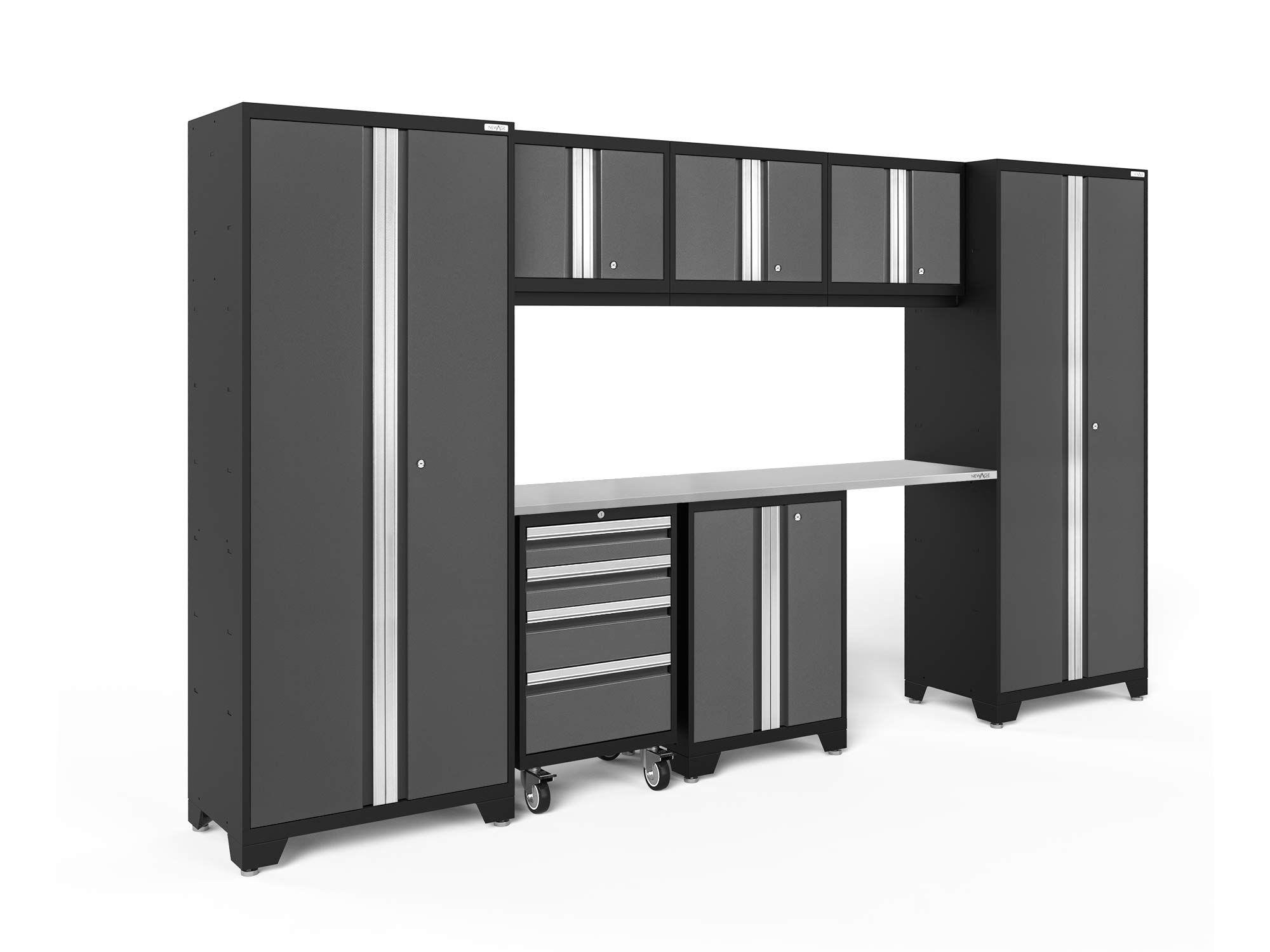
NewAge Products Bold 3.0 Series 4-Piece Outdoor Kitchen
Check price on Amazon
1,200+ reviews
A 304-grade stainless steel prefab outdoor kitchen set with a 16-gauge countertop, weatherproof cabinet doors, and fully modular configurations.
Shop on Amazon →Best Concrete Resurfacer for Refreshing a Worn Outdoor Countertop
If you have an existing concrete countertop that is pitted, stained, or cosmetically worn, a resurfacer is a faster fix than demolition. Resurfacers bond to old concrete and go on in a thin layer, usually 1/8 inch or less. You end up with a smooth, fresh surface that can be stained, sealed, or left natural gray.
Quikrete Re-Cap bonds well to existing concrete that is structurally sound but surface-damaged. It works on horizontal surfaces, mixes cleanly, and feathers out without visible edges at the seam. For a standard outdoor kitchen countertop, one 50-pound bag covers roughly 35 to 40 square feet at 1/8-inch thickness. That is enough for most full-length countertop runs.
Surface prep is the most important step here. Chip out any loose areas, clean off any oil or sealer residue, and wet the existing concrete before you apply. After a 24-hour cure, follow up with two coats of concrete sealer. The result looks close to a fresh pour and adds several more years to a surface that would otherwise need to come out.
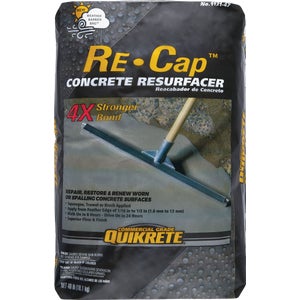
Quikrete 50 lb. Re-Cap Concrete Resurfacer
Check price on Amazon
4,800+ reviews
A polymer-modified resurfacer that bonds to old concrete and gives worn outdoor kitchen countertops a smooth, fresh finish without demolition.
Shop on Amazon →Quick Tips for Outdoor Kitchen Countertops
- Match your material to your climate. Granite and concrete both need sealing in freeze-thaw climates. Porcelain tile and stainless are better choices if you leave the countertop uncovered year-round.
- Pour concrete at least 1.5 inches thick. Thinner pours crack from thermal expansion. If you are pouring over a plywood substrate, add rebar or fiber mesh reinforcement before the pour.
- Test your granite sealer every spring. Drop water on the surface and wait five minutes. If it soaks in instead of beading up, reseal before the cooking season starts.
- Use large-format tile to minimize grout joints. Fewer grout lines mean less maintenance. A 24x24 tile on a 10-foot countertop might have four or five joints total instead of twenty.
- Keep stainless steel modules under a covered area. Even 304-grade stainless will develop surface rust on hardware and hinges with direct rain exposure over multiple seasons. A pergola or roof line extends the life significantly.
- Order 10 percent extra on tile and concrete materials. You will need it for cuts, breakage, and future touch-ups. Running out mid-project and buying a second batch sometimes means a different dye lot and visible color variation.
Frequently Asked Questions
What is the most durable countertop material for an outdoor kitchen?
Porcelain tile and stainless steel are the most durable for outdoor use. Both are UV-stable, require no sealing, and hold up to heat, moisture, and freeze-thaw cycles without failing. Granite is a close third if you seal it every year.
Does granite crack from heat outdoors?
Granite does not crack from heat alone, but rapid temperature changes can cause stress over time. Placing a cold item directly from the refrigerator onto a sun-baked granite slab repeatedly over many seasons is the real risk. A thin trivet nearby for cold items helps.
How thick should an outdoor concrete countertop be?
A minimum of 1.5 inches for a poured-in-place countertop. Two inches is better if the span exceeds four feet or if you are skipping rebar reinforcement. Thinner pours are more likely to crack at corners and along unsupported edges.
Can I use regular grout for outdoor kitchen tile?
You can, but it will fail within a few seasons. Outdoor grout needs to handle UV exposure, temperature swings, and cooking grease without crumbling or staining. A no-seal, stain-resistant grout like Mapei Flexcolor CQ is worth the small price difference.
Is stainless steel too hot to touch as an outdoor countertop in direct sun?
It gets hot, similar to a car hood in summer. A covered patio or pergola solves this and protects the finish over time. For uncovered setups, a light-colored shade sail positioned above the cooking zone makes a real difference in surface temperature.