Louvered vs Open Pergola: Which One Is Right for You
The right pergola depends on how you actually use your yard, not what looks good in a catalog. Louvered models give you adjustable shade and rain protection, but they cost two to four times more than a classic open-beam kit and require considerably more assembly.
Open-beam pergolas are the traditional choice for a reason. They're cheaper, easier to install, and let you add shade cloth or string lights on your own terms. The trade-off is that a sudden afternoon storm means scrambling inside.
This comparison covers two real examples of each type, with honest notes on cost, installation complexity, and who each one is actually built for.
Best Motorized Louvered Pergola for Large Patios
The PURPLE LEAF motorized louvered pergola is the one people buy when they want the full outdoor room experience. At 10x13 feet, it fits comfortably over a sectional sofa and a coffee table, and the motorized louvers close tight enough to handle light rain. You control the angle with a remote, going from full sun to full shade in about ten seconds.
The powder-coated aluminum frame is genuinely rust-resistant, which matters in humid climates or anywhere that gets consistent summer rain. Assembly takes most of a weekend for two people and requires solid concrete or decking for the base posts. This is not a single-afternoon project, but the result is a permanent-feeling structure that adds real value to the property.
At this price, you also get integrated gutters that channel rainwater down through the posts instead of dripping onto your furniture. It's a practical detail that separates this from cheaper louvered options and makes the whole thing feel finished rather than improvised.
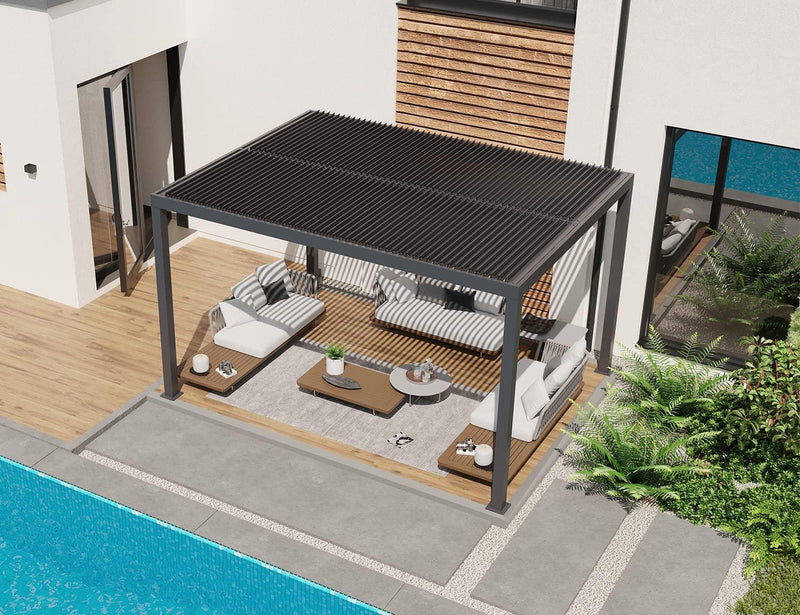
PURPLE LEAF 10x13 ft Outdoor Aluminum Motorized Louvered Pergola
Check price on Amazon
3,200+ reviews
Motorized louvers, integrated gutters, and a weatherproof aluminum frame make this the closest thing to an outdoor room short of hiring a contractor.
Shop on Amazon →Best Manual Louvered Pergola for Mid-Size Budgets
If motorization feels like overkill, the Sunjoy louvered pergola covers a 10x12 space at a noticeably lower price. The louvers adjust with a hand crank, which works fine once you're used to it. Most people set them in the morning and don't touch them again.
The steel frame is heavier than aluminum, so it feels solid once installed, but it does need attention in wet climates. Sunjoy includes all mounting hardware and the assembly instructions are clear, though plan on six to eight hours across two days with a helper.
This model makes sense for someone who wants rain protection and shade control without paying for motorization they'd rarely use. It works well on a standard 10x12 deck or patio and handles moderate wind without flexing.
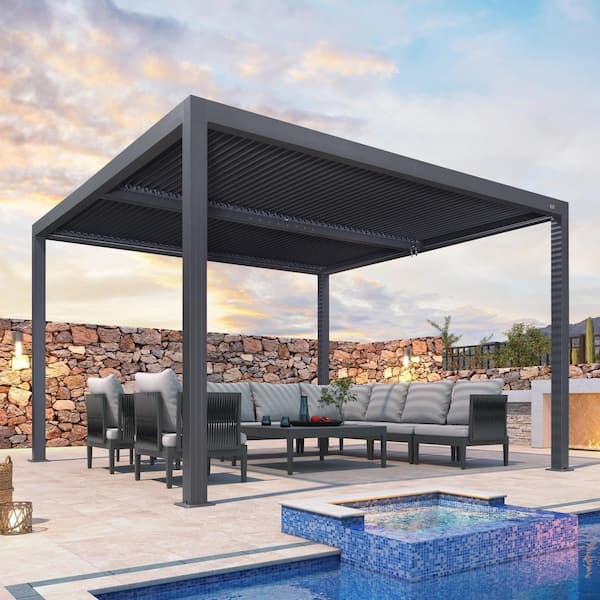
Sunjoy 10x12 Outdoor Pergola with Adjustable Louvered Roof
Check price on Amazon
1,800+ reviews
Manual louver control, a solid steel frame, and a complete hardware kit make this a practical entry point into the louvered pergola category.
Shop on Amazon →Best Open-Beam Cedar Pergola Kit for a Large Backyard
The Yardistry 12x16 cedar pergola kit is the benchmark against which most open-beam kits get measured. It's real western red cedar, which resists rot and handles humidity better than pressure-treated pine. The 12x16 footprint is generous enough for a full dining table with six chairs and still feels open rather than cramped.
Open-beam pergolas don't block rain. That is the key trade-off, and it matters. What you get instead is natural airflow, a classic aesthetic that photographs well, and a structure you can customize on your own schedule. You can drape a shade sail overhead, run string lights along the crossbeams, or train a wisteria vine up the posts over a few seasons.
Installation takes a weekend for two people with basic tools. The cedar boards arrive pre-cut and the hardware kit is complete. Most reviewers note the instructions are clear enough that you don't need any construction background, just patience and a level.
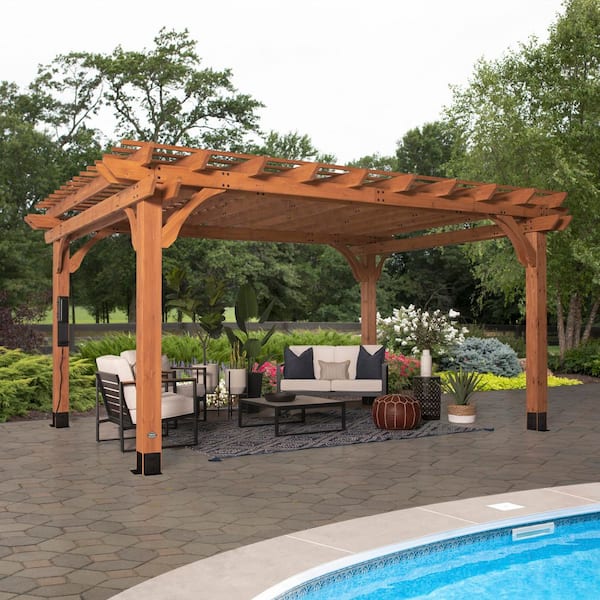
Yardistry 12 x 16 ft Cedar Pergola Kit
Check price on Amazon
4,600+ reviews
Real cedar construction, a generous 12x16 footprint, and clean pre-cut assembly make this the gold standard in open-beam pergola kits.
Shop on Amazon →Best Budget Open-Beam Pergola for Smaller Spaces
The Outsunny 10x13 wood pergola is the right answer when you want the look of a traditional pergola without spending close to a thousand dollars. It covers a 10x13 patio and delivers the classic open crossbeam design that pairs well with string lights, shade cloth, or climbing plants.
The wood is pressure-treated fir rather than cedar, so it needs staining or sealing once a year to stay in good shape. That is a modest trade-off given the savings. For renters or homeowners still figuring out how they want to use the space, this is an easier commitment than a permanent cedar structure.
It is also lighter, which makes solo assembly more realistic. Two people can have this standing in an afternoon. At this price, it is a popular first pergola for people who want to test the waters before investing in something bigger.
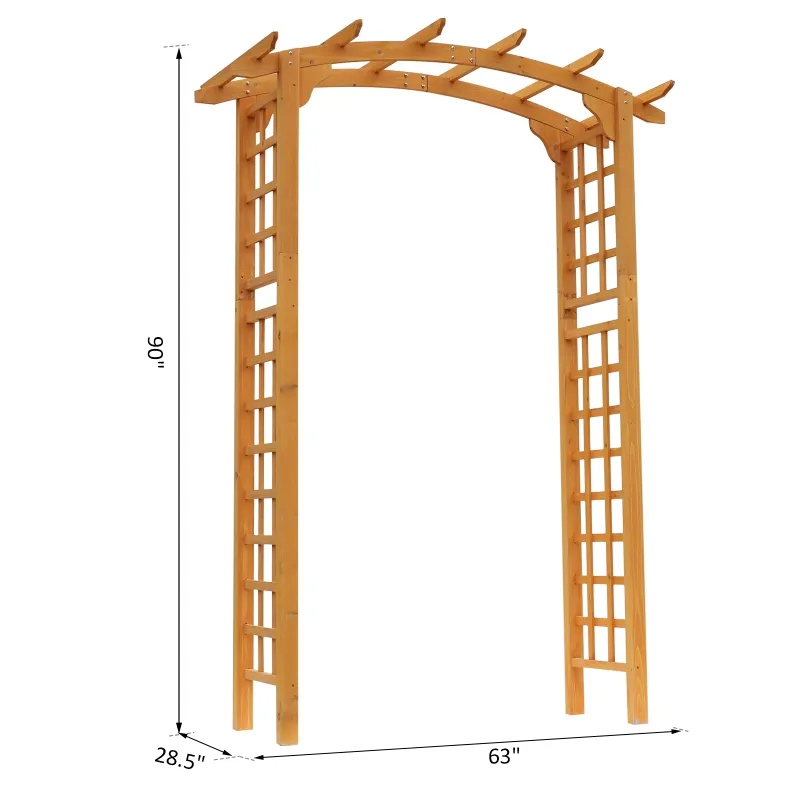
Outsunny 10x13 ft Wood Outdoor Pergola Garden Arbor
Check price on Amazon
2,100+ reviews
An affordable pressure-treated wood pergola that fits a 10x13 patio and handles string lights, shade cloth, or climbing plants without fuss.
Shop on Amazon →Quick Tips for Choosing the Right Pergola
- Measure your rain, not just your sun. If your area gets frequent afternoon showers in summer, louvered is worth the extra cost. If rain falls mainly in winter when you're not outside anyway, an open-beam design is a better value.
- Check local permit requirements before you order. Most municipalities require a permit for permanent pergola structures over a certain square footage. A quick call to your building department before you buy saves a lot of headaches after the fact.
- Think about the base before you commit. Both louvered and open-beam pergolas need a solid foundation, whether that's concrete footings, a poured patio, or ground anchors into firm soil. Soft or uneven ground causes problems no matter which type you choose.
- Aluminum outlasts wood in wet climates. If you're in the Pacific Northwest, the Gulf Coast, or anywhere with consistent humidity, aluminum frames hold up better without annual maintenance. Cedar is beautiful but needs more attention in high-moisture environments.
- Louvered pergolas need a level surface to drain correctly. The integrated gutters only work as designed on a level install. If your patio slopes, water will pool in one corner instead of draining through the posts.
- Open pergolas are easier to customize over time. A shade sail, outdoor curtains, or a weatherproof canopy can give you most of the rain protection of a louvered model at a fraction of the price. Budget for at least one of these add-ons when you buy the base structure.
Frequently Asked Questions
Are louvered pergolas worth the extra cost?
For people who use their patio year-round in regions with unpredictable weather, yes. The ability to close the louvers during a rain event meaningfully extends your outdoor season. If you live somewhere dry or only use your patio in summer, an open-beam pergola is a better value.
Can I install a pergola kit myself?
Most open-beam kits are designed for two-person DIY installation over a weekend. Louvered pergolas are doable for confident DIYers but add a day or two and require more precise leveling. Either way, you need at least one helper for lifting the beam sections into place.
Do pergolas increase home value?
Generally yes, if the structure is well-built and fits the yard proportionally. A permanent aluminum or cedar pergola is typically viewed as an outdoor living upgrade by buyers. A poorly maintained or undersized one can have the opposite effect.
What's the difference between a pergola and a gazebo?
A gazebo has a fixed solid roof and is usually freestanding in the yard. A pergola has an open or adjustable overhead structure and is often placed over a patio or attached to the house. Motorized louvered pergolas bridge the gap, since they can close completely like a solid roof.
How do I anchor a pergola on a wood deck?
Most kits include post anchors that bolt through the decking into the structural joists below. Locate your joists first and confirm your deck is rated for the added load, especially if you're installing a heavier steel or aluminum louvered model.