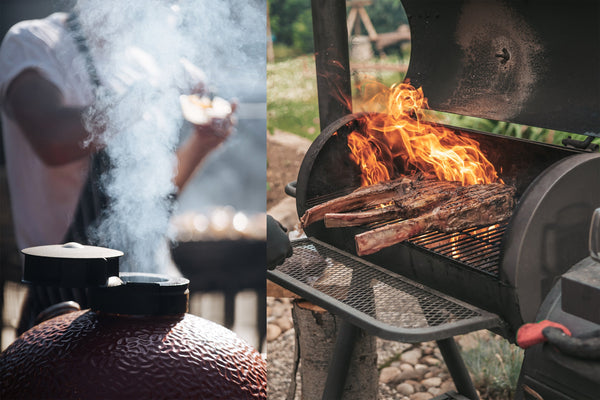
Kamado vs. Pellet Grill: Which Should You Buy?
If you have ever stood in a showroom staring at a massive ceramic egg next to a sleek digital smoker, you know exactly how hard this decision is. Both styles do much more than cook burgers. They smoke brisket, roast whole chickens, and handle long cooks that would destroy a regular gas grill.
Kamado grills run on lump charcoal and use thick ceramic walls to hold heat with almost no effort. Pellet grills burn compressed wood pellets and use a digital controller to maintain temperature automatically. The flavor, the fuel cost, the learning curve, and the results are genuinely different between the two.
This comparison walks you through what each type does best, where each falls short, and which specific models are worth your money in 2026. By the end, you will know which one fits your backyard and your cooking style.
Best Overall Kamado: Kamado Joe Classic III
The Kamado Joe Classic III is the benchmark that every other kamado gets measured against. The 18-inch cooking surface handles a full brisket flat, six racks of ribs with the divide-and-conquer rack system, or a 20-pound turkey with room to spare. The thick ceramic walls hold heat so efficiently that a full bag of lump charcoal lasts 18 to 20 hours at 250 degrees, which makes long overnight smokes genuinely painless.
The air-lift hinge makes the heavy lid feel nearly weightless. If you have ever cooked on a kamado with a cheap hinge, you know the frustration of a lid that slams or sticks. The Classic III also includes the SlōRoller hyperbolic insert for low-and-slow convection cooking, which comes in the box and turns out competition-level pulled pork without any extra accessories.
Temperature control requires learning. You are managing two vents, and the ceramic holds heat so well that a brief overshoot early in a cook is hard to walk back. Budget an hour or two of practice before your first big cook. Once you get the feel for it, this grill rewards you with a smoke flavor that no pellet grill can fully replicate.
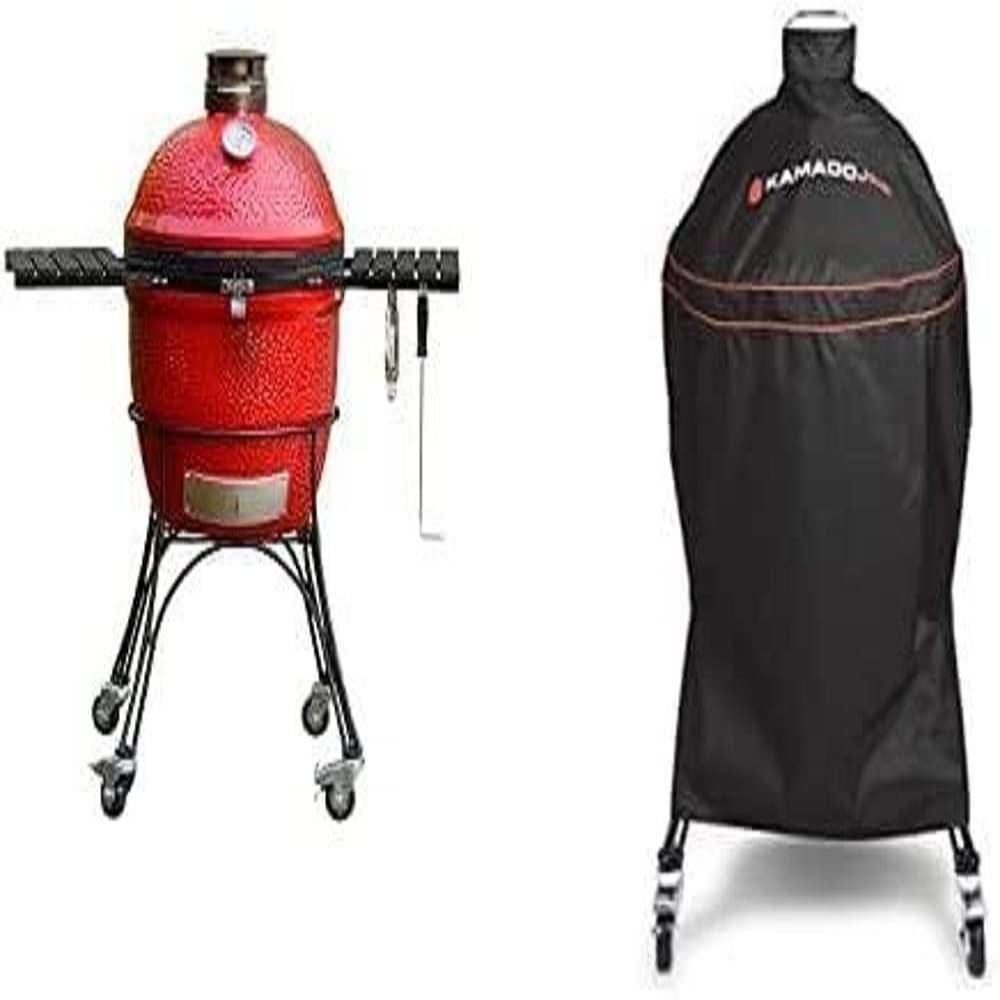
Kamado Joe Classic III 18-Inch Charcoal Grill KJ23RHC
Check price on Amazon
6,800+ reviews
The SlōRoller insert and air-lift hinge make this the most capable all-in-one charcoal grill available under $1,500.
Shop on Amazon →Best Budget Kamado: Char-Griller Akorn 20-Inch
The Char-Griller Akorn is a steel-body kamado rather than ceramic, and that matters for two reasons. First, it costs about a quarter of the price of a Kamado Joe. Second, it heats up faster because steel conducts heat rather than storing it. For a backyard cook who wants kamado-style results without a four-figure investment, the Akorn is the honest recommendation.
The 20-inch cast-iron cooking grate gives you 314 square inches of primary cooking space. That is enough for two full racks of ribs or a 14-pound brisket lying flat. The triple-wall insulation holds heat reasonably well, and the top and bottom vents are surprisingly responsive once you learn the system. Expect to go through charcoal a bit faster than a ceramic grill, but the gap is smaller than most people expect.
The main trade-off versus ceramic is longevity. Steel kamados can rust if left uncovered in wet climates. Keep a cover on it and you will get years of solid performance. For someone who wants to try kamado-style cooking before committing to a Kamado Joe or Big Green Egg, the Akorn is the perfect entry point.
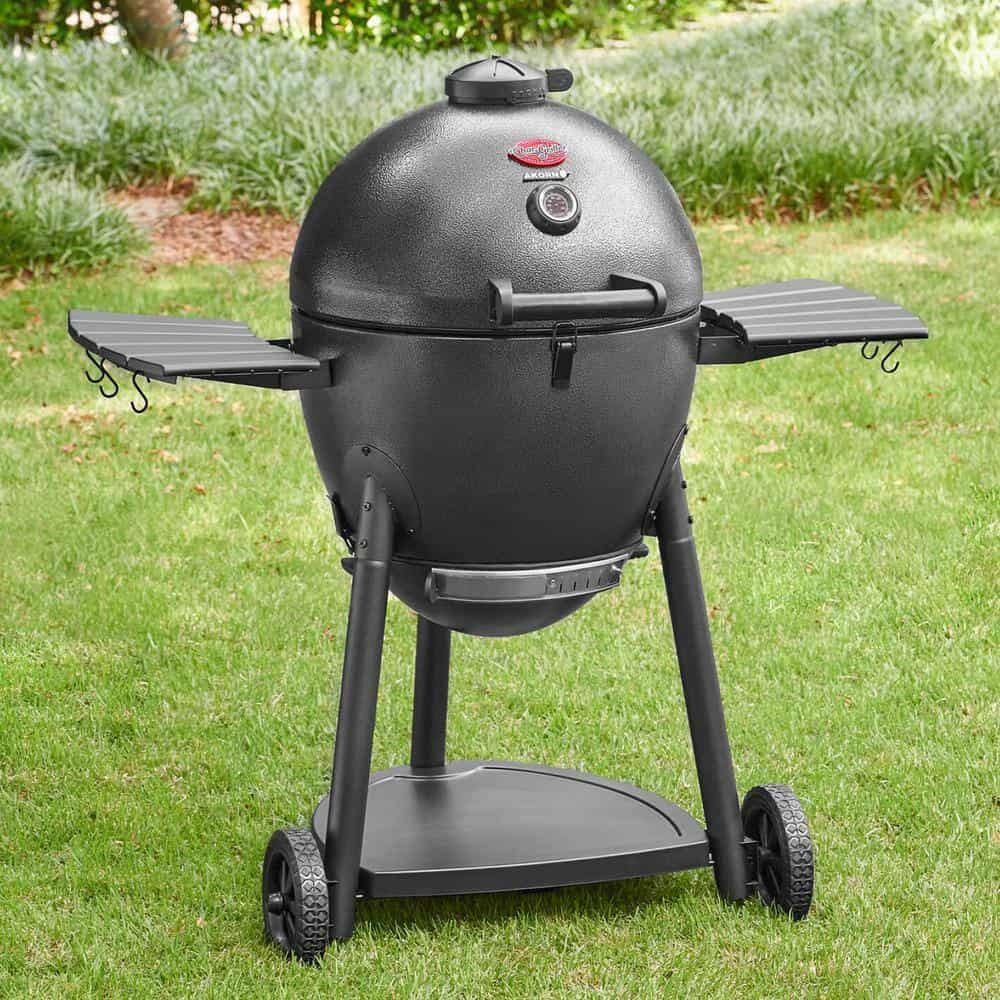
Char-Griller Akorn 20-Inch Kamado Charcoal Grill
Check price on Amazon
9,200+ reviews
A steel kamado that delivers genuine two-zone cooking and long smoke sessions at a fraction of the ceramic grill price.
Shop on Amazon →Best Overall Pellet Grill: Traeger Pro 575 Wi-Fi
The Traeger Pro 575 is the grill that made pellet cooking mainstream, and in 2026 it is still one of the best values in the category. The 575 square inches of cooking space handles a full packer brisket or four racks of baby back ribs without any shuffling. The WiFIRE controller connects to the Traeger app, so you can monitor and adjust temperature from inside while your guests arrive.
Set it to 225 degrees, load the hopper with hickory or cherry pellets, and walk away. The controller maintains temperature within plus or minus 15 degrees across the entire cook. That consistency is what makes pellet grills so popular for brisket and pork shoulder. You get repeatable results every time because the machine removes most of the human variables.
The flavor from a pellet grill is genuinely good, but honest comparison demands admitting it is lighter than what comes off a charcoal kamado. Pellet grills produce a thin blue smoke. Kamados can produce thicker smoke with a deeper bark. For people who want great barbecue without babysitting a fire all day, the Pro 575 is hard to beat.
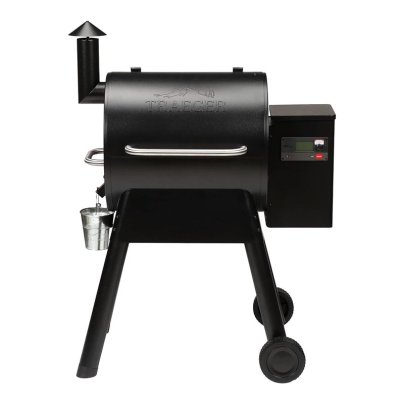
Traeger Pro 575 Wi-Fi Pellet Grill and Smoker
Check price on Amazon
14,500+ reviews
WiFIRE app control and 575 square inches of cooking space make this the easiest path to consistent low-and-slow barbecue.
Shop on Amazon →Best Budget Pellet Grill: Z Grills ZPG-700D
Z Grills built the ZPG-700D to compete directly with the Traeger Pro 575 at about half the price. The 700 square inches of total cooking space actually beats the Traeger for sheer real estate, which makes it a serious option for anyone who regularly cooks for eight or more people. The PID controller holds temperature accurately enough for pulled pork and ribs without the premium brand markup.
The hopper holds 20 pounds of pellets, which is enough for an overnight brisket cook without a refill. The slide-plate flame broiler lets you expose food to direct flame for searing, which most pellet grills in this price range cannot do. If you want pellet convenience plus the ability to sear a steak at 500-plus degrees, the ZPG-700D punches well above its price.
Build quality on the D-series is noticeably better than earlier Z Grills models. The legs are sturdy, the lid seal is tight, and the grates are heavy cast iron. This is the grill to recommend to someone who wants pellet cooking but does not want to spend $800 to get started.
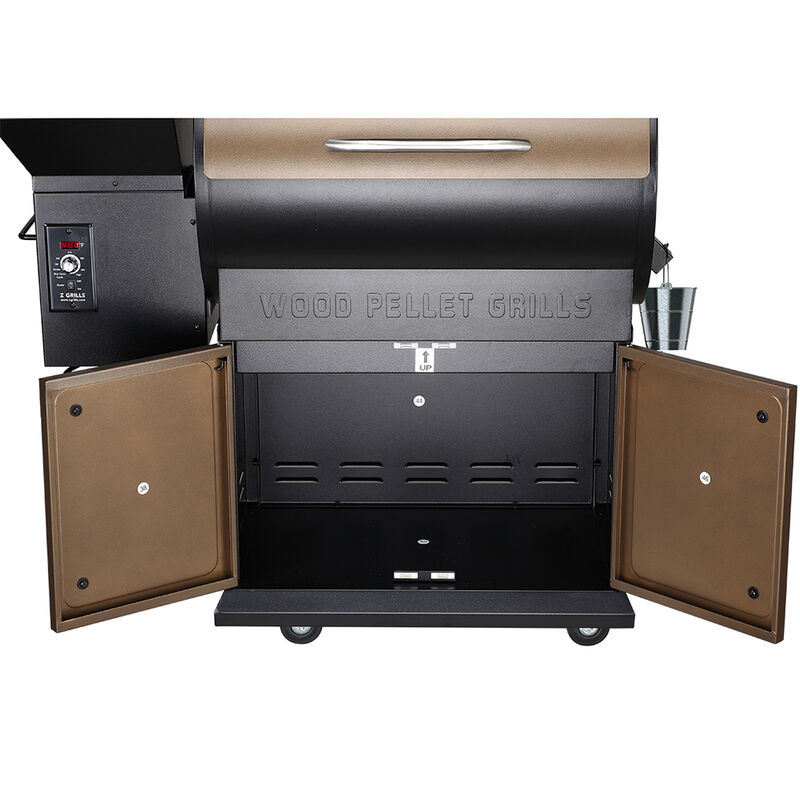
Z Grills ZPG-700D Wood Pellet Grill and Smoker
Check price on Amazon
8,100+ reviews
700 square inches of cooking space, a slide-plate flame broiler, and a 20-pound hopper at a price that makes the Traeger look expensive.
Shop on Amazon →Quick Tips for Choosing Between Kamado and Pellet
- Think about how you actually cook. If you want to manage the fire and learn the craft, get a kamado. If you want to set a temperature and walk away, get a pellet grill. Both make excellent food, but the experience is completely different.
- Factor in ongoing fuel costs. Quality lump charcoal runs about $1.50 to $2 per pound. Food-grade wood pellets run about $1 per pound. For a 12-hour brisket cook, a kamado uses roughly 6 to 8 pounds of charcoal. A pellet grill burns 1 to 2 pounds per hour, so the long-term fuel math is similar.
- Consider your climate. Ceramic kamados perform well in cold temperatures because the thick walls hold heat regardless of outside air. Pellet grills struggle below freezing because the auger and fire pot have to work harder. A thermal blanket accessory helps, but it is an extra cost.
- Pellet grills are easier to clean. A kamado builds up a carbon layer inside the dome over time, which you occasionally need to burn off. Pellet grills have a grease bucket to empty and an ash cup to dump. The routine cleanup is simpler on the pellet side.
- Kamados run hotter than most pellet grills. A kamado can sear at 700-plus degrees and smoke at 200 degrees. Most pellet grills top out around 500 degrees for searing. If high-heat pizza and smash burgers matter to you, the kamado is the more versatile tool.
Frequently Asked Questions
Does a pellet grill produce as much smoke flavor as a kamado?
Not quite. Pellet grills produce a light, clean smoke that most people find pleasant and not overwhelming. Kamados running lump charcoal produce a deeper, more complex smoke flavor with a better bark on meats. The difference is noticeable side by side, though both are genuinely better than gas.
How long does a bag of charcoal last in a kamado?
At 250 degrees, a ceramic kamado like the Kamado Joe Classic III will burn through a 20-pound bag of lump charcoal in 18 to 24 hours. The thick ceramic walls are the reason. A steel kamado like the Akorn will go through charcoal faster, typically 12 to 16 hours at the same temperature.
Can you use a pellet grill as a regular grill for burgers and steaks?
Yes, though some pellet grills do it better than others. Models with a direct flame access option, like the Z Grills ZPG-700D, can reach temperatures hot enough for a decent sear. Most pellet grills top out around 500 degrees, which is enough for burgers but not ideal for a restaurant-quality steak crust.
Which is better for beginners?
A pellet grill is easier to learn because the digital controller does the hard work. You load pellets, set a temperature, and the machine handles the rest. A kamado requires more hands-on attention, especially for the first few cooks, while you learn how the vents respond.
Are kamado grills worth the high price?
The ceramic body lasts decades if you keep it out of freeze-thaw cycles and do not drop it. Many people cook on the same kamado for 20-plus years. Spread across that lifespan, the per-year cost is reasonable. The Char-Griller Akorn gives you most of the performance at a fraction of the cost if price is the barrier.