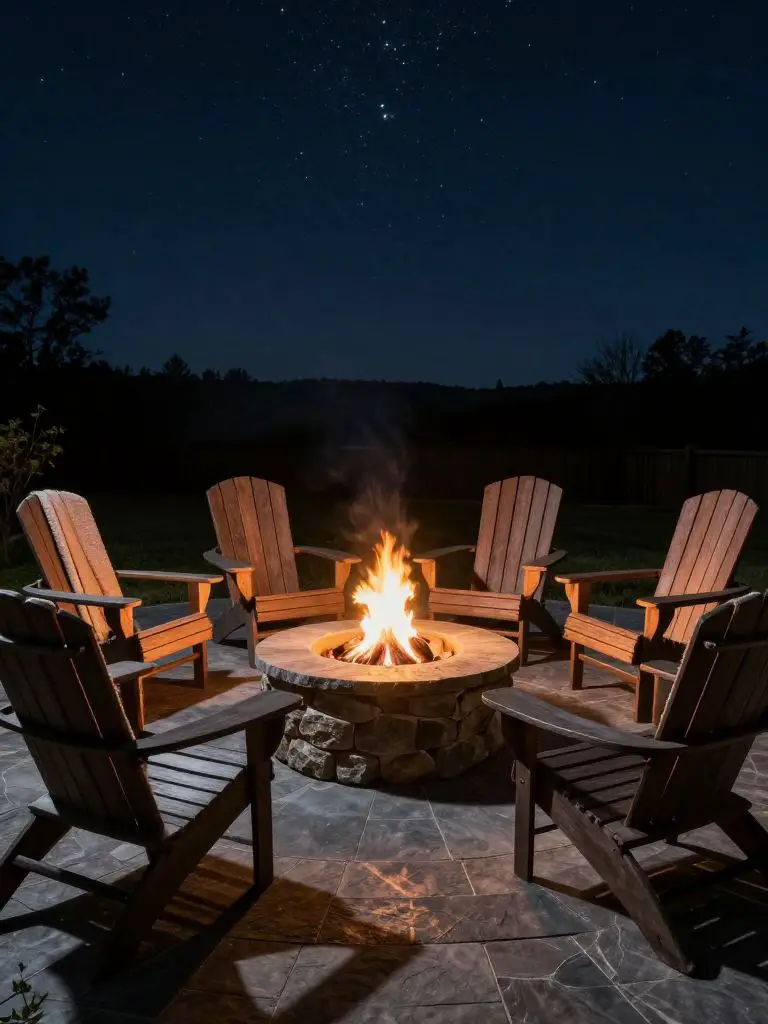
How to Create a Backyard Stargazing Lounge
A backyard stargazing lounge is one of the most rewarding outdoor projects you can pull together in a weekend, and it costs far less than people expect. The design principle is simple: get your body horizontal, keep the light warm and low, and let the sky do the work.
Most attempts at backyard stargazing fail because of setup. People drag a regular lawn chair outside, crane their necks for ten minutes, and give up. The setups that actually get used consistently have reclining chairs angled toward the sky, a small fire pit offset to one side, and lighting that doesn't wreck your night vision. That last part matters more than any telescope.
You don't need a large yard for this. A 12x12 foot cleared area is enough for two chairs, a scope, and a fire pit. Gravel or decomposed granite underfoot keeps things tidy and adds no ambient glow. Here's exactly what to put in that space.
Best Zero-Gravity Chair for Watching the Sky
A regular outdoor chair positions you for looking forward, not upward. You need a zero-gravity lounger that reclines nearly flat and locks there, because the Milky Way is overhead, not in front of you. The Timber Ridge Zero Gravity Lounge Chair hits that angle precisely and stays put, so you're not constantly fighting the recline while trying to track a constellation.
This chair handles up to 350 pounds and has a wide frame that doesn't feel precarious on uneven ground. The textilene mesh breathes well during humid summer nights. Set two of them side by side with a small folding table between for your star chart, a red light, and a drink. That's the whole seating setup, and it costs under $200 for both chairs.
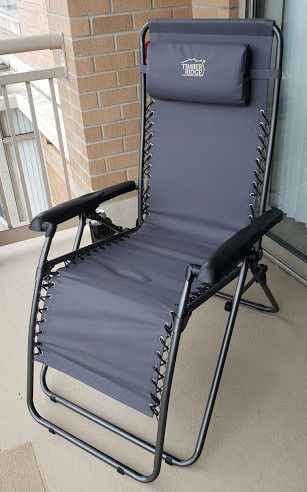
Timber Ridge Zero Gravity Lounge Chair
Check price on Amazon
9,800+ reviews
Wide zero-gravity frame that locks at a true reclining angle, with breathable mesh and a 350-pound weight capacity.
Shop on Amazon →Best Telescope for a Backyard Stargazing Setup
The Celestron AstroMaster 114EQ sits in a sweet spot between beginner simplicity and real optical capability. The 114mm reflector aperture gathers enough light to show Saturn's rings, the Orion Nebula, and Jupiter's cloud bands on a clear night. That's the kind of view that makes people stop looking at their phones and actually stay outside for two hours.
The equatorial mount is the reason to choose this over cheaper alt-azimuth designs. Once you dial it in, tracking a planet becomes a slow turn of a single knob rather than a constant wrestling match to keep the object centered in the eyepiece. First-time setup takes about 20 minutes. Every night after that takes five. Keep a red light nearby so you can read the setting circles without resetting your dark adaptation.
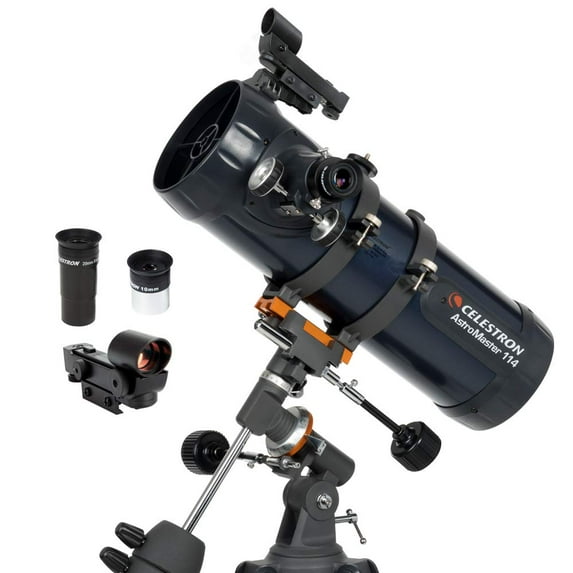
Celestron AstroMaster 114EQ Reflector Telescope
Check price on Amazon
6,400+ reviews
114mm aperture reflector with an equatorial mount that makes tracking planets and deep-sky objects manageable for real beginners.
Shop on Amazon →Best Small Fire Pit as the Warm Anchor
Fire in a stargazing lounge is about warmth, not spectacle. You want a pit that sits low and throws heat outward rather than producing a tall, bright column of flame that wipes out your dark adaptation. The Sunnydaze Decor 36-inch Crossfire Fire Pit does exactly this. The wide, shallow bowl keeps the flame below eye level when you're reclined, and the crossbar grate promotes airflow without creating a bonfire.
Position this about six feet from your chairs, offset 90 degrees from your primary viewing direction. Direct fire in your sightline is a problem. Off to the side, it gives you warmth and ambiance without competing with whatever you're looking at overhead. The bowl is wide enough to sustain a real fire with dry hardwood for a few hours, and the poker and ash tool come included.
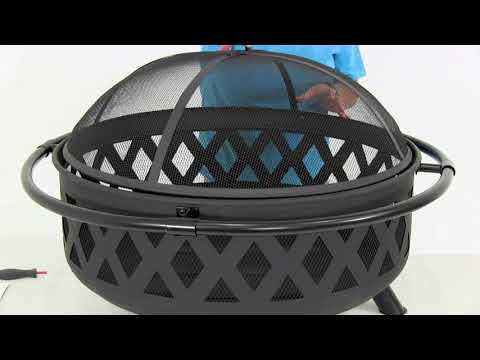
Sunnydaze Decor 36-Inch Crossfire Wood Burning Fire Pit
Check price on Amazon
4,100+ reviews
Wide 36-inch low-profile bowl with a crossbar grate that produces steady heat without a tall flame that interferes with your sky view.
Shop on Amazon →Best Throw Blanket for Summer Nights That Drop Fast
Summer nights can shed 20 degrees after midnight, and once you're reclined and still, that drop arrives faster than you expect. The Pendleton National Park Collection Throw measures 64x80 inches, which is large enough to cover a full zero-gravity chair with enough left to tuck under your sides. The wool-blend construction holds warmth at 55 degrees without being too heavy or stiff to manage.
Pendleton throws wash without issue, which matters because fire pit smoke smell builds up over a season. These aren't cheap fleece blankets you stuff in a bin between uses. The patterns are genuinely good-looking. Fold one over the back of each lounger and the whole setup looks intentional rather than improvised.
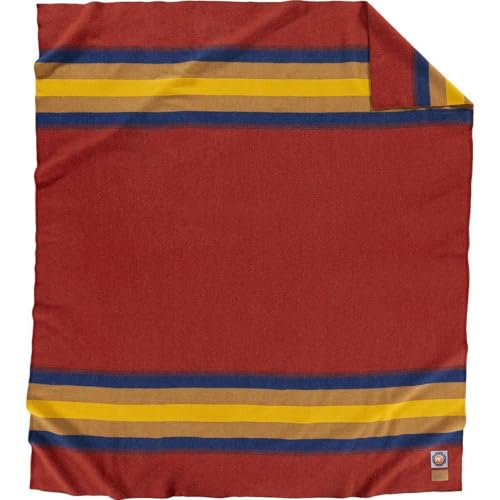
Pendleton National Park Collection Throw Blanket
Check price on Amazon
3,200+ reviews
64x80 inch wool-blend throw that holds warmth at 55 degrees, washes clean, and is large enough to cover a full reclining lounger.
Shop on Amazon →Best Amber Lantern for Protecting Night Vision
White LED lights are the enemy of stargazing. Your eyes take 20 to 30 minutes to fully adapt to darkness, and a single white light source can reset that process in seconds. The Streamlight Siege AA Compact Lantern has dedicated red and green LED modes alongside the main white beam. The red setting lets you read a star chart, adjust your telescope's focus, or refill a drink without destroying your adapted vision.
At under $35, it's practical to buy two of these, one per chair. The magnetic base and hanging hook make placement flexible. Stick it to a metal stake, hang it from a chair arm, or set it on a folding side table. The runtime on red LEDs is long enough to last a full night outside, and the whole unit fits in a jacket pocket.
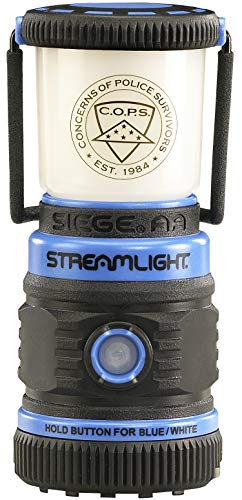
Streamlight Siege AA Compact Hand Lantern
Check price on Amazon
7,600+ reviews
Compact lantern with red, green, and white LED modes, a magnetic base, and a long runtime built for low-impact nighttime use.
Shop on Amazon →Best Binoculars for Wide-Field Sky Scanning
A telescope shows you tight, magnified views of individual objects. Binoculars show you the whole picture, and for many people, especially kids, scanning the Milky Way with a good pair of 25x70 binoculars is more immediately satisfying than hunting a single planet through an eyepiece. The Celestron SkyMaster 25x70 Binoculars have 70mm objective lenses that gather a significant amount of light compared to standard binos, revealing star clusters and nebulas that look flat through smaller optics.
At 25x magnification, these are toward the high end for handheld use. A simple tripod adapter paired with a camera tripod or monopod makes a real difference. These weigh about 2.7 pounds, which feels fine on a mount but fatiguing when held up for more than a minute. On a tripod, they become the best wide-field view you can buy for under $80, perfect for sweeping through Sagittarius or finding the Andromeda Galaxy before you zero the telescope in on it.
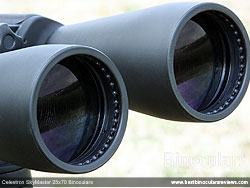
Celestron SkyMaster 25x70 Binoculars
Check price on Amazon
5,900+ reviews
70mm objective lenses with 25x magnification that reveal star clusters and nebulas across wide fields that a telescope crops too tightly to show.
Shop on Amazon →Quick Tips for Setting Up a Stargazing Lounge
- Face away from your house. Your biggest source of light pollution is usually your own home. Orient your chairs so the house is behind you and your eyes point toward the darkest part of your sky.
- Give your eyes 20 full minutes. Sit outside for at least 20 minutes before expecting to see much. Dark adaptation is real, and rushing it produces genuinely disappointing results.
- Check the moon phase before you go out. A full moon washes out faint stars and nebulas completely. The best nights for deep-sky viewing are three to five days before and after the new moon.
- Use a free app with a red display. SkySafari and Stellarium are both free and show you exactly what's overhead tonight. Set them to red-mode so the screen itself doesn't reset your night vision.
- Keep the fire pit offset, not in front of you. Position your fire pit 90 degrees to the side of your main viewing direction. You get the warmth and the light without a bright source directly in your visual field.
- Bring someone the first few times. Stargazing solo is calming, but having another person to share finds with keeps both of you engaged and outside significantly longer.
Frequently Asked Questions
What chairs are best for backyard stargazing?
Zero-gravity chairs that recline nearly flat are the right choice. They position your body at the correct angle to look overhead without neck strain. Look for a wide frame with a locking recline rather than a pool lounger that slowly slides back upright.
Will a fire pit ruin my night vision while stargazing?
It can if it's placed directly in your line of sight. Position the fire pit to the side of your chairs, not in front of them. A low, wide bowl design is better than a tall chiminea or column-style design that puts bright flame at eye level.
How much space do you need for a backyard stargazing area?
A 12x12 foot cleared area is enough for two zero-gravity chairs, a small telescope, and an offset fire pit. What matters more than raw square footage is what surrounds you. Neighbor porch lights, fence lights, and trees that block your sky view have more impact than yard size.
Is a telescope or binoculars better for backyard stargazing?
They serve different purposes. Binoculars are better for wide-field views like the Milky Way and open star clusters. A telescope is better for planets, the moon's surface, and tight deep-sky objects. Starting with a good pair of 25x70 binoculars is often more immediately rewarding for beginners than a telescope.
How do I reduce light pollution in my backyard?
Turn off all white outdoor lights during your session and switch to red or amber LEDs only. If neighbors have bright lights, position your chairs behind a structure or hang dark-colored fabric as a temporary screen to block the source.