Gas vs Electric Patio Heater: Which Is Better?
The answer depends on your patio setup more than your personal preference. Gas heaters throw serious heat across a large open space, but electric heaters are cleaner, safer for covered areas, and require zero fuel management.
If you have a wide-open backyard patio, propane will outperform anything electric in terms of raw warmth. If you have a pergola, a covered deck, or a balcony with combustion restrictions, electric is not just more convenient, it is often the only safe choice.
This comparison covers four real heaters, two gas and two electric, at different price points and form factors. By the end you will know exactly which fuel type fits your situation and which specific heater to buy.
Best Freestanding Gas Heater for Open Patios
The AZ Patio Heaters stainless steel model is the classic mushroom-style propane heater most people picture when they think of outdoor warmth. It puts out 46,000 BTU and can warm a circle roughly 9 feet in diameter, which covers a standard outdoor dining setup for 6 to 8 people on a cold fall night.
The stainless steel finish holds up better than painted versions over a few seasons. Assembly takes about 30 minutes, and the built-in auto shut-off trips if the heater tips over. You need a standard 20-pound propane tank, which slides into the base behind a small panel door. At full output, expect around 10 hours from a full tank.
This is the workhorse choice for anyone with an uncovered patio who wants to extend the season without overthinking the purchase. It is not fancy, but it reliably heats a table of friends when temps drop into the 40s and there is no pergola overhead complicating the decision.
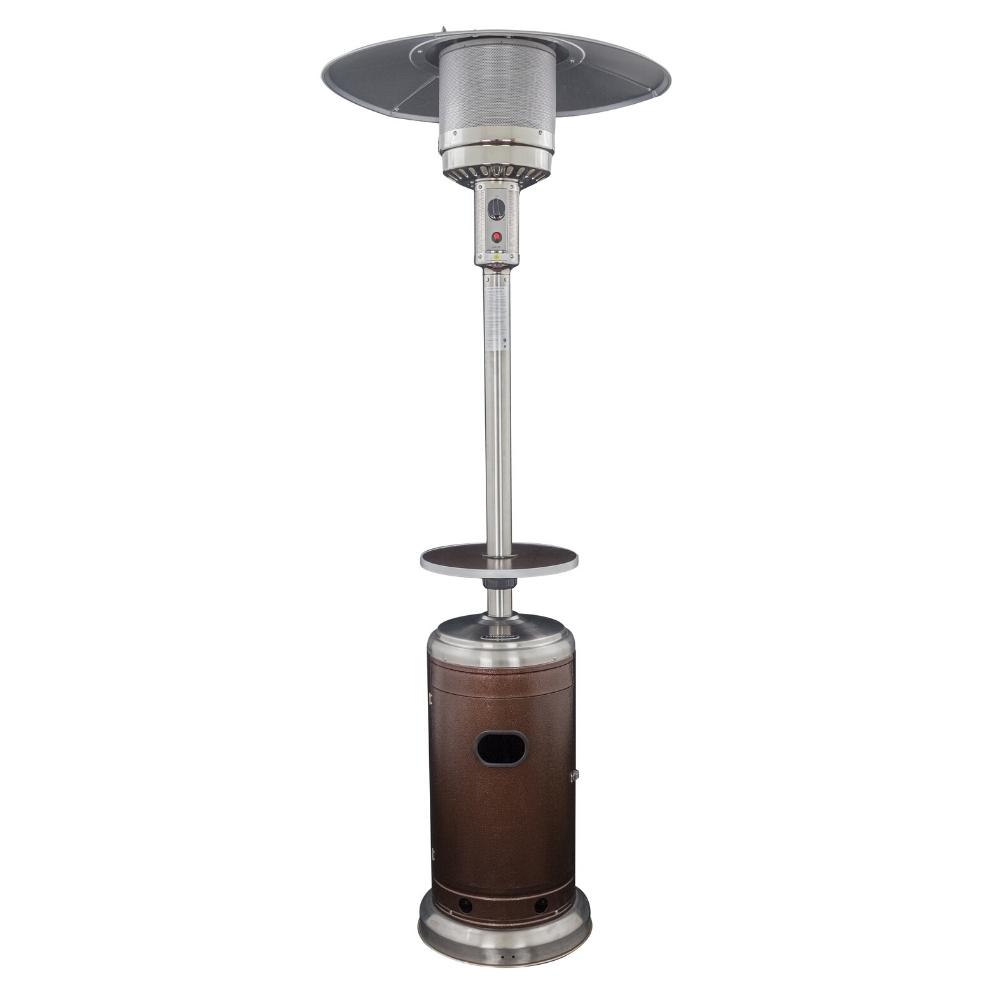
AZ Patio Heaters HLDS01-GTSS Stainless Steel Propane Patio Heater
Check price on Amazon
3,400+ reviews
A 46,000 BTU freestanding propane heater that covers a 9-foot radius and runs around 10 hours per standard 20-pound tank.
Shop on Amazon →Best Directional Gas Heater for Serious Cold Weather
If you live somewhere that gets genuinely cold, like the Pacific Northwest or at elevation above 4,000 feet, the Bromic Heating Tungsten Portable Gas Heater is worth the higher price. It uses a radiant burner design that focuses heat directionally rather than radiating in all directions, which means far less warmth lost to the sky and more landing on the people in front of it.
The stainless steel housing and commercial-grade construction mean this heater looks intentional rather than like an afterthought on a thoughtfully built patio. It runs on a standard propane cylinder and stands on a weighted base. The focused output makes it feel significantly warmer than a comparably rated mushroom heater because you are capturing almost all of what it produces.
The tradeoff is price. This is a premium product, and it costs more than most people expect from an outdoor heater. But if you are building a setup you plan to use for years and want something that actually looks like it belongs there, the Bromic justifies the investment over two or three seasons.
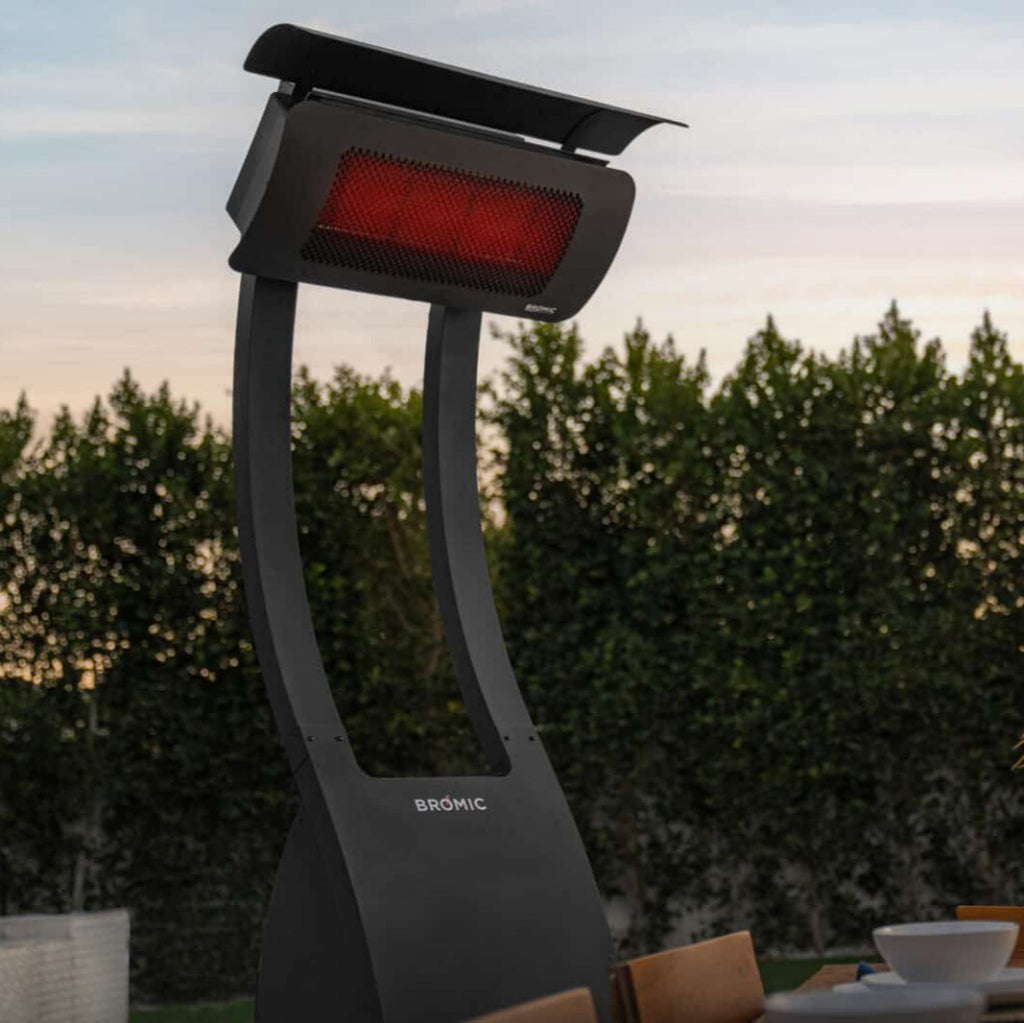
Bromic Heating BH0510001 Tungsten Smart-Heat Portable Gas Heater
Check price on Amazon
980+ reviews
A directional radiant gas heater with a commercial-grade build that focuses warmth where people are sitting rather than radiating it equally in all directions.
Shop on Amazon →Best Electric Heater for Covered Patios and Pergolas
The Briza Infrared Patio Heater is the electric pick for anyone with a covered outdoor space. It mounts to a ceiling or wall, plugs into a standard 120V outlet, and heats whatever is directly below or in front of it. A covered pergola or screened porch is exactly where this excels because radiant heat does not need to fight wind the way a convection heater does.
At 1,500 watts it produces around 5,100 BTU equivalent, which is less than a full-size propane heater on paper. But the heat delivery is different. Infrared heats objects and people directly rather than warming the surrounding air, so you feel it immediately and the warmth does not vanish the moment a breeze cuts through. On a 10x12 covered deck, one of these handles temps in the mid-40s without trouble.
The Briza also works well on apartment balconies where gas heaters are prohibited. No fuel to manage, no open flame, no carbon monoxide risk. You plug it in, aim it, and turn it on. The included remote control is a genuine convenience late at night when you do not want to get up from your seat.
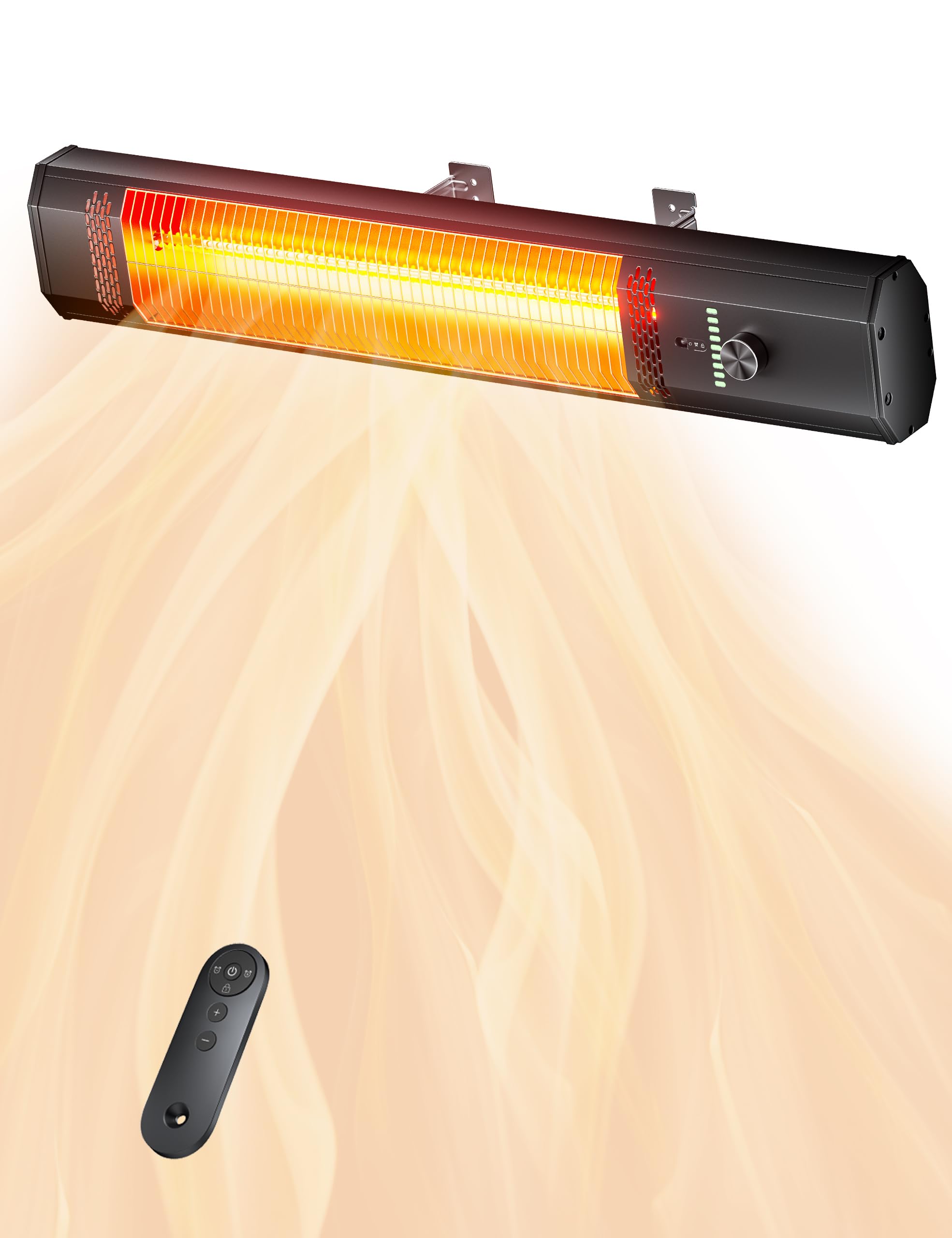
Briza Infrared Patio Heater 1500W Outdoor Wall and Ceiling Mount
Check price on Amazon
4,800+ reviews
A 1,500W infrared electric heater that mounts to ceilings or walls and is rated safe for covered patios, pergolas, and balconies where gas heaters are off-limits.
Shop on Amazon →Best Freestanding Electric Heater for Renters and Flexible Setups
The Dr. Infrared Heater DR-238 gives you the freestanding portability of a propane heater but runs entirely on electricity. It stands about 6 feet tall, plugs into a standard 120V outlet, and puts out 1,500 watts of carbon fiber infrared heat. This is the option if you want to move the heater around your patio or bring it inside a garage or screened porch depending on the evening.
The carbon fiber heating element reaches operating temperature in under a minute, which is noticeably faster than the quartz elements in cheaper electric heaters. The adjustable height and tilt let you aim the heat toward the people sitting in front of it rather than just projecting it straight down. On a calm night at 45 degrees on an uncovered patio, it genuinely holds its own.
For renters or anyone who wants to eliminate propane logistics entirely, this is the most practical choice. You will never forget to buy a tank before guests arrive. There are no ignition issues in cold weather. The setup is plug-in and go, which matters more than it sounds after a full day of work when people are already showing up.
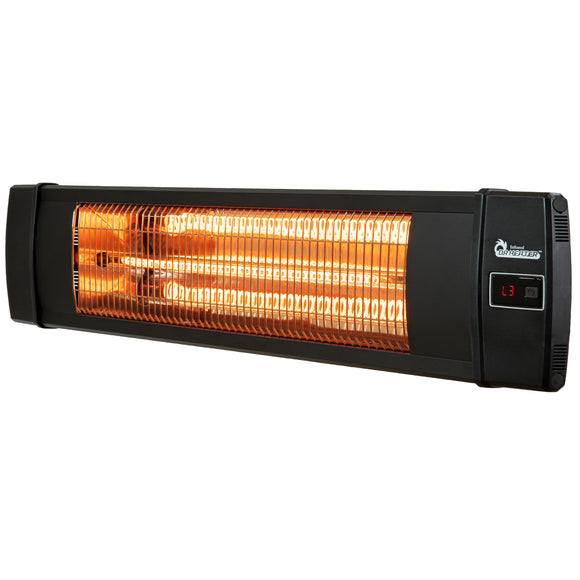
Dr. Infrared Heater DR-238 Outdoor Carbon Infrared Patio Heater
Check price on Amazon
2,100+ reviews
A 1,500W freestanding electric heater with a carbon fiber element that heats up fast, stands 6 feet tall, and tilts to direct warmth exactly where people are sitting.
Shop on Amazon →Quick Tips for Choosing Between Gas and Electric
- Covered spaces require electric. Propane and natural gas heaters produce carbon monoxide and should never run under a solid pergola roof, inside a screened porch, or on a covered balcony. Electric infrared is the only safe option in any space without wide-open ventilation on multiple sides.
- BTU numbers do not tell the whole story. A 1,500W infrared electric heater delivers roughly 5,100 BTU, but the radiant delivery often feels warmer than a 15,000 BTU convection heater because it heats you directly rather than the air around you.
- Gas is cheaper per hour but electric is cheaper to buy. Running a 46,000 BTU propane heater regularly adds up across a season. A 1,500W electric unit running two hours a night costs roughly 30 to 50 cents in electricity depending on your local rate.
- Wind hurts gas heaters more than electric. Propane heaters lose efficiency fast in wind because warm air disperses upward and away. Infrared electric heaters lose less because they heat objects directly. On a breezy patio, electric infrared will often feel more effective per unit of output.
- Check your lease or HOA before buying a gas heater. Many apartment buildings, condos, and some HOAs prohibit propane tanks on balconies and shared patios. Verify the rules before purchasing or you may not be able to use it legally on your property.
- Match the heater to your actual square footage. A full-size freestanding propane heater is overkill for a small bistro table for two. A single 1,500W electric heater is underpowered for a 20x20 open patio. Scaling the output to the space makes a bigger difference than brand or price.
Frequently Asked Questions
Are gas patio heaters safe to use on a covered patio?
No. Propane and natural gas heaters produce carbon monoxide and require open-air ventilation on all sides. A covered pergola, screened porch, or any semi-enclosed space requires an electric infrared heater, not a gas one.
How much does it cost to run a propane patio heater?
A 46,000 BTU heater at full output burns through a 20-pound propane tank in about 10 hours. At roughly $25 per refill, that is around $2.50 per hour. Running at medium heat settings will stretch each tank noticeably further.
Do electric patio heaters work in cold weather?
Electric infrared heaters work well down to around 35 degrees Fahrenheit, especially in covered or semi-enclosed spaces. On a wide-open patio in serious cold or wind, a large propane heater will typically outperform them.
Can I use a patio heater on a wood deck?
Yes, with proper clearance. Most freestanding propane heaters need at least 3 feet of clearance on all sides. Mounted electric infrared heaters typically require 30 to 40 inches of clearance below the element. Follow the manufacturer specs and avoid aiming any heater directly at wood surfaces for extended periods.
Which type of patio heater is better for an apartment balcony?
Electric infrared heaters are the practical choice for most apartment balconies. They produce no open flame, no carbon monoxide, and require no propane storage, which most leases and fire codes prohibit on elevated balconies.