Gas vs Charcoal Smoker: Which Is Better?
The honest answer is that both gas and charcoal smokers can produce incredible food. The wrong answer is that one is always better than the other. What matters is which one fits how you actually cook.
Gas smokers are forgiving. You set a temperature, walk away, and come back to brisket that did not need babysitting. Charcoal smokers reward attention. They ask more of you, and when you give it, the smoke ring and bark on a pork shoulder are hard to beat.
This guide covers five real smokers, gas and charcoal, across different price points and use cases. If you are cooking for a weeknight crowd, a gas smoker might be your best friend. If Saturday low-and-slow sessions are your thing, charcoal is probably calling your name.
Best Gas Smoker for Beginners: Camp Chef Smoke Vault 24"
The Camp Chef Smoke Vault 24 is the smoker I recommend to anyone who wants real smoked food without the learning curve of charcoal. It runs on propane, holds temperature between 160 and 400 degrees with a simple dial, and fits a full packer brisket on its three adjustable racks. On a 10x12 patio, this thing barely takes up any space compared to an offset.
The snap-ignition burner lights reliably even in cooler fall weather, and the door thermometer is accurate enough that you can trust it without a probe. For a weeknight dinner, you can get salmon or chicken thighs done in under two hours with real smoke flavor from the included wood chip tray. It is not the deep bark you get from charcoal, but it is genuinely good, and you barely have to think about it.
At around $300, it is one of the most honest buys in the category. The build quality is solid, the legs are stable on uneven decking, and replacement parts are easy to find. If you have been putting off smoking because it sounds complicated, this is the smoker that will change your mind.
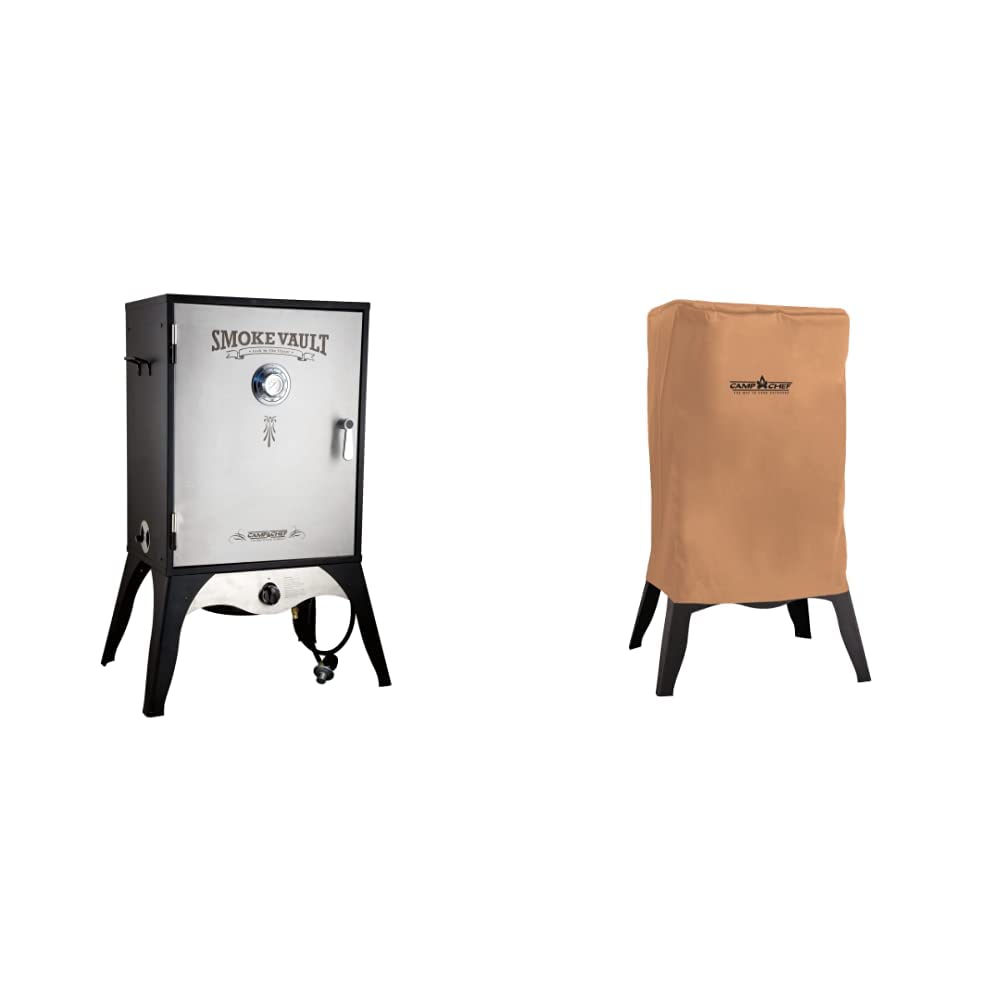
Camp Chef Smoke Vault 24" Vertical Propane Smoker
Check price on Amazon
8,400+ reviews
Three racks, snap-ignition propane, and a wide 160-400F range make this the most approachable gas smoker you can buy.
Shop on Amazon →Best Charcoal Smoker for Serious Results: Weber Smokey Mountain 18"
If you want to understand why competitive pitmasters still reach for charcoal, the Weber Smokey Mountain 18 is the place to start. It is a bullet-style water smoker that uses a middle water pan to stabilize temperature, and once you learn how to dial in the vents, it holds 225 degrees for six to eight hours without you constantly checking it. Ribs, pork shoulder, whole chickens. It handles all of it.
The 18-inch diameter fits comfortably on a small deck or balcony. Two cooking grates give you enough real estate for a rack of ribs on top and a half chicken below at the same time. The porcelain enamel finish resists rust through multiple seasons, which matters if you live somewhere that gets winter rain.
The trade-off versus gas is real. You need to start charcoal 30 minutes early, monitor the vents for the first hour, and learn to read your fire. That is not a flaw for people who enjoy the process. For those who want to set and forget, it will frustrate you until it clicks. When it clicks, the food is noticeably better than anything a gas smoker produces.
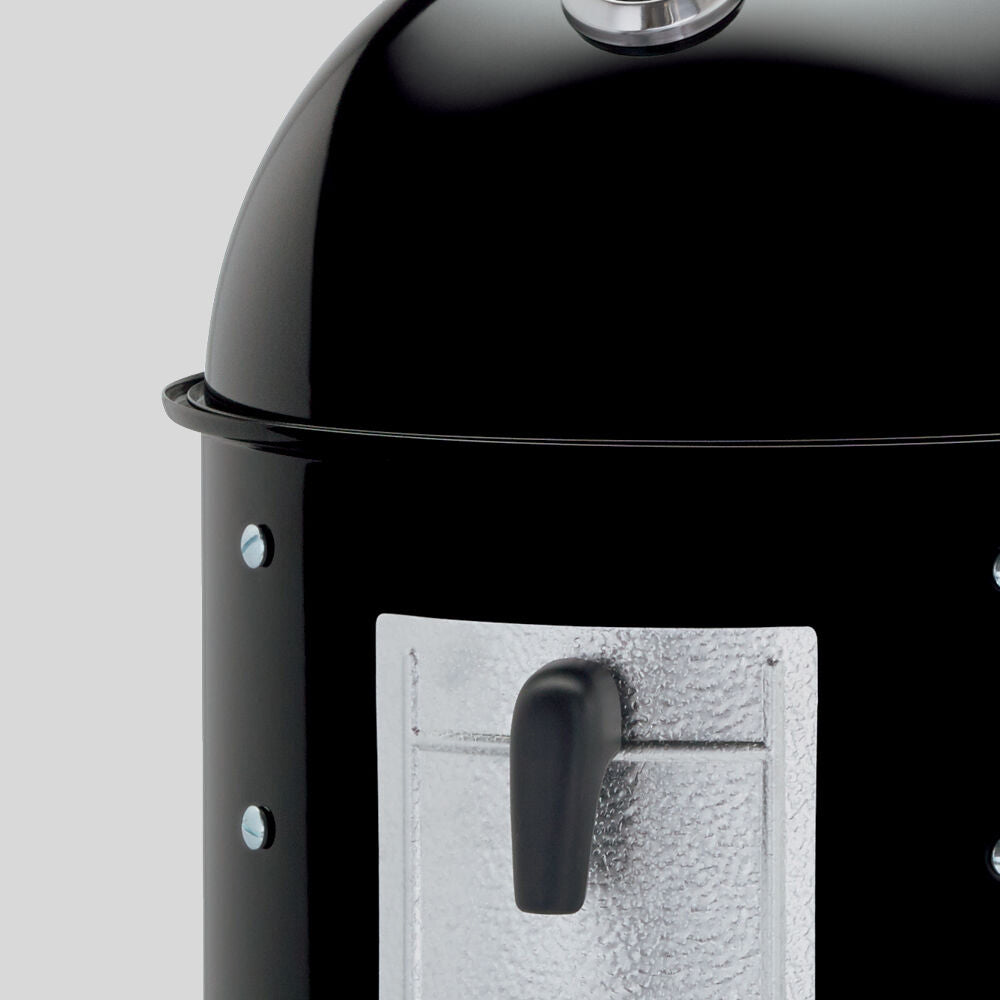
Weber Smokey Mountain Cooker 18" Charcoal Smoker
Check price on Amazon
14,200+ reviews
The bullet smoker that has produced more competition-quality backyard BBQ than any other single unit on the market.
Shop on Amazon →Best Budget Gas Smoker: Masterbuilt 40" Propane Smoker
The Masterbuilt 40-inch propane smoker is a tall cabinet design with four racks, and it gives you more cooking surface than almost anything else under $250. If you are feeding a big group, like a backyard graduation party or a football Saturday with 15 people, you can fit a full brisket, two racks of ribs, and a tray of wings simultaneously. That is a lot of food for the footprint.
Temperature control is straightforward with the push-button igniter and adjustable burner knob. The built-in thermometer reads a little hot, so picking up a separate probe is worth the few dollars. The chip tray loads from the side, which means you can add wood chips mid-cook without opening the door and losing all your heat.
For pure volume cooking at a lower entry price, this is hard to argue with. The cabinet is not as heavy as a Weber or a Pit Barrel, but for the price it is a solid piece of equipment that will last multiple seasons if you keep it covered.
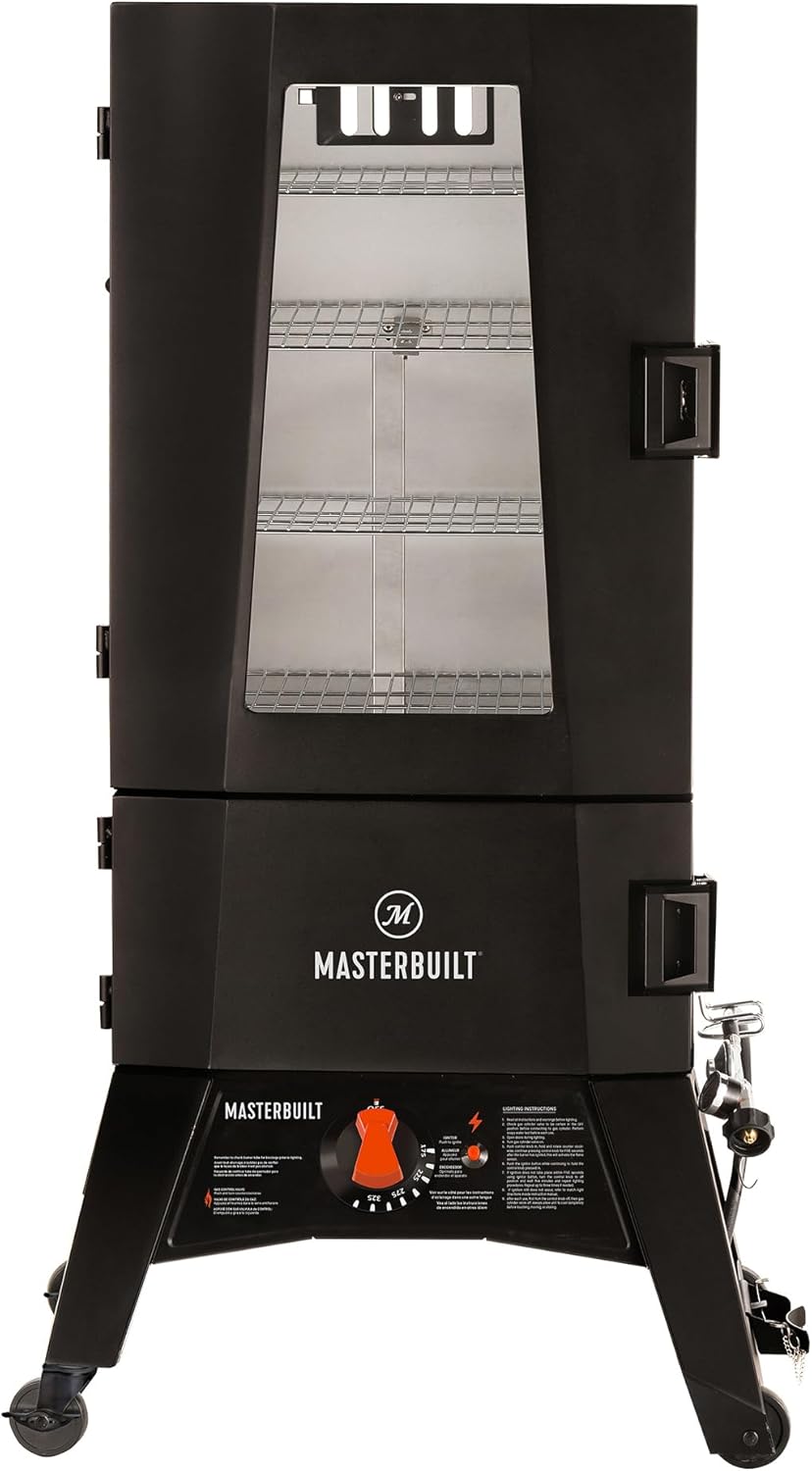
Masterbuilt MB20051316 40" Propane Smoker with Thermometer Control
Check price on Amazon
6,700+ reviews
Four racks and side-load chip tray make this the best high-capacity gas smoker under $250 for feeding a crowd.
Shop on Amazon →Best Drum Smoker for Charcoal Flavor: Pit Barrel Cooker Classic Package
The Pit Barrel Cooker is not shaped like a traditional smoker, and that is exactly why it works so well. It is a 30-gallon steel drum with a single charcoal basket at the bottom and hooks hanging from a bar across the top. You hang your ribs vertically. You hang your whole chicken upside down. The fat bastes the meat as it cooks, and the result is some of the most flavorful smoked food you can produce without spending $1,000.
It holds a steady 250 to 300 degrees with the single intake vent set at factory position. The learning curve is almost nonexistent compared to an offset. You light the charcoal, hang the meat, close the lid, and check back in a few hours. For a compact backyard setup, it fits in a corner easily and the porcelain coating on the barrel handles heat and weather without issue.
This is the charcoal smoker for someone who wants real smoke flavor without obsessing over vent management all afternoon. The hook method is genuinely different from shelf cooking, and once you try hanging ribs this way, it is hard to go back.
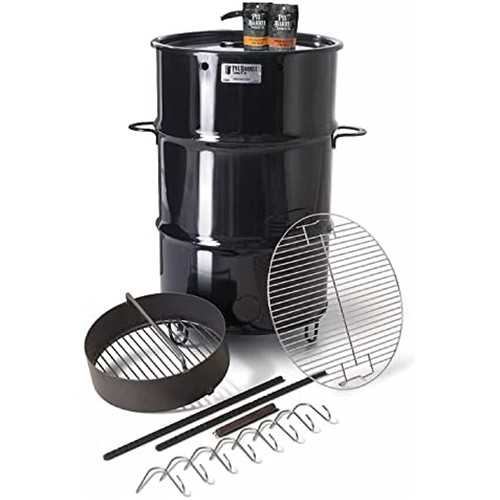
Pit Barrel Cooker Classic Package
Check price on Amazon
5,900+ reviews
The vertical drum design with hanging hooks produces self-basting results that shelf-style smokers simply cannot replicate.
Shop on Amazon →Best Offset-Style Charcoal Smoker: Oklahoma Joe's Highland Offset
The Oklahoma Joe's Highland is a horizontal offset smoker with a firebox on the side and a main cooking chamber big enough for a whole brisket flat or a bone-in pork shoulder with room to spare. If the classic image of a backyard smoker is in your head, it probably looks like this. It fits well in a larger backyard setup where you have some dedicated cooking space.
This is the most hands-on smoker on this list. You manage a real wood or charcoal fire in the offset box and coax heat and smoke through the main chamber. Temperature swings happen, and learning to compensate for them is part of the process. Some people find that deeply satisfying. If you are the type who enjoys tending a fire for four or five hours on a Saturday, an offset gives you that experience plus food that has absorbed genuine wood smoke from a real fire.
The Highland does run cooler near the firebox end and warmer toward the exhaust, which means rotating meat during a long cook. At around $280, it is priced right for an entry into offset smoking. If you want a gas smoker that is easier to manage, this is not your pick. But for the pitmaster mentality, this is where that skill set develops.
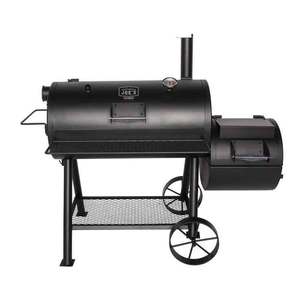
Oklahoma Joe's Highland Reverse Flow Offset Smoker
Check price on Amazon
9,100+ reviews
A full offset smoking setup at an accessible price, built for the backyard pitmaster who wants to cook with real fire.
Shop on Amazon →Quick Tips for Choosing Between Gas and Charcoal
- Start with how much time you have. Gas smokers are a weeknight tool. Charcoal smokers are a weekend ritual. Buy based on which scenario describes your actual life, not your ideal one.
- Flavor comes from wood, not fuel. Both gas and charcoal smokers use wood chips or chunks for smoke. The fuel type affects convenience and bark development, but a good gas smoker with quality wood chips will still produce real smoke flavor.
- Temperature range matters more than max temperature. For smoking, you want consistent low temperatures, 200 to 275 degrees. Check that your smoker holds that range steadily before worrying about how hot it can go.
- Plan for at least one probe thermometer. Built-in thermometers on budget smokers are often inaccurate by 20 to 50 degrees. A two-probe digital thermometer that reads both the chamber and the meat is worth every dollar.
- Cover your smoker every time. Whether gas or charcoal, a fitted grill cover extends the life of your smoker significantly. The firebox on an offset is especially vulnerable to rust from moisture.
- Charcoal type changes everything. Lump charcoal burns hotter and cleaner than briquettes. For smoking, briquettes are often more consistent for long cooks because they burn more slowly and evenly.
Frequently Asked Questions
Does a gas smoker produce real smoke flavor?
Yes, as long as you use wood chips or chunks in the chip tray. The propane provides heat and the wood creates the smoke. The flavor is genuine, though charcoal smoking tends to produce a deeper bark on the meat surface.
How long does it take to smoke a brisket on a charcoal smoker?
A full packer brisket at 225 degrees takes roughly 1 to 1.5 hours per pound. A 12-pound brisket can run 14 to 18 hours. Wrapping in butcher paper around the 165-degree internal temp mark speeds things up without hurting the bark.
Are gas smokers easier to use than charcoal?
Significantly easier for most people. You turn a knob, set your temperature, add wood chips, and walk away. Charcoal requires building and managing a fire, adjusting vents, and more attention during the cook.
Can I use wood chunks instead of chips in a gas smoker?
Most gas smokers are designed for chips, which burn faster. Chunks work in some models but may not fit the chip tray. Check your specific model. Chips soaked in water for 30 minutes will extend your smoke time in a gas unit.
Which smoker is better for a small patio or apartment deck?
A vertical gas smoker like the Camp Chef Smoke Vault or the Masterbuilt propane cabinet has the smallest footprint. A Weber Smokey Mountain 18 is also compact. Offset smokers are wider and need more clearance from walls and railings.