Gas Fire Pit Table vs. Wood Fire Pit: Which Wins?
The short answer is that neither is better. They are different tools for different backyards and different people, and the right choice comes down to how you actually use your outdoor space.
Gas fire pit tables win on convenience, cleanliness, and HOA compliance. Wood burning fire pits win on raw heat, atmosphere, and that primal smell people have been gathering around for thousands of years. Both have real tradeoffs worth knowing before you spend the money.
This covers four specific products across both categories so you can see exactly what you get at each price point. The comparison factors that matter most, heat output, ongoing cost, safety, smoke, and neighborhood rules, run through all of it.
Best Entry-Level Gas Fire Pit Table: Endless Summer
If you are new to gas fire pits and not sure you want to commit several hundred dollars, the Endless Summer GAD1401G is the right starting point. It is a 30-inch round table running on a standard 20-pound propane tank, puts out around 30,000 BTUs, and comes with decorative lava rock already included. Setup takes about 20 minutes, and once you hook up the tank it is ready to use.
The table footprint is small enough for a 10x10 patio and comfortable for two to four people gathered around it. You are not going to heat a crowd of eight on a cold October night, but for mild evenings with friends it does the job. The glass tabletop and steel frame look more expensive than they are, which is a genuinely nice bonus at this price.
On the gas versus wood debate, this table illustrates the core gas advantage: you turn a knob and there is fire. No lighter fluid, no kindling, no waiting for a flame to build. When the night is over, you turn the knob back and it is out. For anyone who wants backyard ambiance without a project every single time, that matters a lot.
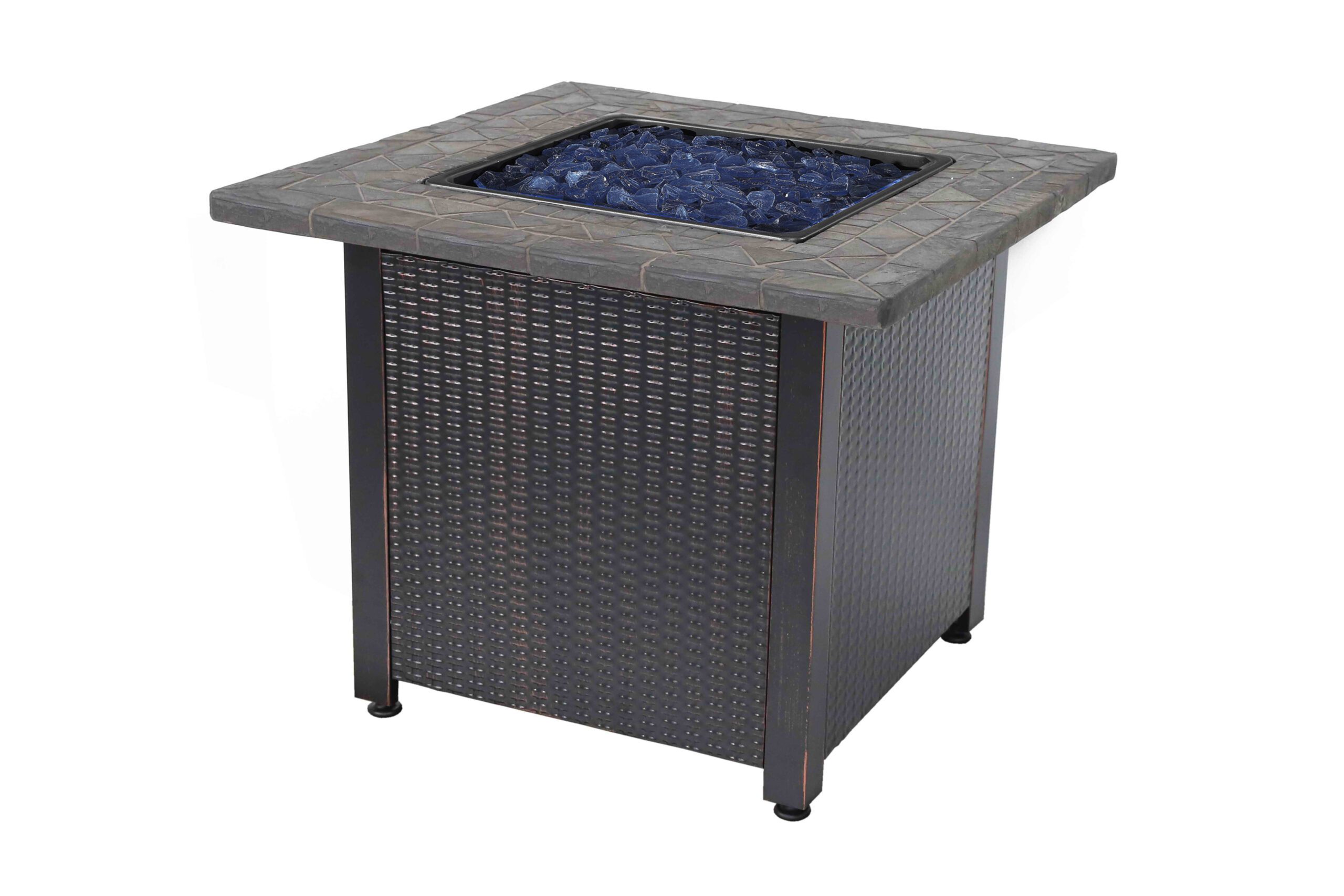
Endless Summer GAD1401G 30-Inch LP Gas Outdoor Fire Table
Check price on Amazon
6,800+ reviews
A no-fuss entry into gas fire pit tables that delivers real ambiance for two to four people without complicated setup or ongoing maintenance.
Shop on Amazon →Best Upgrade Gas Fire Pit Table for Entertaining Groups
The Real Flame Caden fire table operates at a different level entirely. It is a 40-inch rectangle pushing 50,000 BTUs with a powder-coated steel frame, a glass wind guard included in the box, and a clean modern look that fits well on a larger patio or deck. At that output you will actually feel warmth at four to five feet of distance, not just see a pretty flame.
The rectangular shape changes how people gather compared to a round table. Six people can sit comfortably with two on each long side and one on each end, which works well for outdoor dinner parties where conversation is the point. The wind guard keeps the flame steady when a breeze picks up, something cheaper tables do not handle well at all.
From a pure entertaining standpoint, this is where gas fire pits really earn their place. The flame stays consistent all evening without anyone getting up to poke logs or manage airflow. You fill the tank before guests arrive, set the flame height, and the atmosphere runs itself. That is a hard thing to put a price on when you are hosting.
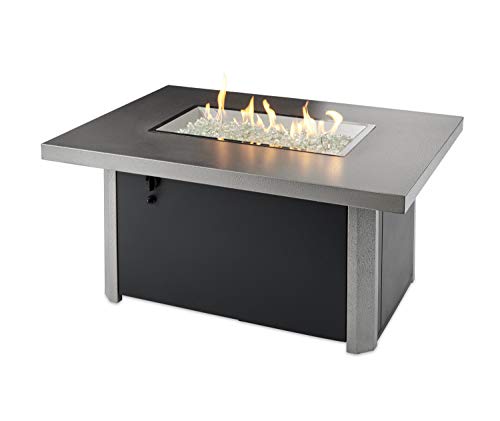
Real Flame Caden 40-Inch Rectangle Propane Fire Pit Table
Check price on Amazon
2,100+ reviews
A higher-output rectangle gas table with an included wind guard that genuinely holds its own for entertaining six people on a larger patio.
Shop on Amazon →Best Classic Wood Burning Fire Pit for Real Heat
The Sunnydaze 35-inch Crossweave fire pit is the kind of purchase that is hard to argue with. It is a heavy-duty steel bowl with a decorative diamond crossweave pattern, an included spark screen, a poker, and a cooking grate. The bowl is deep enough to hold a real fire without sparks escaping constantly, and the whole thing feels substantial rather than flimsy.
For a backyard with space and tolerance for wood smoke, this style of fire pit is genuinely hard to beat on warmth. You can feel the heat from 8 to 10 feet away on a cold night. The cooking grate is not decorative either. People actually use it for hot dogs, brats, and cast iron cooking in a way that no gas table realistically replicates.
The tradeoffs are real: you need to buy or split wood, the fire takes 10 to 15 minutes to build properly, and cleanup means dealing with ash. Many HOAs prohibit open-flame wood burning entirely. But if your neighborhood allows it and you have a yard with clearance from structures, this is the most affordable way to get a fire that actually warms people up.
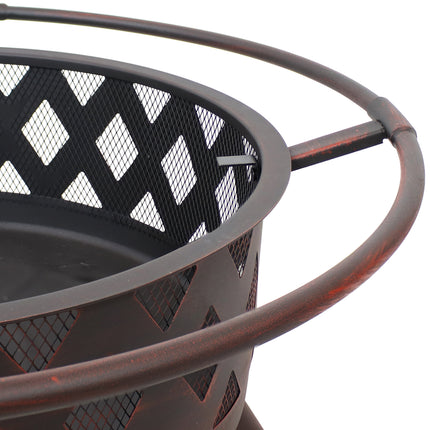
Sunnydaze 35-Inch Heavy-Duty Steel Crossweave Fire Pit with Spark Screen and Poker
Check price on Amazon
8,400+ reviews
A no-nonsense steel bowl fire pit with serious heat output and an included cooking grate, best for yards with space and no HOA restrictions on wood burning.
Shop on Amazon →Best Smokeless Wood Fire Pit for Suburban Backyards
The BioLite FirePit+ is a genuinely different kind of wood burning fire pit. It uses a battery-powered fan to force airflow through the base and create secondary combustion, which burns off most of the smoke before it reaches your guests. The result is a wood fire that smells like a campfire but does not turn your shirt into a smoke collector by the end of the night.
For people who want the wood burning experience but live in a neighborhood where smoke complaints are a real possibility, this is the closest thing to a practical solution. It is compact at about 27 inches long, works well on a 10x10 deck with proper clearance, and is genuinely portable enough to take camping or tailgating. The smokeless effect is real when you use dry seasoned wood and let the fire get up to temperature.
Fan speed control via a companion app sounds gimmicky until you use it. It genuinely helps manage flame intensity without physically adjusting the fire. The FirePit+ sits between gas and traditional wood in terms of effort. You still manage fuel, but cleanup is easier than a standard bowl and the smoke reduction makes it a reasonable option for tighter yards.
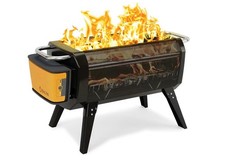
BioLite FirePit+ Wood Burning Smokeless Fire Pit
Check price on Amazon
3,200+ reviews
A battery-powered airflow system makes this the most neighbor-friendly wood burning fire pit for suburban yards and smaller deck spaces.
Shop on Amazon →Quick Tips for Choosing Between Gas and Wood Fire Pits
- Check your HOA rules before buying anything. Most HOAs allow propane gas fire pit tables but prohibit open-flame wood burning. Returning a fire pit is a real hassle, so confirm the rules first.
- BTUs matter more than table size for warmth. A 30,000 BTU gas table provides ambiance on a calm night. A 50,000 BTU table provides actual warmth. If you live somewhere that gets cold in the evenings, go higher.
- Use only dry, seasoned wood to reduce smoke. Fresh or wet wood produces far more smoke and far less heat. Buy kiln-dried firewood or split your own and let it sit for at least a season.
- A propane cover keeps the look clean. Gas fire pit tables with a hidden tank shelf look better. If yours shows the tank, a simple wicker or steel cover in the $20 to $30 range cleans things up fast.
- Plan clearance distances before you position anything. Wood fire pits generally need 10 to 15 feet of clearance from structures, fences, and pergolas. Gas tables can sit closer but still need 2 to 3 feet minimum.
- Factor in ongoing fuel costs over a season. A 20-pound propane tank costs $20 to $25 to refill and lasts 4 to 6 hours at full flame. A face cord of firewood runs $100 to $200 in most regions and lasts considerably longer with regular use.
Frequently Asked Questions
Which puts out more heat, a gas fire pit table or a wood fire pit?
Wood fires produce more usable heat, especially at a distance. A well-built wood fire can exceed 80,000 BTUs, while most residential gas tables top out at 50,000 BTUs. If warmth is your main goal, wood wins by a clear margin.
Are gas fire pit tables allowed in HOA communities?
Most HOAs allow propane gas fire pit tables because they produce no flying sparks and minimal smoke. Always read your CC&Rs or ask your HOA board directly before purchasing, since rules vary significantly by community.
Can you cook on a gas fire pit table?
Not in any practical way. Gas tables are designed for ambiance, not cooking. The burner sits in the center of a decorative table surface and cannot support cookware properly. A wood burning fire pit with a cooking grate is the right tool for actual outdoor cooking.
How long does a propane tank last on a gas fire pit table?
A standard 20-pound tank lasts roughly 4 to 6 hours at full flame on a 40,000 to 50,000 BTU table. Running it at medium height can stretch that to 8 hours or more, which is plenty for most evenings.
Is a smokeless fire pit actually smokeless?
Mostly, yes, when conditions are right. Products like the BioLite FirePit+ dramatically cut smoke compared to a standard steel bowl, but they are not 100% smoke-free. Wet wood or low airflow will still produce noticeable smoke regardless of the design.