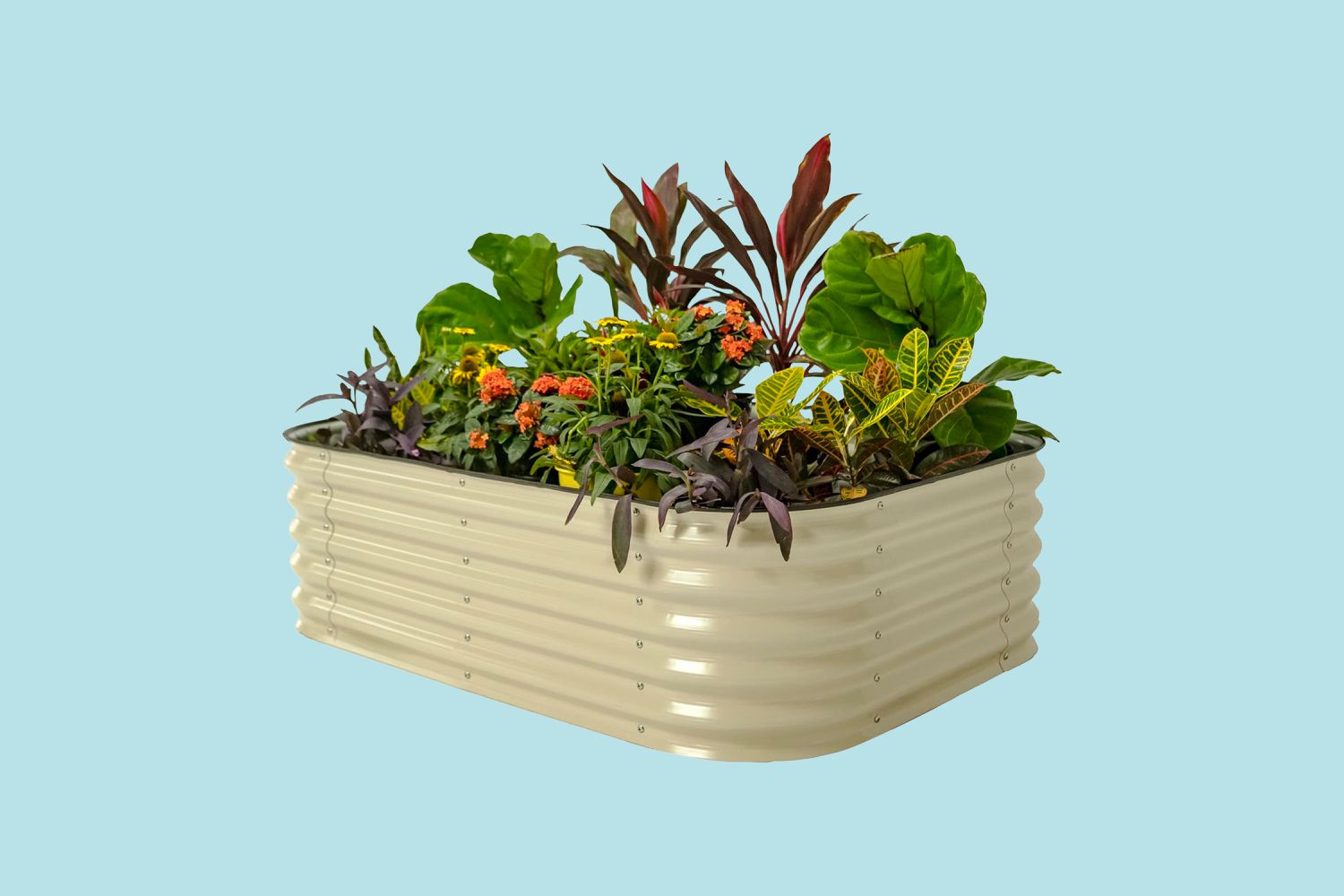
Best Raised Garden Bed Kits for Backyard Veggies
A raised bed fixes most of the reasons people give up on backyard gardening. Drainage improves, soil warms up faster in early spring, and you stop fighting the compacted clay that passes for ground in most yards.
These kits go together in an afternoon. Most need no tools beyond a rubber mallet, and the better ones let you add sections as your garden grows without starting over.
The picks here cover wood, metal, and composite, and range from a $59 galvanized steel box to a $179 modular system that can be reconfigured every season.
Best Modular Option for Flexible Layouts
The Vego Garden kit is the one people keep talking about at the nursery, and for good reason. The panels connect with a sliding tab system that requires zero tools and takes about 20 minutes to assemble. You can arrange it as a straight rectangle, an L-shape, or a U-shape depending on what fits your yard.
The steel is 2mm thick galvanized with a food-safe coating, and the walls are 17 inches tall. That depth matters if you want to grow root vegetables like carrots or parsnips, which most shallower beds cannot support properly. For a 10x12 backyard plot, the 9-in-1 configuration gives you enough room for tomatoes, peppers, and a row of squash without things getting crowded.
One practical note: this kit is heavy once fully assembled, so decide on placement before you fill it with soil. Moving it after the fact is a two-person job.
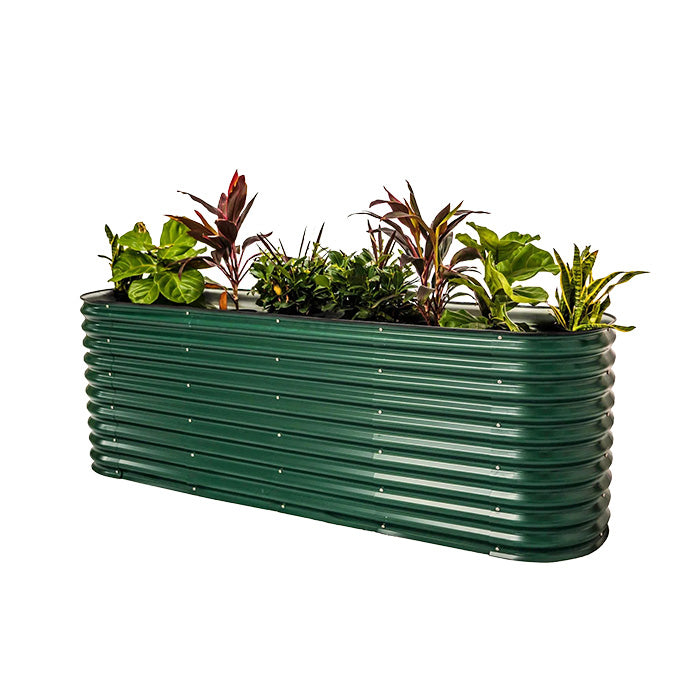
Vego Garden 9-in-1 Modular Metal Raised Garden Bed Kit
Check price on Amazon
8,400+ reviews
Modular steel panels with a tool-free locking system and 17-inch walls deep enough for root vegetables.
Shop on Amazon →Best Cedar Wood Kit for a Classic Garden Look
Cedar is the traditional choice for a reason. It resists rot naturally without any chemical treatment, which matters when you are growing food your family will eat. The Greenes Fence kit comes in multiple sizes, and the most practical is the 4x8, which fits two people growing salad greens, herbs, and a few tomato plants comfortably.
Assembly uses a dovetail joint that locks the corners together without screws or hardware. The boards are 5.5 inches tall, which is ideal for shallow-rooted crops like lettuce, spinach, and radishes. If you want more depth for tomatoes or peppers, you can stack two kits directly on top of each other.
The natural cedar ages to a soft gray over time, which some people love and others seal to preserve the original color. Either way, this is the option that looks most at home in a tidy backyard garden next to a fence or along a garage wall.
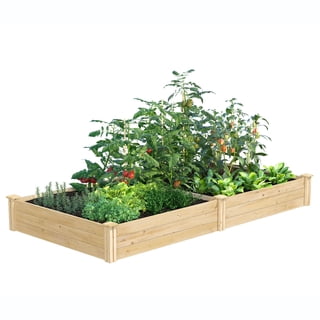
Greenes Fence RC2B48 Premium Cedar Raised Bed Garden Kit 4x8
Check price on Amazon
6,100+ reviews
Naturally rot-resistant cedar with dovetail corners that assemble without screws, available in multiple configurations.
Shop on Amazon →Best for Large Plots and Serious Growers
The Vegega kit is built for people who want to grow a real volume of vegetables, not just a handful of herbs. The 17-in-1 configuration lets you build a bed up to 16 feet long, and the corrugated steel walls are 12 inches tall with reinforced corner posts that keep everything square even when the soil is fully packed in.
This is a good fit for a 15x20 backyard with dedicated garden space. You can run two parallel rows for a proper vegetable plot, and the steel will not warp or bow over time the way thinner options sometimes do. The coating is galvanized inside and out, so it handles heavy rain, irrigation, and humid summers without rusting through.
Setup takes about an hour with two people. The included hardware is well organized and the instructions are clear, which is not always the case with large modular kits at this price point.
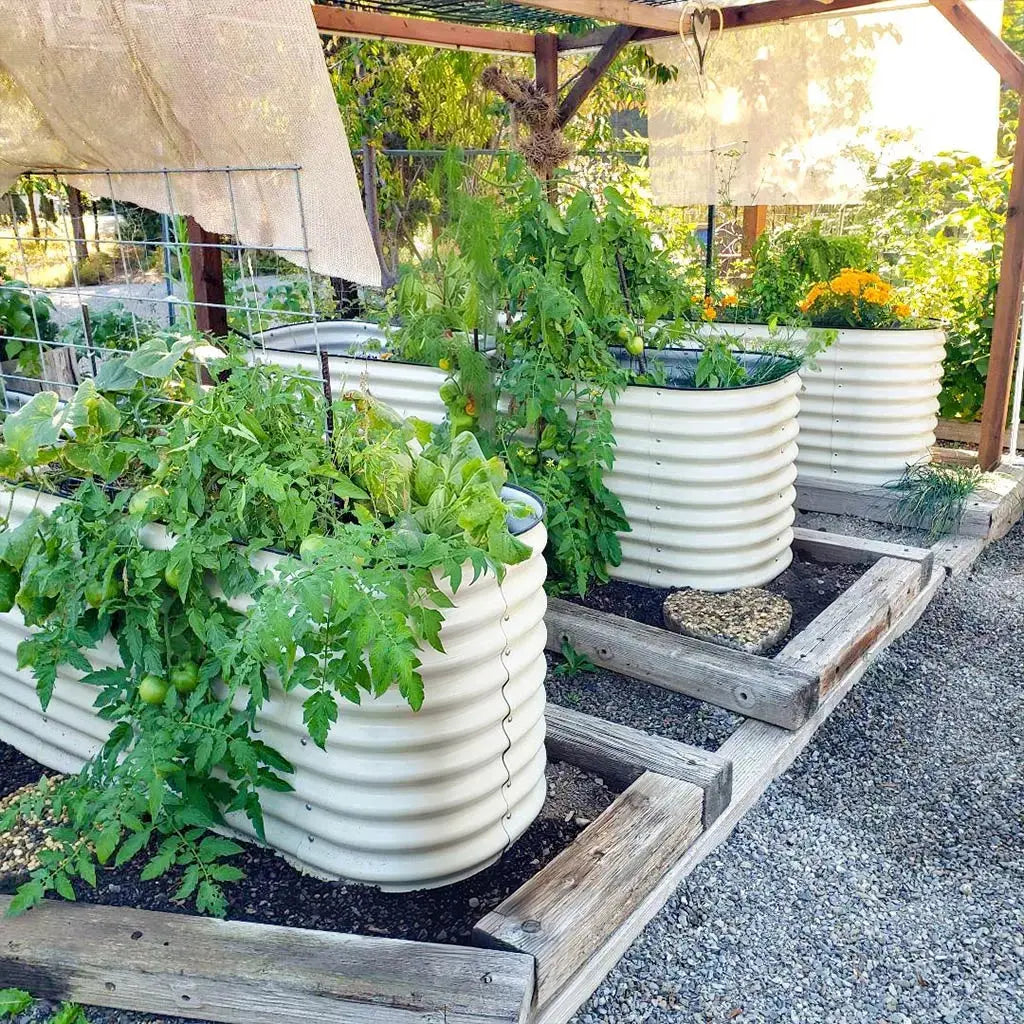
Vegega 17-in-1 Metal Raised Garden Bed Kit
Check price on Amazon
5,300+ reviews
Corrugated galvanized steel with reinforced corners, configurable up to 16 feet long for serious vegetable growing.
Shop on Amazon →Best Composite Option for Low-Maintenance Gardening
Composite boards made from recycled plastic and wood fiber sit in an interesting middle ground. They look like wood from a distance, never need sealing or staining, and will not rot even if you leave the bed outside through a wet winter with standing water around it.
The Frame It All Two Inch Series uses a corner bracket design that snaps together and can be taken apart if you want to move the bed or reconfigure it next season. The 4x4 size is a focused footprint for a dedicated herb and salad garden on a smaller patio or along a side yard where a larger bed would not fit.
It costs a bit more than basic cedar upfront, but the math works out over five or ten years when you are not replacing warped boards or applying sealant every spring.
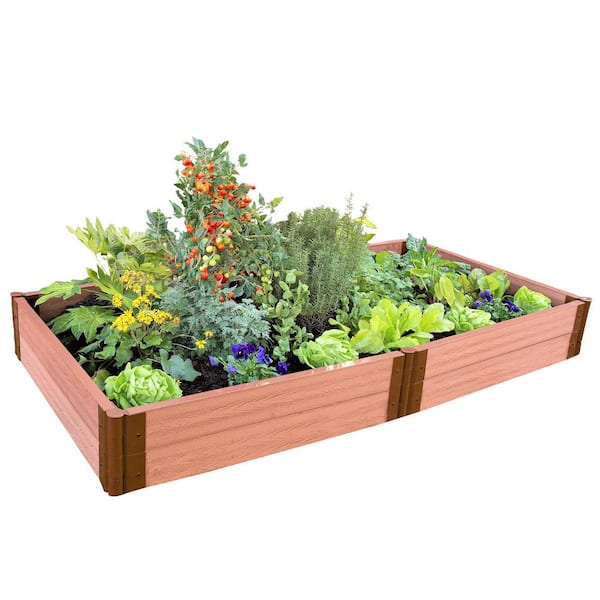
Frame It All Two Inch Series Composite Raised Garden Bed 4x4
Check price on Amazon
3,800+ reviews
Recycled composite boards with snap-together corner brackets that never rot, warp, or need seasonal maintenance.
Shop on Amazon →Best Budget Pick for First-Time Growers
At under $65, the FOYUEE galvanized steel beds are the easiest entry point for anyone who wants to try raised bed gardening before committing to a bigger investment. The corrugated steel is thinner than the premium metal kits, but it handles normal outdoor conditions well and the price is low enough that you can buy two and run a more varied garden from the start.
The 4x8 size is the sweet spot. You have enough room for tomatoes at one end, a row of peppers in the middle, and a few squash plants at the other end. The 12-inch wall depth is sufficient for most vegetables except deep-rooted crops like carrots or parsnips, which need more room.
Do not expect this to look as polished as the Vego or Vegega kits. The finish is plain galvanized, but for a working kitchen garden in the back corner of your yard, it does exactly what you need it to do.
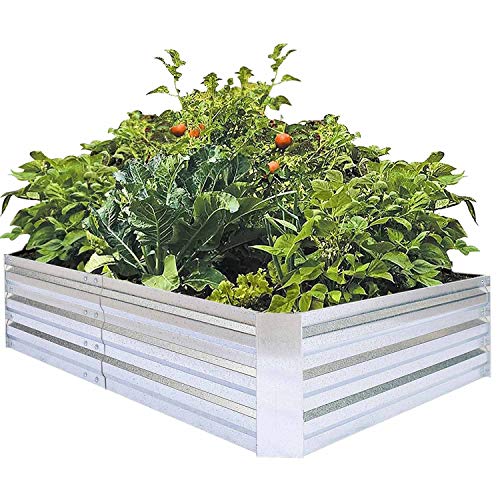
FOYUEE Galvanized Raised Garden Beds for Vegetables Metal Planter Box
Check price on Amazon
4,700+ reviews
Budget-friendly galvanized steel in a 4x8 footprint that handles most vegetables without the premium price tag.
Shop on Amazon →Best Elevated Option for Decks and Bad Backs
If kneeling down to tend a ground-level bed is not an option, this is the kit. The Yaheetech elevated raised bed sits at counter height on steel legs, so you garden at a comfortable standing position. It is popular with people who have back or knee issues, but it is honestly just easier for anyone who spends time out there regularly.
The bed holds about 7.5 cubic feet of soil in a fir wood box with a food-safe liner. That is enough for a solid herb garden, a tray of cut lettuce, or a mix of compact vegetables like dwarf tomatoes and bush beans. It fits on a small deck or patio without taking up much floor space, and the legs keep it above any standing water.
The trade-off is total capacity. You are not growing a full vegetable garden in here. For a dedicated herb station near the back door or a focused salad garden on a deck, it beats bending over a ground-level bed every time you go out.
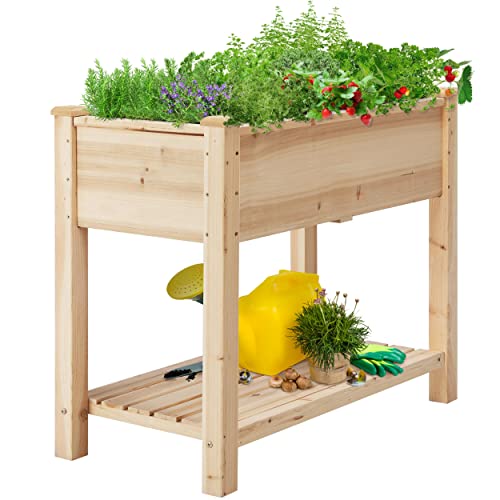
Yaheetech Raised Garden Bed with Legs Elevated Outdoor Planter Box
Check price on Amazon
5,900+ reviews
Counter-height fir wood bed on steel legs for standing-level gardening, ideal for herbs and compact vegetables on a deck.
Shop on Amazon →Quick Tips for Setting Up Your Raised Garden Bed
- Use the right soil mix. Do not fill with straight topsoil. A mix of 60% topsoil, 30% compost, and 10% perlite drains well and feeds plants throughout the whole season.
- Line the bottom with cardboard. Lay down sheets of corrugated cardboard before you fill the bed. It smothers weeds from below and breaks down into the soil over the first season.
- Place it where the sun actually hits. Most vegetables need 6-8 hours of direct sun. Check your yard at noon in spring before you commit to a permanent location.
- Keep the width to four feet. A 4-foot-wide bed lets you reach the center from either side without stepping in. Go wider and you will find yourself leaning in awkwardly to weed and harvest.
- Plan irrigation before you fill. Decide whether you want to run a drip line or soaker hose before the bed is full of soil. Adding irrigation after the fact means digging back through everything.
Frequently Asked Questions
What size raised garden bed is best for beginners?
A 4x8 bed is the standard starting point. It gives you enough room to grow a variety of vegetables, and you can reach the center from both sides without stepping in. Start with one bed before committing to multiple.
Is galvanized steel safe for growing vegetables?
Yes. Galvanized steel uses a zinc coating that does not leach harmful levels into soil under normal growing conditions. If you are still concerned, food-safe liner inserts are available for most metal raised bed kits.
How deep does a raised garden bed need to be for tomatoes?
At least 12 inches, and 17-18 inches is better. Tomatoes develop deep root systems and do best with room to anchor. Shallow beds work fine for lettuce and herbs but will limit tomato yields.
How long does a cedar raised garden bed last?
Untreated cedar typically lasts 10-15 years outdoors. Applying a food-safe wood sealant every two to three years can extend that. Avoid pressure-treated lumber in food gardens.
Can I put a raised garden bed on a concrete patio?
Yes, as long as you have at least 12 inches of soil depth. You will need to water more frequently since the bed has no connection to the ground. A drip line or soaker hose makes this manageable.